
Immune Powerhouse
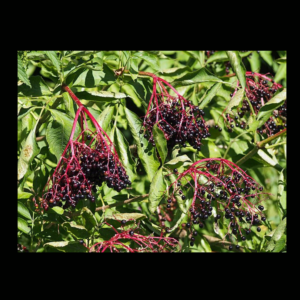
Elderberry is the immune system’s drill sergeant. Its history is steeped in more folklore than almost any other plant—tales of the “Elder Mother” spirit who lived in the trunk and protected the household. In the Middle Ages, it was called “the medicine chest of the country people.” Today, it’s the darling of the natural health world, but behind the trendy syrups is a plant that demands respect. Get it right, and it’s a powerhouse; get it wrong, and you’re in for a very long night in the bathroom—or worse.
FIELD IDENTIFICATION: THE THREE-POINT CHECK
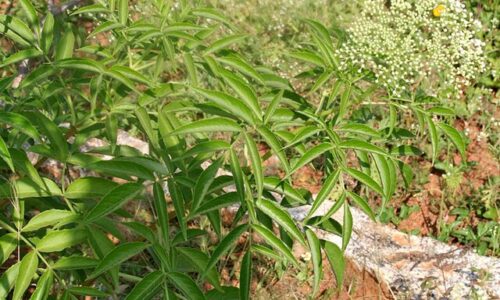
Elderberry can look like a disorganized shrub or a small, graceful tree. Before you start dreaming of syrup, run these checks.
1. The Stem Snap (Visual/Internal) Find a first-year twig and snap it. Elderberry stems are famous for having a soft, white, cork-like pith in the center. It’s almost like a Styrofoam core. If the stem is solid wood or hollow without that pithy center, stop. (Note: Our toxic look-alike has a very different interior).
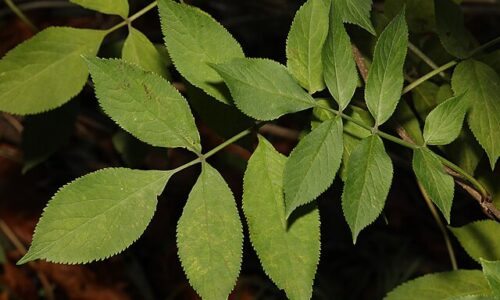
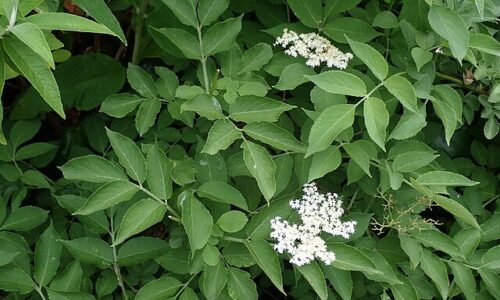
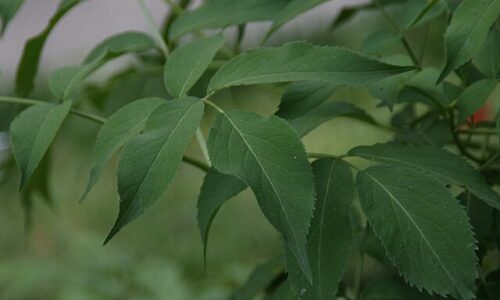
2. The Leaf Layout (Visual) Elderberry leaves are pinnately compound, meaning leaflets grow in pairs along a central stalk with one “terminal” leaf at the very tip (usually 5–11 leaflets). Most importantly, they are opposite—they grow directly across from each other on the branch. If the leaves alternate (staggered), it’s not Elderberry.
3. The Bark Texture (Touch/Visual) Mature bark is grayish-brown and covered in raised, bumpy dots called lenticels. It looks a bit like the plant has a permanent case of goosebumps. It should never be smooth and splotched with purple.
PRIMARY MARKERS
- Leaves: Lance-shaped with finely serrated (toothed) edges. They have a distinct, somewhat “green” or slightly unpleasant smell when crushed—not floral.
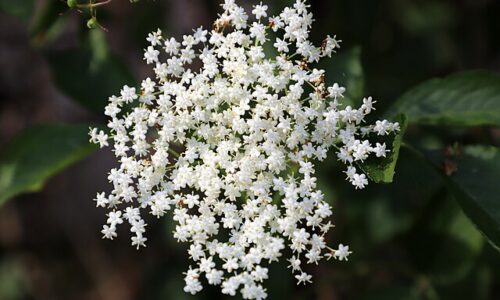
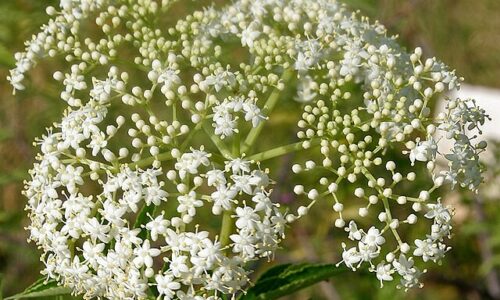
- Flowers: Massive, flat-topped clusters (cymes) of tiny, creamy-white, five-petaled flowers. They smell sweet and honey-like.
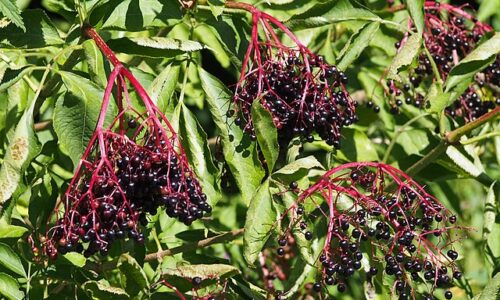
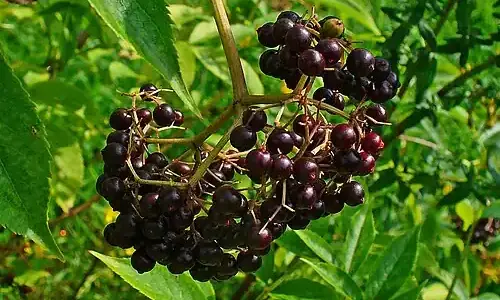
- Fruit: Drooping clusters of tiny berries that turn from green to deep purple-black.
- Habitat: Loves “wet feet.” You’ll find it in ditches, along creek banks, at the edges of forests, and in moist, sunny fields.
TRADITIONAL APPLICATIONS
I’m an herbalist, not a doctor. This is the historical record, not a prescription.
Internal Use – The Antiviral Ally Elderberry is world-renowned for its ability to “disarm” viruses. Modern studies suggest it prevents viruses from attaching to host cells. Historically, it was used at the first sign of a cold or flu to shorten the duration and intensity.
The Flowers – The Diaphoretic While the berries get the fame, the flowers are the “gentle fever-breaker.” An infusion of the flowers was traditionally used to help the body “vent” heat through the skin via perspiration.
The “Never Raw” Rule LISTEN UP: Do not eat raw elderberries. They contain cyanogenic glycosides (basically, a precursor to cyanide). Eating them raw—or eating the bark, leaves, or roots—will result in severe nausea, vomiting, and diarrhea. Cooking destroys these compounds. If you’re eating them off the bush, you’re doing it wrong.
PREPARATION METHODS
Elderberry Syrup (The Standard)
- 1 cup dried berries (or 2 cups fresh/frozen) to 3 cups water.
- Simmer (don’t boil hard) for 45–60 minutes until liquid is reduced by half.
- Strain, let cool to lukewarm, and add 1 cup of raw honey.
- Traditional use: 1 tablespoon daily for “maintenance,” or every 3 hours during active illness.
Elderflower Tea (Infusion)
- 2 teaspoons dried flowers per cup of boiling water.
- Steep COVERED for 10 minutes to keep the volatile aromatics in the cup.
Tincture
- Fresh berries: 1:2 ratio in 75–95% alcohol.
- Dried berries: 1:5 ratio in 40–50% alcohol.
- Macerate for 6 weeks in a dark place.
⚠️THE DEADLY & DANGEROUS LOOK-ALIKES
This is where “knowing” your plant becomes a life-saving skill. Elderberry has one neighbor that will kill you, and one cousin that will make you wish you were dead.
1. Water Hemlock (Cicuta maculata) – DEADLY
While Elderberry is a woody shrub, Water Hemlock is a large perennial herb. They both love wet ditches.
- The Stem: Water Hemlock has a smooth, hollow stem often mottled with purple. It is NOT woody and does NOT have the white corky pith.
- The Roots: If you uproot it, you’ll see chambered air pockets. This is the most violently toxic plant in North America. One bite can be fatal.
2. Red Elderberry (Sambucus racemosa) – TOXIC
Often confused with the medicinal Black Elderberry, but much more dangerous to ingest.
- The Flowers: Grow in conical, grape-like clusters (pyramid shape) rather than the flat “dinner plate” shape of the Black Elderberry.
- The Pith: If you snap a twig, the center pith is tan or brown, not white.
- The Danger: The seeds are highly emetic. Even when cooked, many people experience violent vomiting. In the Poison Index, we treat Red Elderberry as a “look but don’t touch” species.
COMPARISON TABLE
| Feature | Black Elderberry (Safe) | Red Elderberry (Toxic) | Water Hemlock (FATAL) |
| Growth Habit | Woody shrub/tree | Woody shrub | Herbaceous (non-woody) |
| Stem Pith | White & Corky | Tan / Brownish | Hollow / Chambered |
| Flower Shape | Flat-topped (Plate) | Conical (Pyramid) | Rounded Umbels |
| Berry Color | Deep Purple/Black | Bright Red | No berries (Small seeds) |
| Danger Level | Safe (Cooked) | High Toxicity | FATAL |
GROWING ELDERBERRY
Elderberry is a “generous” plant. It grows fast—sometimes 6 to 12 feet in a single season.
- Propagation: Stick a hardwood cutting in moist ground in early spring; it’s likely to take.
- Harvesting: Be prepared to fight the birds. They know exactly when the berries hit peak ripeness, usually about five minutes before you do.
SAFETY CONSIDERATIONS
- Preparation: MUST BE COOKED. Never consume raw berries, bark, or leaves.
- Autoimmune Disorders: Because Elderberry stimulates the immune system, those with autoimmune conditions should consult a professional.
- Pregnancy/Nursing: Generally avoided due to lack of safety data.
- Diuretics: May increase the effect of pharmaceutical diuretic medications.
FINAL NOTES
Elderberry is a cornerstone of the folk pharmacy, but it requires the harvester to transition from a casual observer to a focused identifier. Respect the “Never Raw” rule, steer clear of the purple-spotted stems of the Hemlock, and keep your eyes peeled for that flat-topped flower structure.
For more information on toxic lookalikes, see the Deadly Doubles series. For detailed plant profiles, visit the Flora Archive.