
[SYSTEM WARNING: ⚠️ LEVEL-10 TOXICITY ALERT]
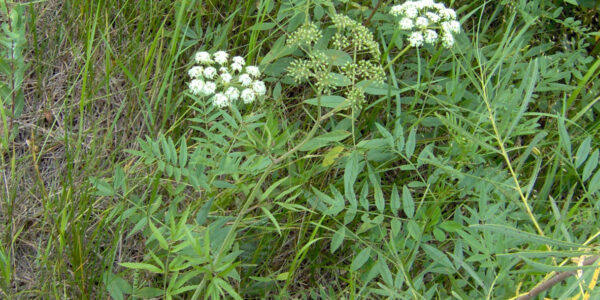
Specimen: Cicuta maculata. Identification: The Executioner. Status: EXTREMELY LETHAL. Hazard: Violent Seizures / CNS Collapse. OVERVIEW: Water Hemlock is the most toxic plant in the North American grid. While Poison Hemlock paralyzes, The Executioner triggers violent electrical storms in the brain. It is a wetland specialist. If you are scavenging in marshes, swamps, or stagnant ditches, assume any white-flowered specimen is hostile until cleared by the Notch Protocol. Accuracy is the only defense; even a “pea-sized” bite is terminal.
FIELD IDENTIFICATION: THE TRIAD CLEARANCE
To clear this specimen for “The Grave” (exclusion), you must verify the Three-Point Clearance. If the specimen fails even one of these checks, it is designated as a “Red Zone” hazard of the highest order.
-
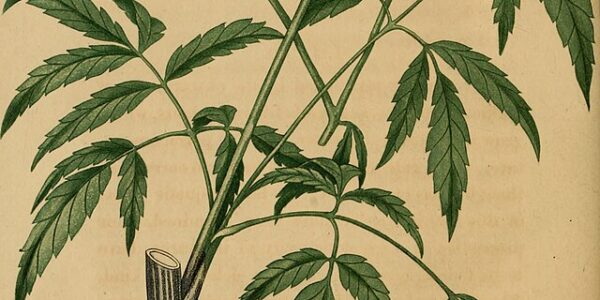
THE LEAF VEINS (The “Notch” Protocol): Inspect the veins on individual leaflets. In almost every other plant, veins run to the tips of the teeth. In Water Hemlock, the veins run to the notches (the “V” between the teeth). This marker is the most reliable tactical indicator, even on young plants.
-
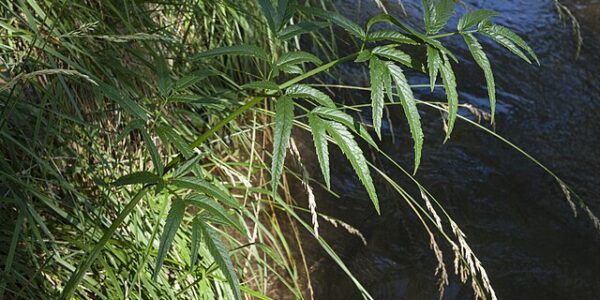
THE HABITAT CHECK: The Executioner is strictly aquatic or semi-aquatic. It requires saturated soil. If your boots aren’t in mud or standing water, you are likely dealing with “The Assassin” (Poison Hemlock) or Yarrow. If you are in the “Wet Zone,” the risk factor increases 100%.
-
THE ROOT ARCHITECTURE: The root is thick, tuberous, and multi-chambered. If uprooted, the base contains chambered air pockets that exude a yellow, oily sap. This sap smells like parsnips but is pure Cicutoxin.
PRIMARY IDENTIFICATION
MARKERS THE STEM: Typically 3–6 feet tall. Stems may be green or mottled with purple. Stems are often swollen at the base where they meet the water line.
THE LEAVES: Doubly compound and lance-shaped. The edge of the leaf is sharply saw-toothed. Tracing the veins is your “Safety Key.”
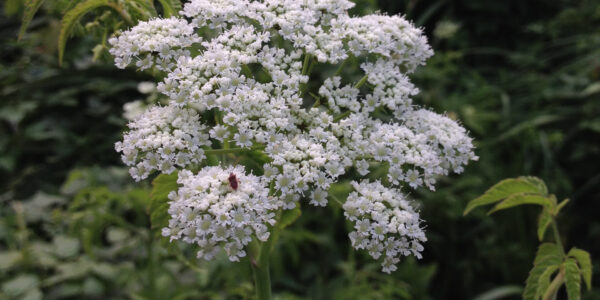
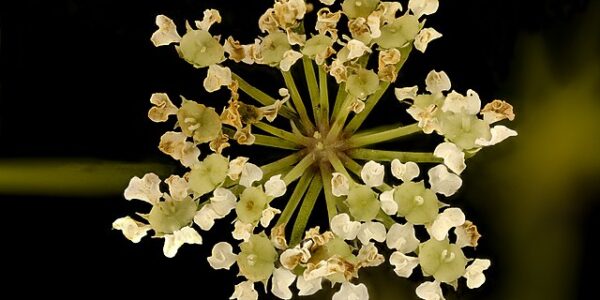
THE FLOWERS: Tiny white flowers in compound umbels (umbrella clusters). From a distance, they mimic Yarrow or Wild Carrot.
HABITAT: Swamps, marshes, ditch lines, and stagnant water margins. A “Wet Zone” specialist.
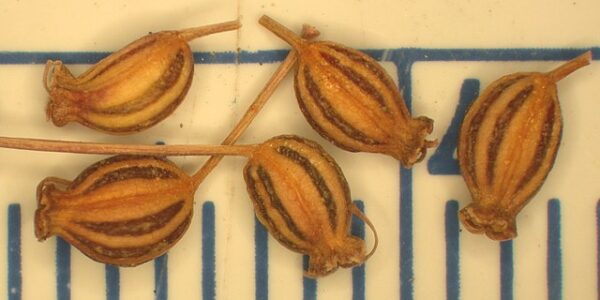
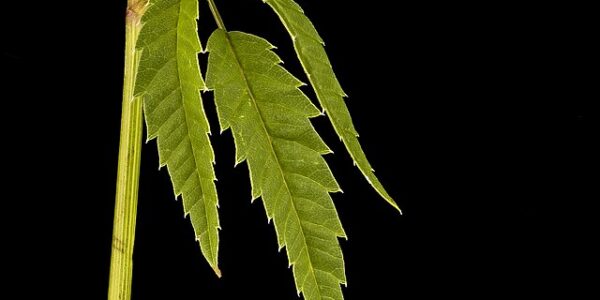
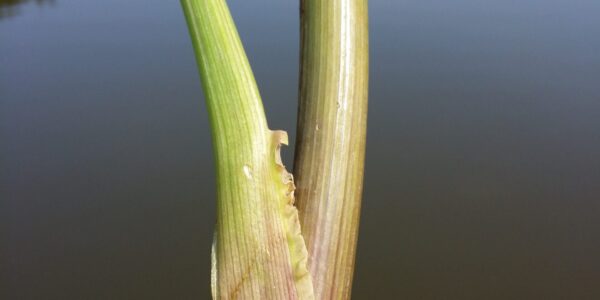
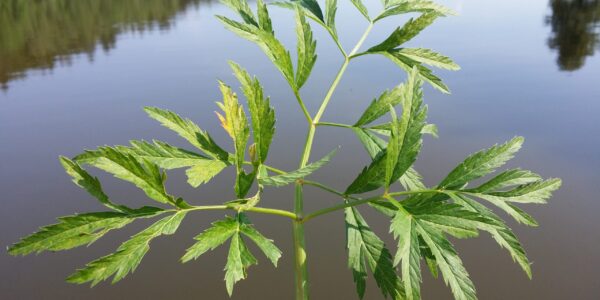
THE TOXICITY LOG (ARCHIVAL DATA)
Archival records identify the primary toxin as Cicutoxin. We report the toxicological record; we make no medical claims.
- Mechanism: Powerful Central Nervous System (CNS) stimulant/convulsant.
- The Kill: Triggers violent, uncontrollable grand mal seizures and total CNS collapse within 15–60 minutes.
- Fatal Dose: A single “pea-sized” bite of the root is sufficient to kill an adult.
Bunker Advisory: Containment
- NO CONTACT: Toxins can be absorbed through the skin. Wear heavy rubber gloves when handling specimens in wet sectors.
- WATER SECURITY: If found near a bunker water intake, move the intake upstream immediately to avoid contaminated particulates.
- ERADICATION: Dig the entire root cluster out of the mud. Bag and seal. Fragmented roots left in the soil remain toxic for years.
- DECON: Sanitize all tools with 10% bleach. Wash handling clothes separately from bunker textiles.
⚠️ DEADLY DOPPELGÄNGER PROTOCOL: THE ASSASSINS
The “Executioner” hides among common forageable plants. If your specimen grows in the mud, apply the Notch Protocol immediately.
WATER HEMLOCK (The Executioner)
- Veins: Lead to the notches between leaf teeth.
- Habitat: Standing water or saturated mud.
- Effect: Violent grand mal seizures.
POISON HEMLOCK (The Assassin)
- Veins: Lead to the leaf tips.
- Stem: Purple splotches/bloodstains. Hairless.
- Effect: Quiet respiratory paralysis.
YARROW (The Soldier)
- Stem: Woolly and hairy. Solid green.
- Scent: Spicy, medicinal, and clean.
- Effect: Hemostatic and healing.
Log Entry: Do not trust the “bloodstains” on the stalk.
“Veins to the tip, you might get a grip. Veins to the notch, watch the watch.”
Yesterday, I found a cluster of white lace near the marsh. My hands reached for it—habitual, stupid—before I remembered the ‘Red Spot’ incident. I stopped. I didn’t look at the stem; I looked at the leaflets. I traced the veins with a magnifying lens. They didn’t lead to the points. They led straight into the notches.
That’s the signature of Cicuta maculata. It doesn’t need ‘bloodstains’ to kill you; it hides its identity in its leaves. If I had pulled that root, the Cicutoxin would have triggered a seizure before I reached the airlock. If you see lacy umbrellas in the mud, check the veins. If they hit the notch, walk away.
BUNKER CLEARANCE:
This information is for identification and avoidance purposes only. KNF7 and the Bunker Archives are not responsible for misidentification. Documentation of historical use is for educational context and is NOT a recommendation for use. In the event of suspected ingestion, immediate professional medical intervention is the only protocol.
SYSTEM NOTICE: ARCHIVAL SAFETY DATA
This record consists of historical identification markers and toxicological data compiled from botanical archives and survival field logs. NO MEDICAL ADVICE PROVIDED.