
The One That Burns You
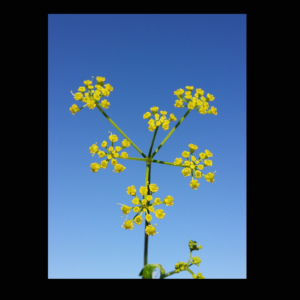
Wild Parsnip is the plant that will teach you to wear gloves the hard way.
It looks harmless – tall, yellow flowers in flat-topped clusters, grows along roadsides and fields. But the sap contains chemicals called furanocoumarins that, when exposed to sunlight, cause severe chemical burns. Not “irritating rash” burns. Massive, fluid-filled blisters that can last for months and leave scars for years burns.
The irony? The root is edible. It’s the exact same species as the parsnip you buy at the grocery store – a starchy, sweet root vegetable that’s been cultivated in Europe for centuries. But the plant that produces that edible root is covered in sap that will wreck your skin.
This is phytophotodermatitis – plant + light + skin = chemical burn. The sap alone won’t hurt you. Sunlight alone won’t hurt you. But sap + sunlight on your skin = disaster.
People confuse Wild Parsnip with Golden Alexanders (a harmless native) all the time. The difference is critical: bloom timing, stem texture, and leaf structure. Get it wrong and you’ll end up with blisters the size of quarters.
Let’s talk about how to identify Wild Parsnip, how to tell it apart from safe look-alikes, and what to do if you get the sap on you.
WHAT IS WILD PARSNIP?
Botanical Name: Pastinaca sativa
Common Names: Wild Parsnip, Poison Parsnip
Family: Apiaceae (Carrot/Parsley family)
Wild Parsnip is a biennial herb native to Europe and Asia, introduced to North America as a food crop in the 1600s. It escaped cultivation and is now naturalized (and invasive) across most of the northern United States and southern Canada.
What It Looks Like:
- 2-5 feet tall (sometimes taller)
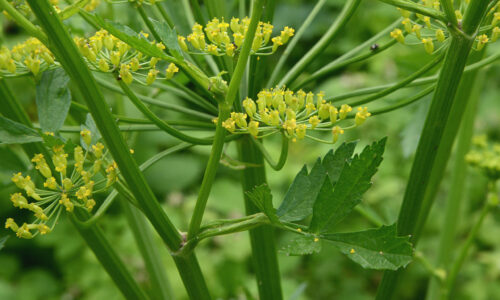
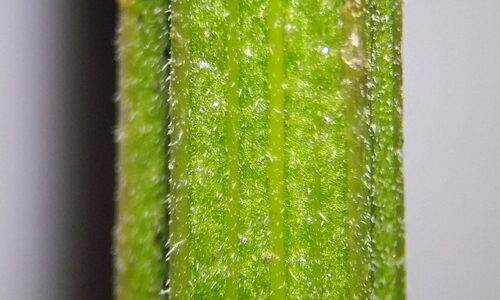
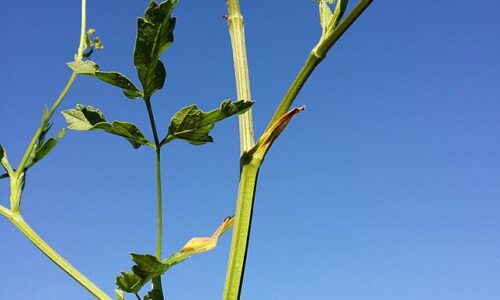
- Thick, grooved stem (like celery)
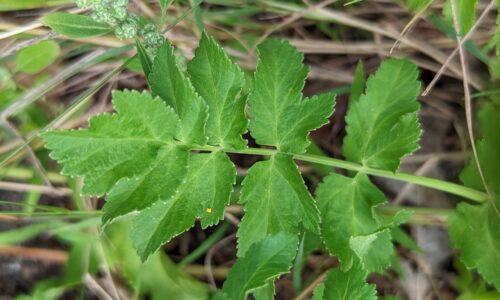
- Large, compound leaves (coarse, celery-like)
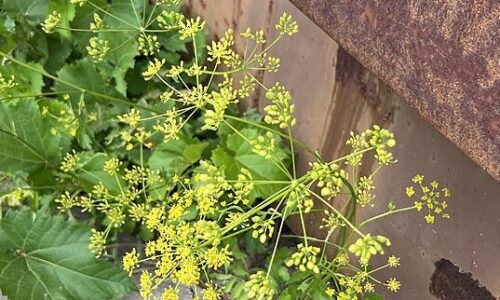
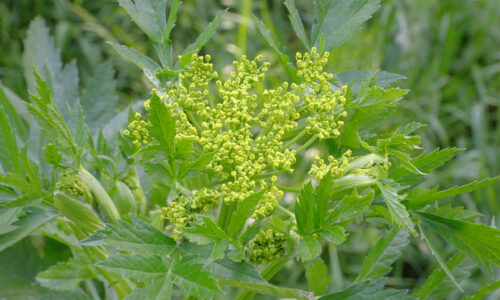
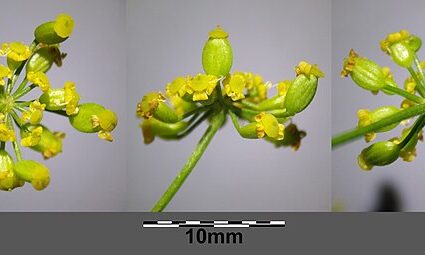
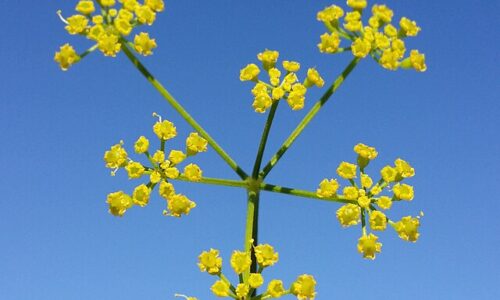
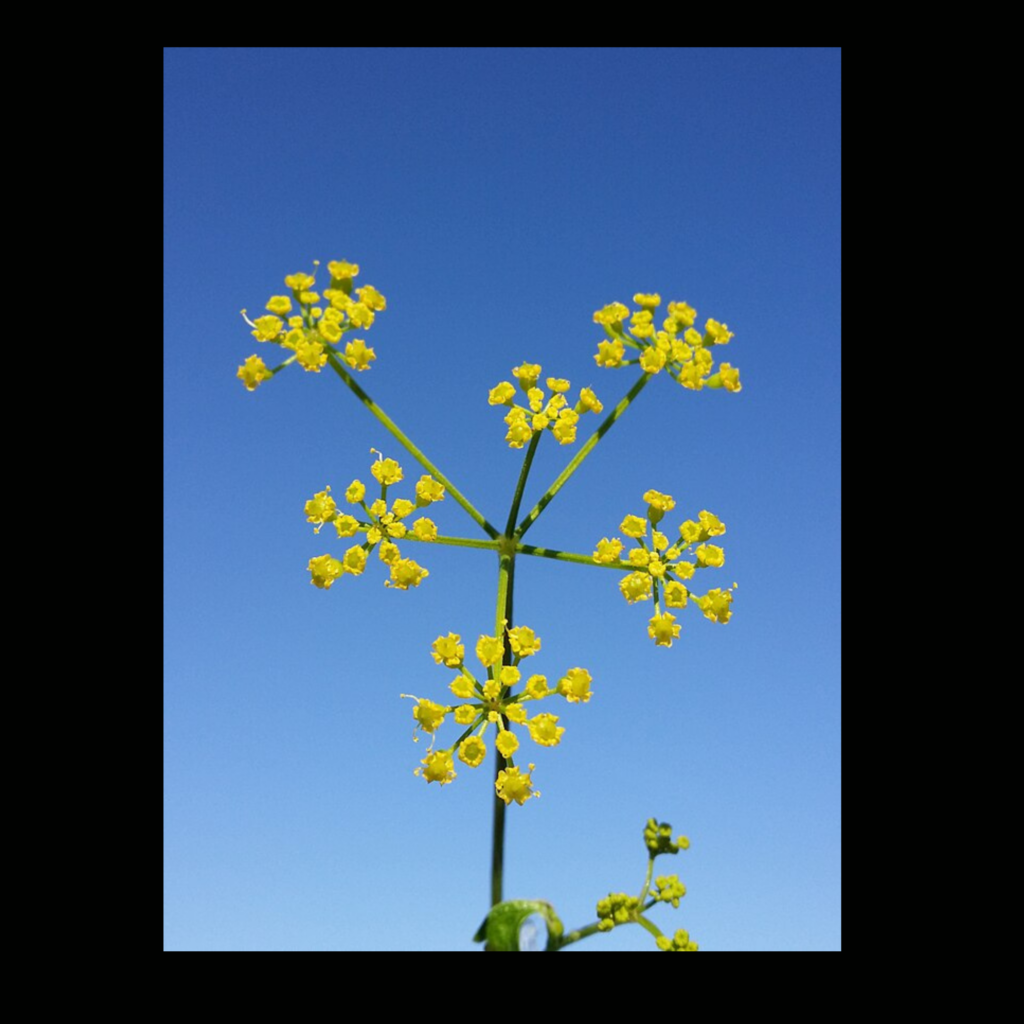
- Bright yellow, flat-topped flower clusters (umbels)
- Blooms mid-to-late summer (June-August)
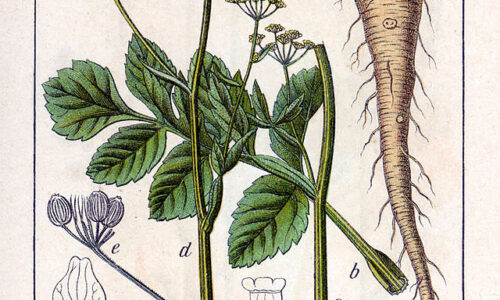
- Large taproot (edible, like grocery store parsnip)
The Signature:
Yellow umbel flowers + deeply grooved stem + coarse celery-like leaves + mid-summer bloom = Wild Parsnip.
The Danger:
Sap contains furanocoumarins → contact with skin + sunlight = severe chemical burns (phytophotodermatitis).
IDENTIFICATION
THE FLOWERS:
- Shape: Compound umbels (flat-topped, umbrella-like clusters)
- Color: Bright yellow to yellow-green
- Size: 3-8 inches across
- Structure: Multiple small umbels arranged in larger cluster (like Queen Anne’s Lace but yellow)
- Bloom time: June to August (MID-TO-LATE SUMMER – critical timing)
- Height: Flowers held 2-5 feet above ground
- Distinctive: Bright yellow umbels are a “warning beacon”
THE LEAVES:
Critical identification feature:
- Type: Pinnately compound (feather-like arrangement)
- Structure: 5-15 leaflets arranged in pairs along central stem
- Shape: Oval to oblong leaflets
- Edges: Coarsely toothed/serrated (saw-toothed)
- Color: Yellowish-green to dark green
- Texture: Somewhat glossy, thick
- Size: Large – basal leaves can be 12-18 inches long
- Appearance: Like oversized, coarse celery leaves
- NOT triple-compound – this is the key difference from Golden Alexanders
THE STEM:
The most distinctive feature:
- Shape: Deeply grooved/ridged (like celery stalks)
- Texture: Smooth, hairless (NOT hairy like some plants)
- Color: Yellowish-green to green
- Thickness: Stout, robust (1-2 inches diameter)
- Hollow: Stem is hollow inside
- Sap: Contains furanocoumarins (DANGER)
- Test: Run your finger along the stem (WITH GLOVES) – you’ll feel distinct vertical ridges
THE ROOT:
- Type: Large taproot (like a carrot)
- Color: White to pale yellow
- Size: Can be 12+ inches long, 2-3 inches diameter
- Shape: Tapered, carrot-like
- Edible: Yes (same as grocery store parsnip)
- Caution: Harvesting exposes you to sap from cut stem
THE SEEDS:
- Shape: Small, flat, oval discs
- Color: Tan to brown
- Arrangement: In umbels (where flowers were)
- Season: Late summer to fall
- Dispersal: Wind, water, animals
THE GROWTH CYCLE:
YEAR 1 (Biennial):
- Basal rosette of leaves
- No flower stalk
- Root developing
YEAR 2:
- Tall flowering stalk emerges
- Flowers, sets seed, dies
- Root is woody, not good for eating
THE HABITAT:
- Roadsides (very common)
- Fields and meadows (disturbed areas)
- Railroad tracks
- Waste ground
- Old pastures
- Prefers: Full sun, disturbed soil
- NOT in: Deep woods, wetlands, intact prairie
WILD PARSNIP VS. GOLDEN ALEXANDERS (CRITICAL)
This is the most common and dangerous confusion.
| Feature | WILD PARSNIP | GOLDEN ALEXANDERS |
|---|---|---|
| DANGER | SAP CAUSES SEVERE BURNS | SAFE – harmless to touch |
| Bloom time | June-August (SUMMER) | April-June (SPRING) |
| Height | 2-5 feet (tall) | 1-3 feet (shorter) |
| Stem | Deeply grooved/ridged (celery) | Smooth, round |
| Stem texture | Hairless | Hairless |
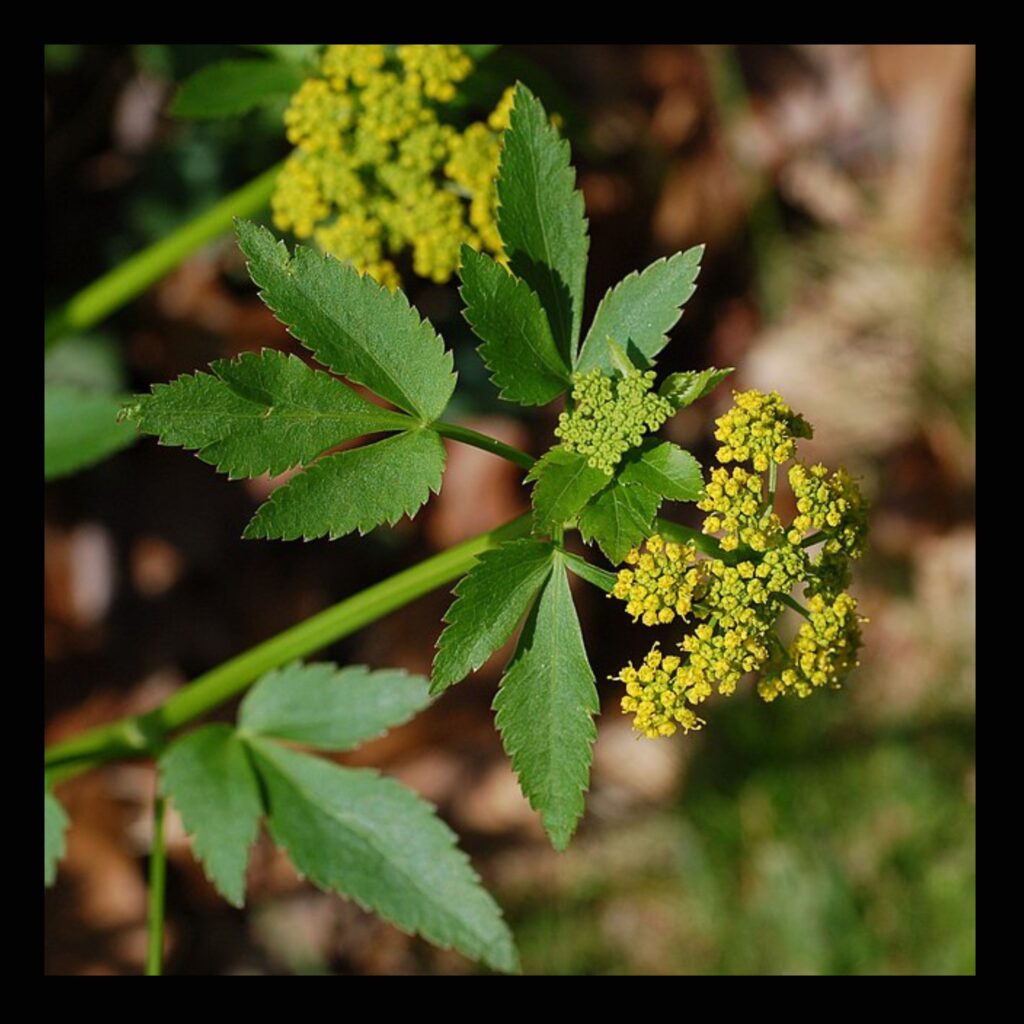
| Leaves | Single-compound (one row) | Triple-compound (3 divisions) |
| Leaf appearance | Coarse, celery-like | Fine, delicate |
| Flower color | Yellow to yellow-green | Bright golden yellow |
| Central flower | Stalked | Sessile (no stalk) |
| Root | Large, edible (if careful) | Small taproot |
| Native status | INVASIVE | Native |
THE THREE CRITICAL TESTS:
1. BLOOM TIMING (Easiest Test):
- Yellow umbels in May = Probably Golden Alexanders (safe)
- Yellow umbels in July = Probably Wild Parsnip (DANGER)
2. STEM CHECK (DO WITH GLOVES OR DON’T TOUCH):
- Grooved/ridged like celery = Wild Parsnip (DANGER)
- Round and smooth = Golden Alexanders (safe)
3. LEAF STRUCTURE:
- Single-compound (one long row of leaflets) = Wild Parsnip
- Triple-compound (divided into groups of three) = Golden Alexanders
Memory aid:
“If it blooms in summer with a celery stem, stay the hell away from it.”
WILD PARSNIP VS. OTHER LOOK-ALIKES
POISON HEMLOCK (Conium maculatum):
- DEADLY if ingested (kills Socrates)
- Flowers: WHITE (not yellow)
- Stem: Smooth, purple-blotched, hairless
- Height: 3-8 feet (taller)
- Both are dangerous – Hemlock poisons you, Parsnip burns you
QUEEN ANNE’S LACE / WILD CARROT (Daucus carota):
- Flowers: WHITE (not yellow)
- Stem: Hairy (not smooth)
- Leaves: Finer, more lacy
- Root: Edible (wild carrot)
- Much safer than Wild Parsnip
PARSNIP (cultivated) (Pastinaca sativa var. sativa):
- Same species as Wild Parsnip
- Same sap danger
- Same burn risk
- Cultivated varieties are selected for root size, not reduced sap
YELLOW PIMPERNEL (Taenidia integerrima):
- Native, yellow umbels
- Leaves: Simple or barely divided (not coarse)
- Stem: Round, not grooved
- Safe
WHY IT’S CALLED “WILD PARSNIP”
“Parsnip” comes from the Latin pastinaca, which means “to dig” (because you dig the root).
“Wild” because it’s the escaped, naturalized form of the cultivated parsnip.
The confusing part: It’s the same species as the grocery store parsnip (Pastinaca sativa). The cultivated variety (var. sativa) has been bred for larger roots, but it’s genetically the same plant. Both have the dangerous sap.
History:
- Introduced to North America by European colonists in the 1600s as a food crop
- Grown in gardens for the edible root
- Escaped cultivation
- Naturalized across temperate North America
- Now considered invasive in many areas
Other names:
- Poison Parsnip (emphasizes the danger)
- Bird’s Nest (for the dried seed heads)
WHERE TO FIND WILD PARSNIP
Habitat:
- Roadsides (extremely common)
- Ditches
- Fields and meadows (especially disturbed or overgrazed)
- Railroad rights-of-way
- Waste ground
- Old pastures
- Parks (unfortunately common)
- Prefers: Full sun, disturbed soil, dry to moderately moist
- NOT typically in: Deep shade, wetlands, intact native ecosystems
Season:
- Year 1: Basal rosette, no flower (spring through fall)
- Year 2: Flowering stalk emerges in late spring
- Blooms: June to August (peak July)
- Seeds: Late summer to fall
- Dies: After setting seed (biennial)
Distribution:
- Native: Europe, Asia
- Invasive in: Most of northern U.S. and southern Canada
- Especially common: Northeast, Midwest, Pacific Northwest
- Zones: 3-9
Climate:
- Tolerates: Wide range of conditions
- Prefers: Temperate climates
- Cold-hardy
- Heat-tolerant (with moisture)
EDIBILITY
YES – the root is edible. But harvesting it is DANGEROUS.
Wild Parsnip is the same species as grocery store parsnip. The root is a starchy, sweet vegetable that’s been eaten in Europe for over 2,000 years.
But there’s a massive catch: getting to the edible root requires handling the toxic plant.
THE ROOT:
- Edible: Yes, same as cultivated parsnip
- When: First-year plants only (basal rosette, no flower stalk)
- Harvest time: Fall through early spring (after frost improves flavor)
- Taste: Sweet, starchy, nutty (improves after frost)
- Nutrition: High in carbohydrates, vitamin C, potassium, fiber
- Cooking: Roast, boil, mash, add to soups (like carrots or potatoes)
HARVESTING PROTOCOL (If You Must):
SAFETY FIRST:
- Protective gear REQUIRED:
- Heavy gloves (nitrile or rubber, not cotton)
- Long sleeves and pants
- Eye protection
- Closed-toe shoes
- Time of day:Night or deep overcast (reduces UV exposure risk)
- If sap gets on skin and sun hits it = burns
- Dark = safer (but still wear gloves)
- Identification: Must be 100% certain it’s Wild Parsnip, not Poison Hemlock or Water Hemlock (deadly)
HARVESTING:
- Target: First-year plants (basal rosette, no flower stalk)
- Avoid: Second-year plants (woody root, not good eating)
- Method: Dig deep to get entire taproot
- Cut leaves: Away from root immediately, dispose carefully
- Wash: Thoroughly before handling without gloves
- Storage: Cool, damp place (root cellar ideal); can store in buckets of sand
COOKING:
- Peel the root (outer skin may have higher furanocoumarin levels)
- Cook thoroughly
- Same uses as cultivated parsnip
IS IT WORTH IT?
Honestly? Probably not.
- Risk: Severe chemical burns from sap
- Reward: A root vegetable you can buy at the store
- Alternatives: Cultivated parsnips (safer to harvest, better flavor)
- Identification risk: Could confuse with deadly Poison Hemlock
If you’re in a survival situation and need calories: Maybe. Otherwise, just buy parsnips.
THE DANGER: PHYTOPHOTODERMATITIS
This is what Wild Parsnip is known for.
What Is Phytophotodermatitis?
- “Phyto” = plant
- “Photo” = light
- “Dermatitis” = skin inflammation
The sap contains furanocoumarins (specifically psoralen compounds). These chemicals:
- Absorb into skin cells
- Are activated by UV light (sunlight)
- Damage DNA in skin cells
- Cause cell death
- Result in severe burns and blistering
The Three-Part Reaction:
- Sap contact – you brush against the plant, sap gets on skin
- UV exposure – sunlight hits the affected area (within hours to days)
- Chemical reaction – sap + UV = burns
Without UV light, the sap is relatively harmless. This is why night harvesting is safer.
Symptoms:
INITIAL (0-24 hours after sun exposure):
- Redness
- Burning sensation
- Itching
ACUTE (24-48 hours):
- Severe blistering (fluid-filled blisters)
- Pain (significant)
- Swelling
- Blisters can be huge (covering large areas)
LONG-TERM (weeks to months):
- Blisters heal slowly
- Hyperpigmentation (dark discoloration where blisters were)
- Scars (can be permanent)
- Discoloration can last years
Severity:
- Mild cases: Small blisters, moderate pain
- Severe cases: Massive blisters covering large areas (arms, legs, torso), intense pain, secondary infection risk
- Eyes: Can cause temporary or permanent blindness if sap gets in eyes and is exposed to UV
Who’s at Risk:
- Weed whackers/mowers – aerosolized sap sprays on skin
- Gardeners – pulling plants without gloves
- Hikers/outdoor workers – brushing against plants
- Children – playing in areas where Wild Parsnip grows
- Anyone in sunny areas where Wild Parsnip is common
⚠️ FIRST AID: WHAT TO DO IF EXPOSED
If you get Wild Parsnip sap on your skin:
IMMEDIATE (Within Minutes):
- Wash immediately with soap and water
- Wash thoroughly – don’t just rinse
- Cover the affected area with opaque cloth or clothing
- Get out of sunlight – go indoors or into shade
- Keep area covered and away from sunlight for at least 48 hours
IF BLISTERS DEVELOP:
- Do not pop blisters – they protect the damaged skin underneath
- Keep clean and dry
- Cover with sterile bandage
- Avoid sun exposure to affected area
- Seek medical attention if:
- Blisters are large or numerous
- Signs of infection (increased redness, warmth, pus)
- Severe pain
- Blisters on face, eyes, or genitals
IF SAP GETS IN EYES:
- Flush immediately with clean water for 15+ minutes
- Cover eyes with dark cloth
- Avoid all sunlight
- Seek immediate medical attention
- Can cause blindness – this is an emergency
MEDICAL TREATMENT:
- Cool compresses for pain
- Topical corticosteroids (prescription) for inflammation
- Pain medication (OTC or prescription)
- Antibiotics if secondary infection develops
- Keep out of sunlight until healed
LONG-TERM:
- Hyperpigmentation (dark spots) can last months to years
- Sunscreen on affected areas to prevent further darkening
- Time – discoloration gradually fades
CONTROL & REMOVAL
If you need to remove Wild Parsnip from your property:
Safety Gear:
- Heavy gloves (nitrile, rubber, or leather)
- Long sleeves and pants (tightly woven fabric)
- Eye protection (safety glasses or goggles)
- Closed-toe boots
- Consider face shield if using power tools
Timing:
- Early morning or late evening (less UV)
- Overcast days (safer than full sun)
- Never on hot, sunny days
Methods:
HAND-PULLING:
- First-year plants: Easier to pull (before flower stalk)
- Dig out entire taproot (or it regrows)
- Wet soil makes pulling easier
- Bag plants immediately, don’t leave on ground
CUTTING:
- Before flowering (prevents seed production)
- Cut below ground level (below root crown)
- Multiple cuttings may be needed
- Mowing works but requires repeated mowing to exhaust root
HERBICIDE:
- Glyphosate or 2,4-D effective
- Early spring (rosette stage) or fall (before winter)
- Follow label directions
- Wear protective gear
DISPOSAL:
- Bag plants in heavy plastic
- Do not compost (can regrow from root fragments, seeds remain viable)
- Trash or burn (where legal)
- Wash tools and equipment
After Removal:
- Revegetate with desirable plants (prevents reinvasion)
- Monitor for new seedlings
- Repeat treatments likely needed for several years
WHY WILD PARSNIP IS INVASIVE
Invasive Characteristics:
- Biennial strategy: First year establishes root, second year produces massive seed
- High seed production: Single plant can produce thousands of seeds
- Wind dispersal: Seeds spread easily
- Long seed viability: Seeds can remain viable in soil for years
- Large root: Stores energy, hard to kill
- Tolerates disturbance: Thrives in disturbed areas
- No natural predators: Native herbivores avoid it (toxic sap)
- Competitive: Outcompetes native plants
Ecological Impact:
- Displaces native plants
- Reduces biodiversity
- Forms monocultures along roadsides and fields
- Hazard to humans and animals
- Difficult to control once established
WILD PARSNIP IN HISTORY
Ancient & Medieval Use:
- Romans: Cultivated and ate the root
- Pliny the Elder: Documented cultivation and use
- Medieval Europe: Important food crop (before potatoes)
- Believed to be aphrodisiac (likely due to nutritional value)
Colonial North America:
- Introduced 1600s by European colonists
- Grown in gardens for food
- Escaped cultivation and naturalized
- Listed in Thomas Jefferson’s garden at Monticello
Modern Era:
- Recognized as invasive (mid-20th century onward)
- Phytophotodermatitis well-documented
- Public health concern in areas where common
- Control efforts in many states/provinces
FINAL THOUGHTS
Wild Parsnip is a lesson in why you don’t judge a plant by its root.
Yes, the root is edible – the same starchy, sweet parsnip humans have been eating for over 2,000 years. But the plant that produces that root is covered in sap that will give you burns that look like a chemical weapons attack.
Those bright yellow umbel flowers in July are a warning. That deeply grooved celery stem is a red flag. Those coarse, celery-like leaves are telling you to back away.
If you see yellow umbels in summer, assume it’s Wild Parsnip until proven otherwise.
Learn the grooved stem. Learn the bloom timing (summer, not spring). Learn the single-compound leaves (not triple-compound like Golden Alexanders). And for the love of everything, wear gloves if you have to touch it.
If you must harvest the root for food, do it at night, in full protective gear, and ask yourself if it’s really worth the risk when you can buy parsnips at the grocery store for $2 a pound.
The blisters aren’t worth it.
For safe look-alikes, see Golden Alexanders in the Flora Archive. For more deadly look-alikes, see Deadly Doubles.