
The One With the Crown
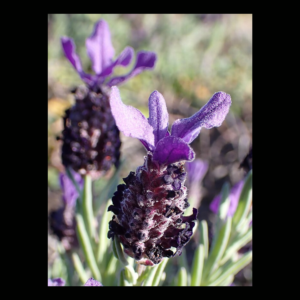
Spanish Lavender is the lavender that doesn’t smell like lavender.
If you’re expecting that sweet, perfumey English Lavender scent, you’re in for a surprise. Spanish Lavender smells like camphor – sharp, medicinal, resinous. Like eucalyptus or pine. That’s because it’s not bred for potpourri – it’s built for survival in brutal Mediterranean heat, and it’s loaded with antiseptic compounds.
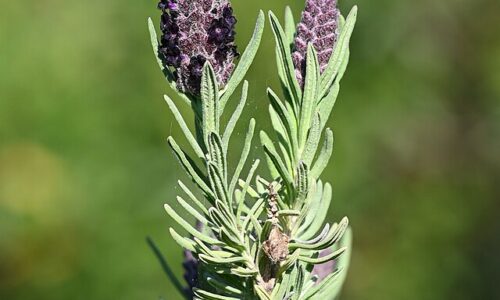
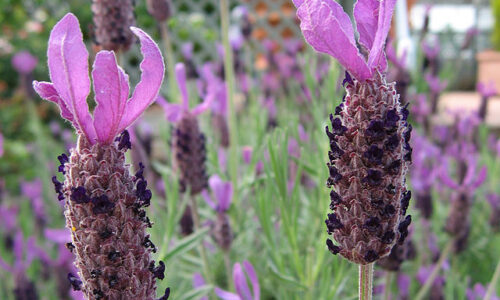
The giveaway? Those distinctive “bunny ears” or “crown” bracts on top of the flower heads. Once you see them, you’ll never mistake this plant for anything else.
It’s been used medicinally since Roman times – soldiers used it to dress wounds, plague doctors burned it as a fumigant, and herbalists used it for everything from headaches to respiratory issues. It’s tougher, more drought-resistant, and more medicinally potent than its English cousin.
Let’s talk about how to identify it, what makes it different from other lavenders, and why it earned the name “Butterfly Lavender.”
WHAT IS SPANISH LAVENDER?
Botanical Name: Lavandula stoechas
Common Names: Spanish Lavender, Butterfly Lavender, Topped Lavender, French Lavender (confusingly)
Family: Lamiaceae (Mint family)
Spanish Lavender is a woody perennial shrub native to the Mediterranean region – Spain, Portugal, southern France, North Africa. The ancient Greeks and Romans called it “Stoichas” after the Stoechades Islands (now Îles d’Hyères off the French coast) where it grew abundantly.
What It Looks Like:
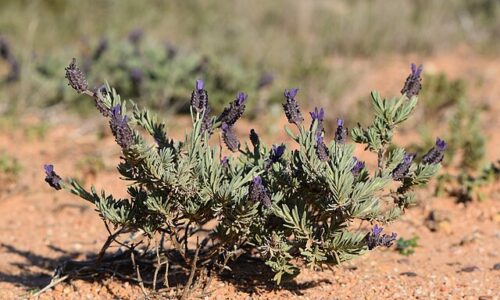
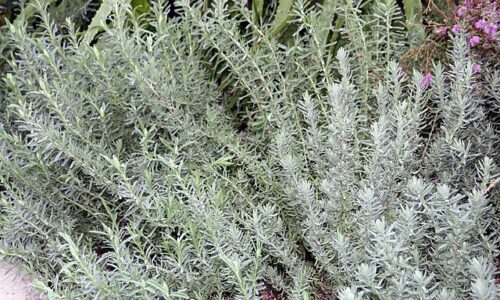
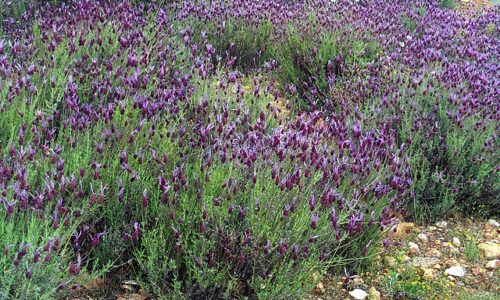
- 12-36 inches tall, compact and bushy
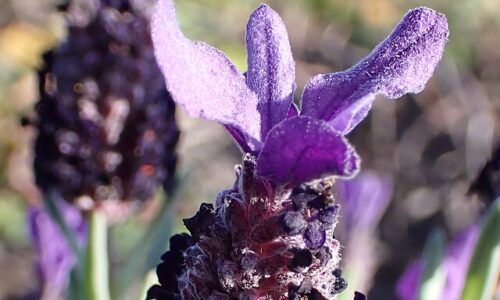
- Distinctive “crowned” flower heads with petal-like bracts on top
- Pinecone-shaped purple flower spikes
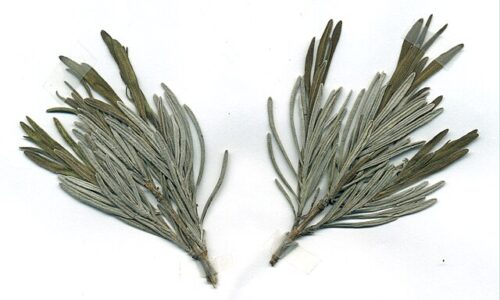
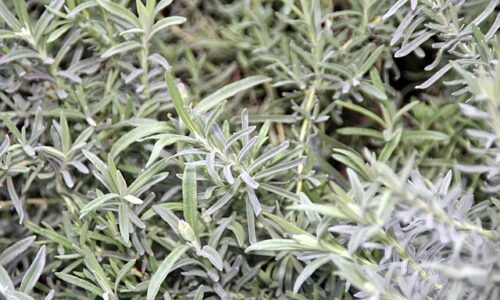
- Silver-grey to grey-green narrow leaves
- Square stems (mint family trait)
- Strong camphor/resinous scent
The Signature:
Those upright petal-like bracts (“bunny ears” or “butterfly wings”) on top of the flower head. No other common lavender has these.
IDENTIFICATION
THE FLOWERS:
- Flower head: Dense, egg-shaped or pinecone-shaped spike (1-2 inches long)
- Color: Deep purple to dark violet
- The crown: 2-4 large, upright, petal-like bracts on top (lighter purple, pink, or white)
- Bracts look like: Bunny ears, butterfly wings, flags, or a crown
- Bloom time: Spring to early summer (sometimes repeat bloom in fall)
- Scent: Strong, camphoraceous, medicinal – NOT sweet like English Lavender
THE LEAVES:
- Arrangement: Opposite (typical of mint family)
- Shape: Narrow, linear, almost needle-like
- Length: 1-2 inches
- Color: Silver-grey to grey-green
- Texture: Covered in fine hairs (fuzzy/velvety)
- Scent when crushed: Strong camphor/resinous smell
THE STEM:
- Shape: Square (run your fingers along it – you’ll feel four distinct edges)
- Color: Grey-green, becoming woody with age
- Growth: Branching, compact, shrubby
THE HABIT:
- Form: Rounded, compact shrub
- Size: Typically 12-24 inches tall and wide (up to 36 inches in ideal conditions)
- Growth pattern: Woody at base, herbaceous at tips
- Evergreen: Retains foliage year-round in mild climates
THE HABITAT:
- Native: Mediterranean – rocky hillsides, poor soils, full sun
- Cultivated: Gardens, xeriscapes, containers
- Prefers: Hot, dry, sunny locations
- Tolerates: Poor soil, drought, heat, coastal conditions
- Hates: Wet feet, humidity, heavy soil
SPANISH LAVENDER VS. ENGLISH LAVENDER
These two are often confused, but they’re quite different:
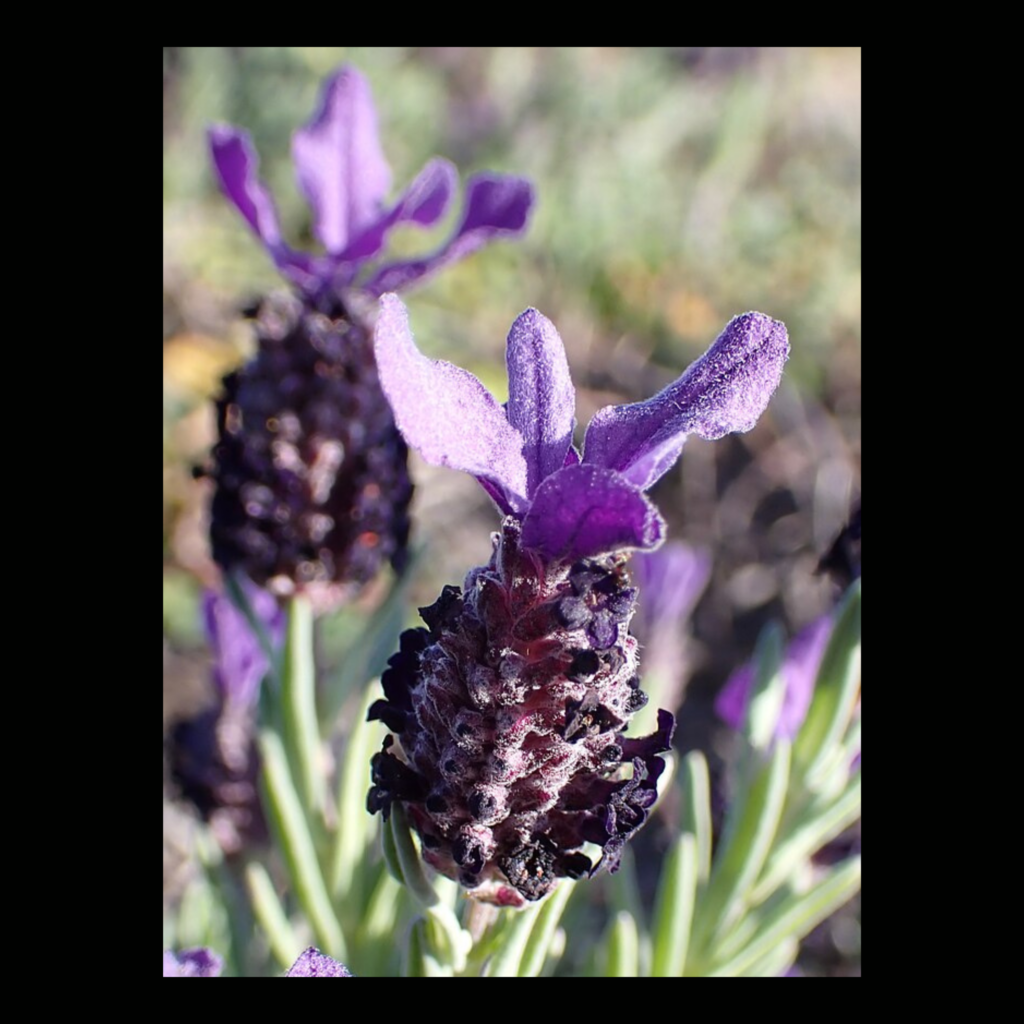
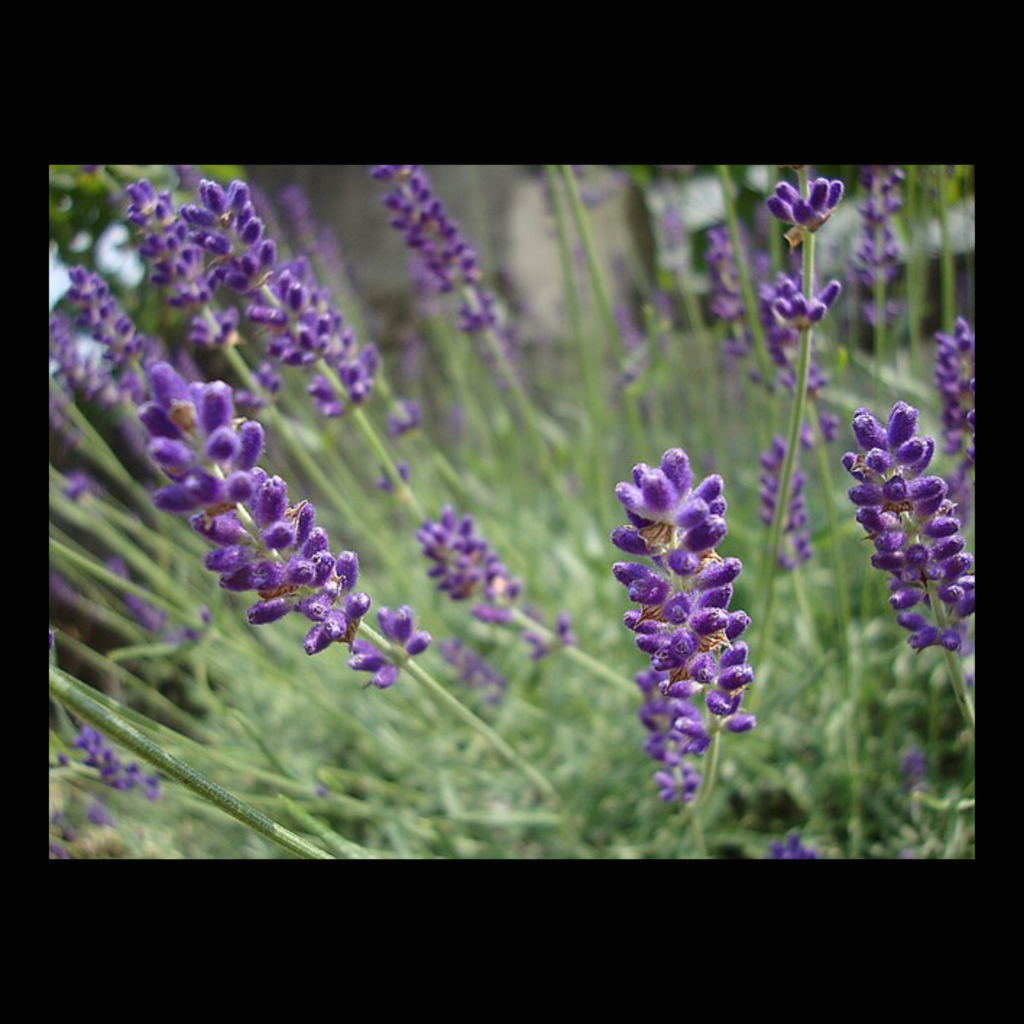
| Feature | SPANISH LAVENDER | ENGLISH LAVENDER |
|---|---|---|
| Flower shape | Pinecone-shaped with “crown” on top | Long, slender spikes, no crown |
| Bracts | Large, upright, petal-like (the “bunny ears”) | Small, inconspicuous |
| Scent | Camphoraceous, resinous, sharp | Sweet, perfumey, classic lavender |
| Hardiness | Less cold-hardy (zones 8-9) | More cold-hardy (zones 5-8) |
| Heat tolerance | Excellent (built for it) | Moderate |
| Bloom time | Spring to early summer | Mid to late summer |
| Culinary use | NO – too much camphor | YES – culinary standard |
| Medicinal potency | Higher (more camphor/antiseptic) | Lower (gentler) |
| Species | Lavandula stoechas | Lavandula angustifolia |
The Quick Tests:
- Check the top: Crown/bunny ears = Spanish, No crown = English
- Smell it: Camphor/sharp = Spanish, Sweet/perfumey = English
- Check bloom time: Spring = Spanish, Summer = English
WHY IT’S CALLED “BUTTERFLY LAVENDER”
Two reasons:
1. The Bracts Look Like Butterfly Wings
Those distinctive petal-like bracts on top of the flower head flutter in the breeze and resemble butterfly wings. In some regions, people call it “Butterfly Lavender” for this reason.
2. It Attracts Butterflies
Spanish Lavender is a powerful pollinator magnet. Butterflies, bees, and other pollinators love it – the nectar is accessible and abundant throughout its long bloom period.
Why “Spanish” Lavender?
Despite being native across the Mediterranean (not just Spain), it earned the name “Spanish Lavender” in England because early specimens were imported from Spain. It’s also called “French Lavender” in some regions, which adds to the confusion.
The ancient name “Stoichas” comes from the Stoechades Islands (Îles d’Hyères) off the southern coast of France, where it grew wild in abundance.
WHERE TO FIND SPANISH LAVENDER
Habitat:
- Wild (native range): Mediterranean hillsides, rocky slopes, garrigue (scrubland)
- Cultivated: Gardens, xeriscapes, herb gardens, containers
- Prefers: Full sun, poor rocky soil, excellent drainage
- Common in: Mediterranean-climate regions (California, Australia, South Africa)
Season:
- Blooms: Spring to early summer (March-June in Northern Hemisphere)
- Sometimes: Repeat bloom in fall if deadheaded
- Foliage: Evergreen in mild climates
Distribution:
- Native: Mediterranean Basin – Spain, Portugal, France, Italy, Greece, North Africa
- Naturalized: Parts of Australia, California
- Cultivated: Worldwide in suitable climates (zones 8-9, sometimes zone 7 with protection)
Climate Requirements:
- Heat: Loves it – thrives in hot, dry summers
- Cold: Less tolerant than English Lavender (damaged below 10-15°F)
- Humidity: Hates it – prone to fungal issues in humid climates
- Best in: Mediterranean, semi-arid, or desert climates
EDIBILITY
NOT RECOMMENDED FOR CULINARY USE.
Unlike English Lavender (Lavandula angustifolia), Spanish Lavender is too high in camphor to be pleasant or safe for regular culinary use. The flavor is harsh, medicinal, and overpowering.
Why not edible:
- High camphor content (can be toxic in quantity)
- Harsh, resinous flavor
- Historically used medicinally, not culinarily
If you want culinary lavender: Use English Lavender (L. angustifolia) – it’s the standard for cooking, baking, and teas.
MEDICINAL USES (Historical & Traditional)
Disclaimer: I’m not a doctor. This is historical and traditional information, not medical advice.
Spanish Lavender has been used medicinally since ancient times. The Greeks and Romans documented it extensively.
Traditional Applications:
Antiseptic & Wound Care:
- Use: Strong decoction used to clean wounds, burns, skin ulcers
- Why: High camphor and other antimicrobial compounds
- Historical: Roman soldiers used it to dress battle wounds
- Method: Boil 2 handfuls of flowering tops in 1 quart water for 15 minutes, cool, apply topically
Respiratory Issues:
- Use: Expectorant for chest congestion, coughs, lung issues
- Why: Camphor acts as a powerful expectorant
- Traditional: Decoction or steam inhalation
- Caution: Strong – use in moderation
Headaches & Mental Fog:
- Use: Tea or tincture for headaches, mental clarity
- Historical: Pliny the Elder cited it for “melancholy” and “worrisome headaches”
- Traditional belief: It “opens the brain” and clears mental fog
Nervine (Nervous System Support):
- Use: Calming, sleep aid
- Method: Dried flowers in sachets under pillows
- Traditional: “Lavender wands” for insomnia
Digestive Aid:
- Use: Small doses for colic, stomach pain, gas
- Historical: Galen recommended it mixed with wine for stomach issues
- Caution: High camphor – use sparingly
Fumigant/Air Purifier:
- Use: Burned or strewn on floors to disinfect air
- Historical: Used during plague outbreaks to “sweeten the air”
- Why: Antimicrobial volatile oils
Emmenagogue:
- Use: Stimulates menstrual flow
- WARNING: Avoid during pregnancy for this reason
Active Constituents:
- Camphor (high) – antiseptic, expectorant, stimulant
- Linalool – calming, antimicrobial
- 1,8-Cineole – expectorant, decongestant
- Fenchone – expectorant
- Various terpenes – antimicrobial, anti-inflammatory
Preparation Methods:
ANTISEPTIC WASH:
- Ingredients: 2 handfuls fresh or dried flowering tops, 1 quart water
- Method: Boil 15 minutes, strain, cool completely
- Use: Topical wash for wounds, burns, skin issues
- Storage: Refrigerate, use within 3 days
TINCTURE:
- Ingredients: Fresh flowering tops, 70% alcohol (vodka or grain alcohol)
- Ratio: 1 part herb to 5 parts alcohol
- Method: Macerate 3 weeks, shaking daily, strain
- Dose: 5-10 drops in water (historical dose for headaches)
- Use: Internally for headaches, topically for muscle aches
SLEEP SACHET:
- Method: Dry flowering tops completely, place in small cloth bags
- Use: Under pillow or in drawers
- Benefit: Moth repellent, sleep aid
- Duration: Scent lasts 2-3 years
STEAM INHALATION:
- Method: Handful of fresh or dried flowers in bowl, pour boiling water, cover head with towel, inhale steam
- Use: Respiratory congestion, sinus issues
- Caution: Keep eyes closed, don’t burn yourself
⚠️ SAFETY WARNINGS
PREGNANCY:
- Avoid internal use – historically used to stimulate menstruation
- Potentially uterine-stimulating
CAMPHOR CONTENT:
- High camphor – much higher than English Lavender
- Internal overuse can cause dizziness, nausea, “narcotic effects”
- Stick to documented doses – this isn’t English Lavender
- Not for long-term internal use
PET TOXICITY:
- Toxic to cats and dogs if ingested in quantity
- Linalool and camphor are the problematic compounds
- Especially dangerous: Concentrated essential oils
- Keep away from pets
TOPICAL:
- Patch test first – can cause skin irritation in sensitive individuals
- Dilute essential oil – never apply undiluted to skin
HARVESTING SPANISH LAVENDER
When to Harvest:
- For medicine: When flowers are in full bloom (spring/early summer)
- Best time: Morning after dew has dried but before heat of day
- Peak oils: Just as flowers open
How to Harvest:
- Cut stems 6-8 inches below flower heads
- Use sharp scissors or pruners
- Don’t take more than 1/3 of the plant at once
- Leave enough for the plant to continue blooming
Drying:
- Bundle stems with rubber band (they shrink as they dry)
- Hang upside down in warm, dark, well-ventilated space
- OR: Lay on screens in single layer
- Dry until: Stems snap easily, flowers are crispy
- Time: 1-2 weeks depending on humidity
Storage:
- Strip flowers from stems once dry
- Store in airtight containers (glass jars ideal)
- Keep in dark place (light degrades oils)
- Shelf life: 1-2 years for best potency
- Check for: Moisture (causes mold), loss of scent (loss of potency)
GROWING SPANISH LAVENDER
From Seed:
- Difficulty: Moderate
- Germination: Slow and erratic (2-4 weeks)
- Method: Surface sow (needs light), keep moist but not wet
- Better option: Buy starts or propagate from cuttings
From Cuttings:
- Best time: Spring or fall
- Method: 3-4 inch semi-hardwood cuttings, remove lower leaves, dip in rooting hormone, plant in sandy mix
- Success rate: Good (better than seed)
Growing Conditions:
SOIL:
- Type: Poor, sandy, rocky – the WORSE the better
- Drainage: EXCELLENT – this is critical
- pH: Neutral to alkaline (6.5-8.0)
- Fertility: Low – don’t fertilize (reduces oil production)
SUN:
- Requirement: Full sun – minimum 6 hours, prefers 8+
- Shade tolerance: None – leggy and won’t bloom
WATER:
- Once established: Drought-tolerant
- Young plants: Water regularly until established
- Mature plants: Water deeply but infrequently
- Rule: Let soil dry completely between waterings
- Overwatering kills it
TEMPERATURE:
- Heat: Loves it – thrives in hot, dry summers
- Cold: Hardy to zones 8-9 (some cultivars to zone 7 with protection)
- Below 10-15°F: Damage likely
- Frost: Some tolerance, but not extended freezes
Pruning:
- When: After first flush of blooms
- How much: Cut back by 1/3
- Why: Prevents woodiness, encourages second bloom, maintains compact shape
- Don’t: Cut into old wood (won’t regrow)
Garden Considerations:
PROS:
- Drought-tolerant once established
- Pollinator magnet
- Deer and rabbit resistant
- Insect repellent (moths, mosquitoes)
- Evergreen in mild climates
- Long bloom period
- Low maintenance
CONS:
- Less cold-hardy than English Lavender
- Hates humidity (fungal issues)
- Requires excellent drainage (dies in wet soil)
- Not culinary
- Can get woody and unproductive without pruning
Best Uses in Garden:
- Xeriscaping
- Rock gardens
- Mediterranean gardens
- Containers (with excellent drainage)
- Pollinator gardens
- Herb gardens (medicinal section)
- Edges and borders
SPANISH LAVENDER VS. OTHER LAVENDERS
There are about 45 species of lavender. Here’s how Spanish stacks up against the common ones:
| Species | Common Name | Hardiness | Scent | Culinary? | Distinctive Feature |
|---|---|---|---|---|---|
| L. stoechas | Spanish/Butterfly | Zones 8-9 | Camphor/sharp | NO | “Bunny ear” bracts on top |
| L. angustifolia | English/True | Zones 5-8 | Sweet/classic | YES | Long, slender spikes |
| L. x intermedia | Lavandin | Zones 5-9 | Strong/camphor | Sometimes | Large, branched spikes |
| L. dentata | French/Fringed | Zones 8-9 | Rosemary-like | NO | Toothed leaves |
Spanish Lavender is the one with the crown.
CULTURAL & HISTORICAL SIGNIFICANCE
Ancient Use:
- Greeks and Romans: Called it “Stoichas”
- Dioscorides: Documented medicinal uses in De Materia Medica
- Galen: Recommended for poisoning, stomach issues
- Pliny the Elder: Cited for headaches and melancholy
Medieval & Renaissance:
- Wound care: Standard in military medicine
- Plague doctors: Burned as fumigant, stuffed in beak masks
- Monastic gardens: Grown for medicine and air purification
Symbolism:
- Resilience: Thrives in harsh conditions
- Purification: Historical use as fumigant
- Protection: Believed to ward off evil, disease, insects
FINAL THOUGHTS
Spanish Lavender is the tough, medicinal cousin of the lavender family. It’s not the one you bake with or put in tea for a gentle bedtime ritual – it’s the one you use when you need something strong.
Those distinctive “bunny ears” make it unmistakable. That sharp camphor scent tells you it means business. And its ability to thrive in brutal heat and terrible soil makes it valuable in climates where English Lavender would give up.
If you’re growing it, give it what it wants: sun, heat, rocky soil, and excellent drainage. Don’t baby it. Don’t fertilize it. Let it be what it is – a tough Mediterranean survivor.
And if you harvest it for medicine, respect the potency. This isn’t gentle. It’s been cleaning wounds and clearing lungs since Roman soldiers marched through Gaul.
Learn the crown. Know the camphor scent. Don’t confuse it with culinary lavender.
And remember – not all lavender smells like lavender sachets.
For other lavender species, see the Flora Archive. For other drought-tolerant medicinal plants, see Rosemary and Sage posts.