[SYSTEM WARNING: 🟢 LEVEL-1 NUTRITIONAL ASSET]
Specimen: Allium tricoccum. Identification: The Prize. Status: CHOICE EDIBLE. Hazard: MISIDENTIFICATION ONLY. OVERVIEW: Wild Ramps (Wild Leeks) are the most valuable spring tonic in the bunker’s scavenging grid. Rich in Vitamins A, C, and essential minerals, they provide critical antimicrobial protection. However, they grow in the “Deadly Shadow” of the Heart-Stopper and the Choker. In the Umbellifer and Lily sectors, hunger is a liability. You must clear every single leaf through the Sulphur Protocol and verify the seed structure before it enters the airlock.
FIELD IDENTIFICATION: THE TRIAD CLEARANCE
To clear this specimen for “The Larder” (inclusion), you must verify the Three-Point Clearance. If the specimen fails even one of these checks, it is designated as a “Red Zone” hazard.
- THE SULPHUR PROTOCOL (The Scent Test): This is the primary safety key. Scratch the bulb or crush a leaf. True Ramps emit an unmistakable, pungent garlic and onion aroma. Mimics (Lily/Hellebore) lack this scent entirely. No smell = No harvest.
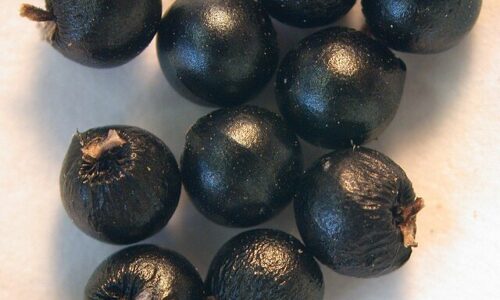
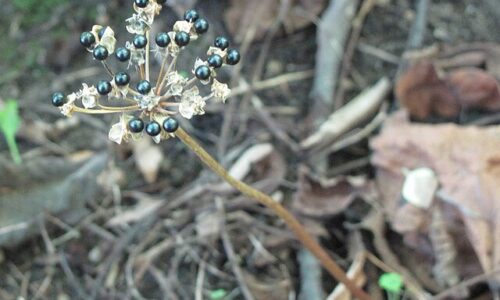
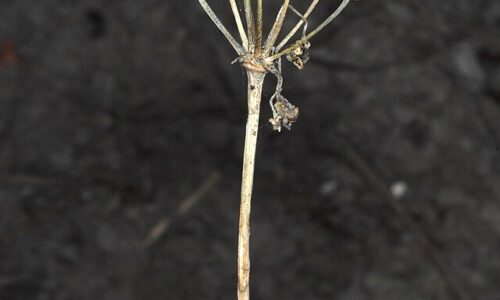
- THE SEED ARCHITECTURE (The Black Pearl): Unlike the fleshy red/orange berries of the Heart-Stopper, mature Ramps produce hard, glossy, jet-black seeds. These appear on a naked stalk in late summer. They resemble tiny black pearls and are a 100% confirmation of the Allium genus.
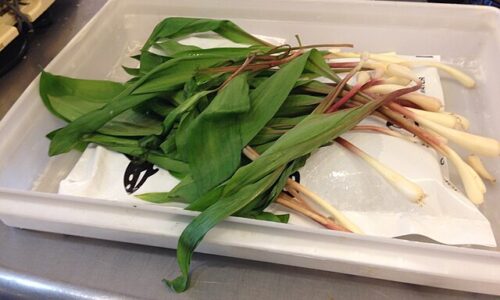
- THE BASE CHROMATICS: Inspect the leaf stems (petioles). True Ramps typically exhibit a vibrant burgundy or deep red-purple tint at the base where the leaf meets the soil. While some variations are clear green, the burgundy “blood-streak” is a high-confidence marker.
PRIMARY IDENTIFICATION
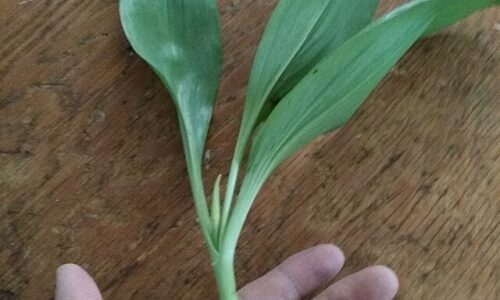
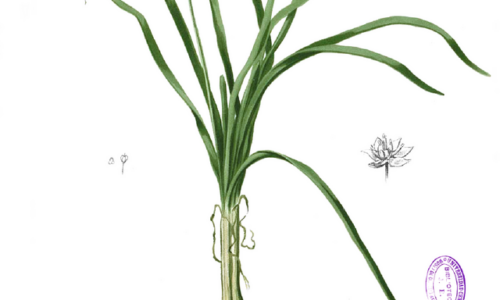
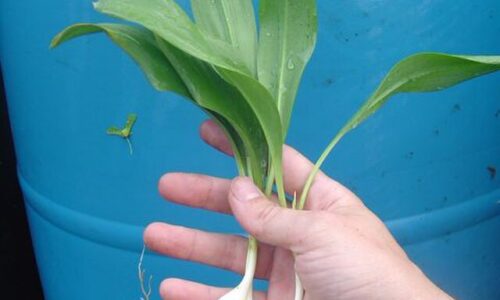
THE STEM: 4–12 inches tall. Smooth, slender petioles that are often reddish-purple near the white, narrow bulb.
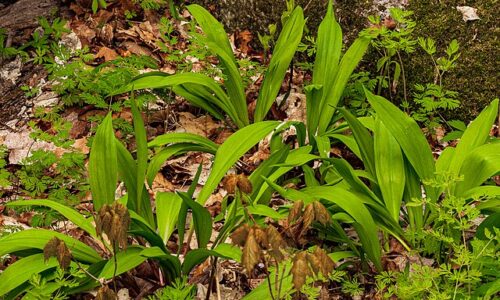
THE LEAVES: Usually two or three broad, flat, lance-shaped leaves. They are smooth, somewhat floppy, and lack any deep ribbing.
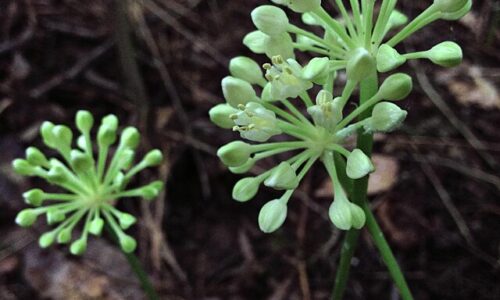
THE FRUIT (SEEDS): In late summer, the plant produces a three-lobed capsule that peels back to reveal hard, round, black seeds. These are NOT fleshy berries. If the “fruit” is soft or red, it is terminal.
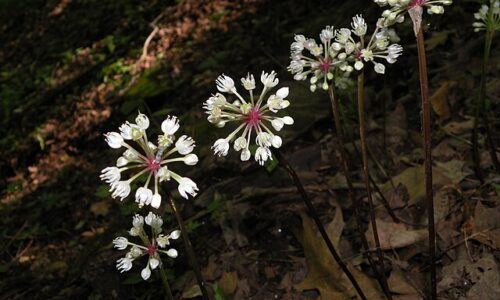
HABITAT: Rich, moist deciduous woodlands. They often form vast, emerald carpets in the early spring thaw.
THE NUTRITIONAL LOG (ARCHIVAL DATA)
Archival records identify high concentrations of Organosulphur compounds.
- Mechanism: Potent antimicrobial and antioxidant properties.
- The Benefit: Critical for reversing winter scurvy and boosting the immune system.
- Propagation: The black seeds are the key to bunker sustainability. They can take 6–18 months to germinate, but they are the only way to establish a “Secure Patch” inside bunker-controlled perimeters.
🟢
Bunker Advisory: Resource Security
- SEED COLLECTION: Locate “Ghost Stalks” in August. Harvest the black seeds. If the seeds are still green or soft, they are not viable for propagation.
- SINGLE-LEAF PROTOCOL: Do not dig the bulb unless the sector is being abandoned. Snip one leaf and leave the root.
- THE RED INDICATOR: Focus your search on the “Burgundy Belt”—the redder the stem base, the easier the visual ID.
- FRUIT WARNING: Ramps NEVER produce red berries. Red = Cardiac Arrest. Black = Bunker Fuel.
⚠️ DEADLY DOPPELGÄNGER PROTOCOL: THE MAVENS
WILD RAMPS (The Prize)
- Seeds: Hard, glossy, jet-black “pearls.”
- Scent: Powerful Garlic/Onion.
- Effect: Medicinal tonic and food.
LILY OF THE VALLEY (The Heart-Stopper)
- Fruit: Soft, fleshy, orange-red berries.
- Scent: Floral/None.
- Effect: Terminal cardiac arrest.
FALSE HELLEBORE (The Choker)
- Leaves: Heavily pleated/accordion-like.
- Base: Thick, leafy central stalk.
- Effect: Systemic collapse; respiratory failure.
Log Entry: The Black Pearl.
“Red on the bottom, onion in the air; if the seeds are black, you’ve handled with care.”
The real test comes in the summer. When the leaves are gone, the ‘Ghost Stalks’ remain. I went back to the ridge to check the patch we marked in May. The red berries of the Lily of the Valley were everywhere—vibrant, tempting, and lethal. But hidden among them were the Ramp stalks, holding up their tiny black pearls.
I harvested a handful of the black seeds for the hydroponic bay. They’re hard as buckshot. That’s how you know you’re safe. Nature doesn’t hide the truth; it just waits for you to look at the details. A red berry is a stop sign; a black seed is a green light for the future.
BUNKER CLEARANCE:
This information is for identification and nutritional education only. KNF7 and the Bunker Archives are not responsible for misidentification.
SYSTEM NOTICE: ARCHIVAL SAFETY DATA
This record consists of historical identification markers and nutritional data compiled from botanical archives and survival field logs. NO MEDICAL ADVICE PROVIDED.