
[RESOURCE IDENTIFIED > AUTUMN SQUILL]
Specimen: Prospero autumnale. Identification: Starry Squill / Autumn Hyacinth. Status: TOXIC / IRRITANT / LEVEL-5 HAZARD. Hazard: Contact Dermatitis / Cardiac Glycoside Toxicity.
CROSS-REFERENCE PROTOCOL
⚠️ SECTOR DISTRACTION: This plant often grows in the same dry, rocky “Saffron Sectors.” Its purple hue acts as a visual lure. Scouts often harvest this thinking it is a medicinal spike. Cross-reference with the [PURPLE SPIKE TRAP] and [RESOURCE > SAFFRON] archives.
FIELD IDENTIFICATION
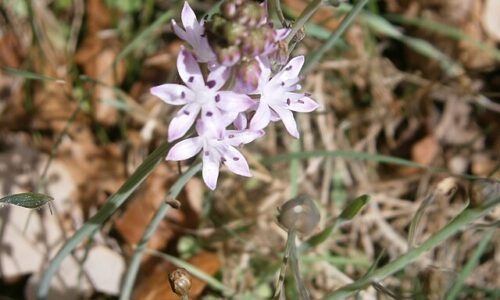
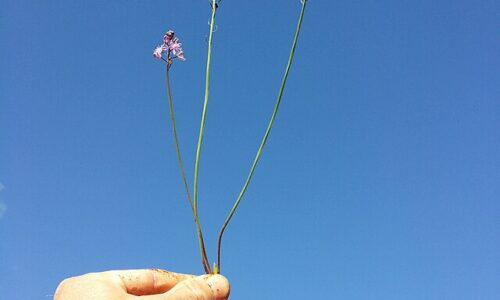
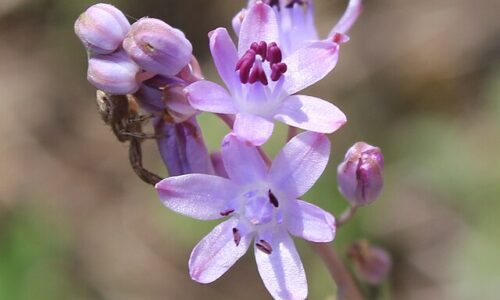
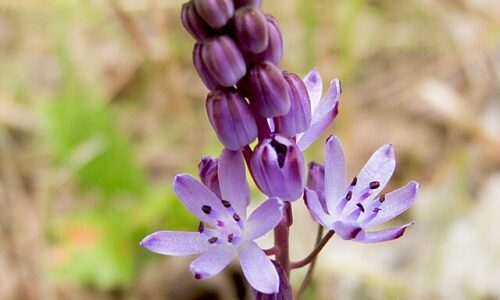
The Autumn Squill does not grow as a single cup-shaped flower like a Crocus. Instead, it produces a “raceme”—a vertical stalk featuring dozens of tiny, star-shaped flowers. It is a master of camouflage in rocky terrain.
Primary Identification Markers:
- The Flower Spike: A central leafless stem (scape) topped with a cluster of 6-petaled, star-like flowers. Colors range from lilac to bluish-purple.
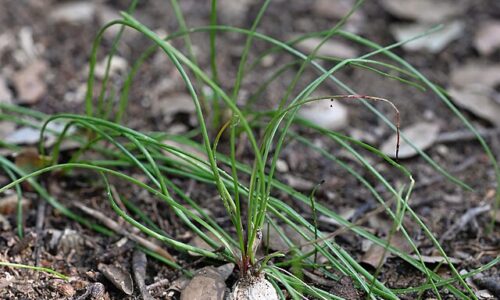
- The Foliage: Very narrow, needle-like leaves that usually appear after the flowers begin to bloom. They look like thin tufts of grass.
- The Anthers: The center of each tiny flower has purple to blackish anthers, unlike the bright yellow stamens of the Crocus family.
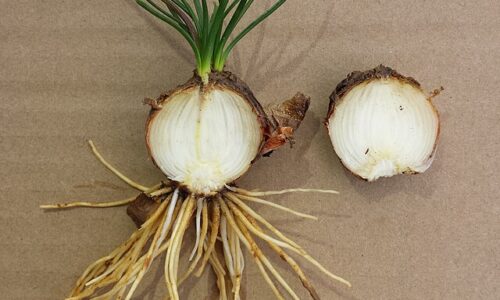
- The Bulb: A small, ovoid bulb with papery skins. Warning: Handling the bulb with bare hands often triggers an immediate allergic reaction.
THE TOXICOLOGY LOG: THE BLISTER & THE BEAT
Autumn Squill contains calcium oxalate crystals (raphides) and cardiac-active compounds. It is a dual-threat toxin affecting both the skin and the heart.
- “Hyacinth Itch”: Physical contact with the sap or crushed bulb causes “Contact Dermatitis.” Symptoms include intense itching, burning, and the formation of small, fluid-filled blisters.
- Cardiac Impact: Ingestion affects the heart rate similarly to Digitalis. It can cause heart palpitations, skipped beats, and in high doses, cardiac arrest.
- Gastrointestinal: Triggers violent purging, abdominal pain, and internal inflammation.
HISTORICAL APPLICATIONS (REJECTED)
In ancient Greek medicine, it was used as a diuretic and for “dropsy” (edema). However, because the toxic dose is nearly identical to the medicinal dose, it was abandoned. Bunker Protocol: DO NOT USE. The risk of heart failure is too high for field-expedient medicine.
| ⚠️ |
Bunker Advisory: The Starry Trap |
- GLOVE REQUIREMENT: Never handle Squill bulbs without protection. The needle-like crystals will penetrate the skin and cause a 48-hour “burning” rash.
- FLOWER GEOMETRY: True Saffron is a cup. Autumn Squill is a spike of stars. If the purple flowers are star-shaped and multiple on one stem, it is Squill.
- DECONTAMINATION: If sap touches the skin, wash immediately with cool water and vinegar to help dissolve the crystals. Do not rub; rubbing pushes the needles deeper.
BUNKER CLEARANCE
“Stars on a stick with a black-hearted center, a garden of itching where no scout should enter. Leave the Squill in the rocks where it grows, or pay with your heart and the skin on your toes.” Archive complete. KNF7 and the Bunker Archives are not responsible for cardiac incidents.
Historical data compiled from Greek herbals and toxicology reports. NO MEDICAL ADVICE PROVIDED. Skin and heart hazards confirmed.