
Parts, Types, and Structure
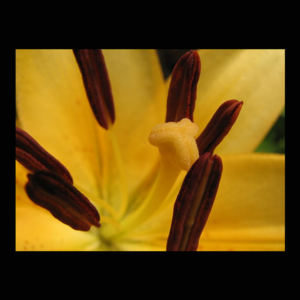
Flowers aren’t just pretty – they’re identification tools. The number of petals, the arrangement of stamens, whether the ovary sits above or below the petals – these details can be the difference between safely harvesting a plant or accidentally poisoning yourself.
This is especially critical when dealing with plants that have deadly look-alikes. Saffron has 3 stamens; Autumn Crocus has 6. That difference is life or death. You need to know what you’re looking at.
Let’s break down flower anatomy, types, and arrangements so you can use flowers as reliable identification markers.
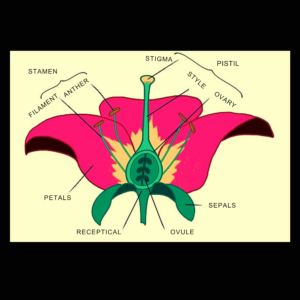
BASIC FLOWER ANATOMY
A complete flower has four main parts in whorls (circles):
THE FOUR WHORLS (From Outside to Inside):
1. CALYX (Sepals)
- Outermost whorl
- Usually green, leaf-like structures
- Protect the flower bud before it opens
- Individual parts called sepals
- Collectively called the calyx
2. COROLLA (Petals)
- Second whorl
- The showy, colored parts
- Attract pollinators
- Individual parts called petals
- Collectively called the corolla
3. ANDROECIUM (Stamens – Male Parts)
- Third whorl
- Produce pollen
- Each stamen has:
- Filament: Stalk
- Anther: Pollen-producing tip
- Collectively called the androecium
4. GYNOECIUM (Pistil/Carpels – Female Parts)
- Innermost whorl
- Receive pollen and produce seeds
- Parts of the pistil:
- Stigma: Sticky top that receives pollen
- Style: Tube connecting stigma to ovary
- Ovary: Contains ovules (become seeds after fertilization)
- Collectively called the gynoecium or pistil
Complete Flower: Has all four parts (sepals, petals, stamens, pistil)
Incomplete Flower: Missing one or more parts
Perfect Flower: Has both stamens AND pistil (both male and female parts)
Imperfect Flower: Has only stamens OR pistil (either male or female, not both)
Why this matters: Counting stamens is critical for some identifications. Saffron = 3 stamens. Autumn Crocus = 6 stamens. You need to know what you’re counting.
THE CRITICAL PARTS FOR IDENTIFICATION
PETALS
Number of Petals:
This is often the FIRST thing to check:
3 Petals:
- Monocots (lilies, iris, trillium)
- Often indicates lily family or related groups
4 Petals:
- Crucifers/Brassicas (mustard family – cabbage, radish, shepherd’s purse)
- Evening Primrose family
- Fireweed
5 Petals:
- Most common number
- Roses and rose family
- Many wildflowers
- Buttercups
6 Petals:
- Often monocots (true lilies, tulips)
- Sometimes 3+3 (actually 3 petals + 3 sepals that look like petals)
Many Petals:
- Composites (actually many tiny flowers)
- Water lilies
- Magnolias
Irregular numbers:
- Some flowers lose petals easily
- Count carefully on multiple flowers
Petal Fusion:
SEPARATE (Polypetalous):
- Each petal separate, can be pulled off individually
- Examples: Rose, Buttercup, Apple
FUSED (Gamopetalous/Sympetalous):
- Petals joined together forming a tube or cup
- Examples: Morning Glory, Bluebell, Mint flowers
Types of Fused Corollas:
- Tubular: Straight tube (Honeysuckle)
- Funnel-shaped: Tube opens gradually (Morning Glory)
- Bell-shaped (Campanulate): Bell-like (Bluebells)
- Urn-shaped: Narrow opening (Blueberry flowers)
- Two-lipped (Bilabiate): Upper and lower lip (Mint family, Snapdragon)
Why petal fusion matters: Mint family flowers are almost all two-lipped. If you see a two-lipped flower, check for square stem and opposite leaves – probably mint family.
STAMENS
The Critical Count:
For many plants, counting stamens is ESSENTIAL for safe identification:
Examples where stamen count matters:
Crocus vs. Colchicum:
- True Crocus (Saffron): 3 stamens = SAFE
- Colchicum (Autumn Crocus): 6 stamens = DEADLY
Allium (Onion family):
- 6 stamens
- If it looks like an onion flower but has different number, it’s NOT an onion
Mint Family:
- Usually 4 stamens (sometimes 2)
- Helps confirm mint family identification
How to Count Stamens:
- Open the flower carefully
- Look for the stalks with pollen sacs on top
- Count each separate stamen
- Check multiple flowers (sometimes stamens fall off or are hidden)
Stamen Position:
Exserted: Stamens stick out beyond petals (obvious, easy to see)
Included: Stamens hidden inside flower tube
Attached to petals vs. separate: Affects how you count them
Why stamens matter: This is literally life-or-death for some plants. Miscounting stamens on Crocus vs. Colchicum = fatal mistake. ALWAYS COUNT STAMENS when dealing with look-alikes.
PISTIL (STIGMA/STYLE/OVARY)
Number of Pistils:
- Can be 1 or many
- Multiple pistils = often rose family
Stigma Types:
Simple: Single, undivided
Lobed: Split into 2-3+ sections
Feathery: Branched, feathery appearance
Styles:
Single: One style per pistil
Multiple: Several styles from one ovary
Branched: Style splits into multiple stigmas
For Saffron identification:
- 3 long, bright red stigmas (parts of the pistil)
- These are what you’re harvesting
- If stigmas are short, yellow, or different number = NOT saffron
Ovary Position:
Superior (Hypogynous):
- Ovary sits ABOVE the attachment point of petals/sepals
- Free-standing
- Examples: Buttercups, Lilies
Inferior (Epigynous):
- Ovary BELOW the attachment point
- Appears to be beneath the flower
- Examples: Apples, Cucumbers, Sunflowers
Half-Inferior (Perigynous):
- Ovary partially enclosed
- Examples: Roses, Cherries
Why ovary position matters: It’s a family-level trait. All members of a plant family usually share the same ovary position. Helps narrow identification.
FLOWER SYMMETRY
RADIAL SYMMETRY (Actinomorphic/Regular)
Description: Can be divided into equal halves in multiple ways
What it looks like: Round, star-like, symmetrical in all directions
Examples:
- Roses (5-way symmetry)
- Buttercups
- Lilies
- Most “regular” flowers
BILATERAL SYMMETRY (Zygomorphic/Irregular)
Description: Can be divided into equal halves in only ONE way (left and right)
What it looks like: Has a distinct top and bottom, left and right
Examples:
- Orchids
- Snapdragons
- Peas and beans (legume family)
- Mints (two-lipped flowers)
- Violets
Why symmetry matters:
- Bilateral symmetry often indicates advanced pollination strategies
- Many bilateral flowers are in specific families (legumes, orchids, mints)
- Quick way to narrow down plant family
FLOWER ARRANGEMENT (INFLORESCENCE)
How flowers are arranged on the plant:
SOLITARY
Description: Single flower per stem
Examples: Tulip, Poppy, Trillium
RACEME
Description: Flowers along an unbranched stalk, each with its own small stalk (pedicel)
What it looks like: Flowers along a central stem, opening from bottom to top
Examples: Snapdragon, Lupine, Foxglove
SPIKE
Description: Like raceme, but flowers directly attached (no pedicels)
What it looks like: Flowers packed along central stem
Examples: Plantain, Lavender, some Vervains
PANICLE
Description: Branched raceme
What it looks like: Multiple racemes branching off main stem
Examples: Oats, some Grasses, Lilac
CORYMB
Description: Flat-topped or rounded cluster, lower flowers have longer stalks so all flowers reach same height
What it looks like: Flat top, but stalks of different lengths
Examples: Hawthorn, Yarrow
UMBEL
Description: Flower stalks radiate from one point like umbrella spokes
What it looks like: Umbrella-shaped
Examples:
- Simple umbel: Queen Anne’s Lace, Dill, Parsley
- Compound umbel: Carrot family (multiple umbels branching from central point)
CRITICAL for safety: Carrot family (Apiaceae/Umbelliferae) includes both edible plants (carrots, parsley) and deadly toxic plants (Water Hemlock, Poison Hemlock). ALL have umbel flower arrangement. If you see umbels, be EXTREMELY careful about identification.
HEAD (Capitulum)
Description: Dense cluster of flowers on disc
What it looks like: What looks like one flower is actually many tiny flowers
Examples:
- Composite flowers: Sunflower, Dandelion, Daisy
- Each “petal” may be a separate ray flower
- Center disc is made of many tiny disc flowers
CYME
Description: Branched cluster where central flower opens first
What it looks like: Branching flat-topped cluster
Examples: Chickweed, St. John’s Wort
CATKIN (Ament)
Description: Dense spike of small, usually wind-pollinated flowers
What it looks like: Hanging, fuzzy spike
Examples: Willow, Birch, Oak (male flowers)
Why arrangement matters:
- Umbels = Probably carrot family = EXTREME CAUTION (many deadly species)
- Two-lipped flowers in spike = Probably mint family
- Composite heads = Aster/Sunflower family
SPECIAL FLOWER TYPES
COMPOSITE FLOWERS (Asteraceae/Compositae)
What they are: What looks like one flower is actually MANY tiny flowers
Structure:
- Ray flowers: The “petals” around the edge (each is a complete flower)
- Disc flowers: The tiny flowers in the center
Examples:
- Sunflower (obvious ray + disc)
- Dandelion (all ray flowers, no disc)
- Thistles (all disc flowers, no rays)
Why this matters: You’re not looking at one flower – you’re looking at dozens or hundreds of tiny flowers clustered together. Understanding this helps you identify the huge Asteraceae family.
LEGUME FLOWERS (Fabaceae/Leguminosae)
Structure: Distinctive “pea flower” shape
- Standard (Banner): Large upper petal
- Wings: Two side petals
- Keel: Two lower petals fused together
What it looks like: Butterfly-like or pea-like
Examples: Peas, Beans, Clover, Lupine, Locust trees
Why this matters: If you see this flower structure, it’s almost certainly a legume. Many are edible (peas, beans), some are toxic (some Lupines, Laburnum).
ORCHID FLOWERS
Structure: Highly specialized
- 3 sepals (often petal-like)
- 3 petals (one modified into a “lip”)
- Stamens and pistil fused into column
What it looks like: Exotic, bilateral symmetry, often with elaborate shapes
Examples: Lady’s Slipper, various Orchids
Why this matters: Orchids are advanced plants with specific pollination strategies. The complexity helps you identify the family.
USING FLOWERS FOR IDENTIFICATION
The Flower Identification Checklist:
When examining a flower for identification:
- How many petals?
- Count carefully
- Check multiple flowers
- Are petals separate or fused?
- Try gently pulling one
- Look at base
- How many stamens?
- CRITICAL for some species
- Count carefully
- Check pollen color if needed
- Pistil details:
- How many stigmas?
- What color?
- Style length?
- Flower symmetry:
- Radial or bilateral?
- Flower arrangement:
- Solitary, raceme, umbel, spike, head?
- Size:
- Measure diameter
- Color:
- Note precisely
- Any color variations?
- Scent:
- Smell the flower
- Pleasant, unpleasant, none?
- Sepals:
- How many?
- Green or petal-like?
Critical Flower Identification Examples:
SAFFRON vs. AUTUMN CROCUS:
- Both purple autumn flowers
- Saffron: 3 stamens, 3 long red stigmas, leaves present
- Autumn Crocus: 6 stamens, short pale stigmas, no leaves
Decision: Count stamens. 3 = potentially safe. 6 = deadly.
WILD CARROT (Queen Anne’s Lace) vs. POISON HEMLOCK:
- Both have white umbel flowers
- Wild Carrot: Purple center floret, hairy stem, carrot smell
- Poison Hemlock: No purple floret, smooth stem with purple splotches, mousy smell
Decision: Multiple factors, but umbel arrangement tells you “carrot family = be very careful.”
FIREWEED vs. PURPLE LOOSESTRIFE:
- Both tall with magenta flowers
- Fireweed: 4 petals, round stem, willow-like leaves
- Purple Loosestrife: 5-7 wrinkled petals, square stem, sessile leaves
Decision: Count petals. 4 = Fireweed. 5-7 = Loosestrife.
COMMON MISTAKES
Mistake 1: Not counting stamens
- For critical identifications, you MUST count stamens
- Don’t estimate, don’t assume – count them
Mistake 2: Confusing composite flowers for single flowers
- Dandelion isn’t one flower – it’s dozens of tiny flowers
- Understanding this helps identify Asteraceae family
Mistake 3: Only looking at petal color
- Color varies (pink, white, blue forms of same species)
- Structure is more reliable than color
Mistake 4: Not checking multiple flowers
- Sometimes petals fall off
- Sometimes stamens are hidden
- Check several flowers on the plant
Mistake 5: Ignoring flower arrangement
- Umbels = carrot family = caution
- Spikes, heads, racemes all indicate different families
WHY FLOWERS MATTER FOR SAFETY
Example: The Carrot Family (Apiaceae)
This family includes:
- Edible: Carrots, Parsley, Dill, Fennel, Celery
- DEADLY: Poison Hemlock, Water Hemlock
They all have umbel flowers.
If you see umbel flowers, you know it’s carrot family. But that doesn’t tell you if it’s safe or deadly. You need OTHER features (stem, smell, leaf veins, habitat) to be certain.
The flower tells you the family. Other features tell you the species.
Example: Crocus Family
- True Crocus (safe, 3 stamens)
- Autumn Crocus/Colchicum (deadly, 6 stamens)
Both are purple autumn flowers. The stamen count is THE defining difference.
Without looking at the flower closely, you can’t tell them apart.
FINAL THOUGHTS
Flowers are not decoration – they’re data. The number of petals, the arrangement of stamens, the structure of the pistil – these are diagnostic features that can save your life.
Learn to see flowers as identification tools:
- Count petals
- Count stamens
- Note arrangement
- Check symmetry
- Identify flower type (composite, legume, umbel, etc.)
Combined with leaf, stem, and habitat information, flower details give you confident identification.
And when you’re dealing with plants that have deadly look-alikes – Saffron vs. Colchicum, Wild Carrot vs. Poison Hemlock – flower details aren’t optional. They’re essential.
Learn to look closely. Count carefully. Use the correct terminology. And never assume you know what a flower is until you’ve checked all the details.
Your life might depend on it.
For plant-specific identification, see individual profiles in the Flora Archive. For dangerous look-alikes, see Deadly Doubles. For other identification guides, see Leaf Identification and Stem Types.