
[SYSTEM WARNING: ⚠️ LEVEL-10 TOXICITY ALERT]
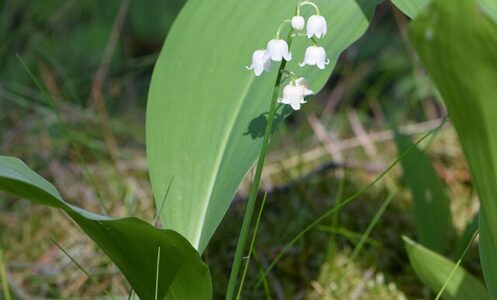
Specimen: Convallaria majalis. Identification: The Heart-Stopper. Status: EXTREMELY LETHAL. Hazard: Cardiac Arrest / Systemic Shutdown. OVERVIEW: Lily of the Valley is a deceptive, high-order cardiac toxin. While its bell-shaped flowers are iconic, its early spring leaves are a terminal trap for those seeking Wild Ramps. It does not paralyze or cause seizures; it attacks the heart’s electrical rhythm directly. If you are scavenging in shaded woodlands or old garden sites, assume any broad, green leaf without an onion scent is a hostile mimic.
FIELD IDENTIFICATION: THE TRIAD CLEARANCE
To clear this specimen for “The Grave” (exclusion), you must verify the Three-Point Clearance. If the specimen fails even one of these checks, it is designated as a “Red Zone” hazard.
- THE SCENT TEST (The “Sulphur” Protocol): Crush a small portion of the leaf. Edible Ramps emit a powerful, pungent garlic-onion aroma immediately. The Heart-Stopper has no scent or a faint, sweet floral smell. If the “kitchen” smell is missing, the plant is lethal.
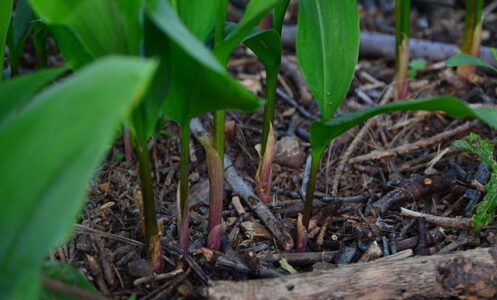
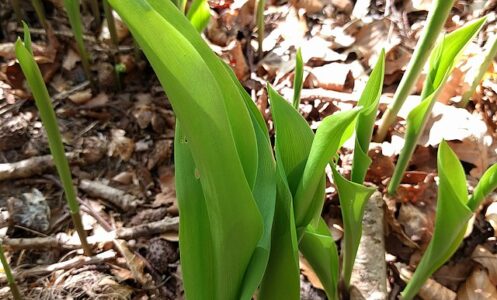
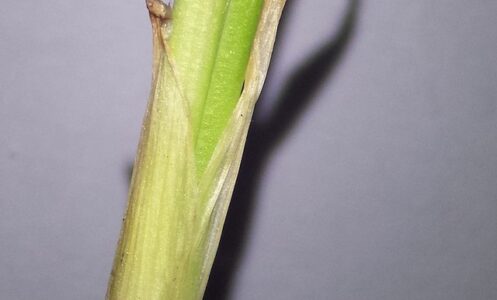
- THE BASE ARCHITECTURE: Inspect the stem at the soil line. In Lily of the Valley, the leaves wrap around each other in a tight, tubular sheath (like a rolled cigar). Edible Ramps emerge as individual stems, often with a burgundy-red tint near the bulb.
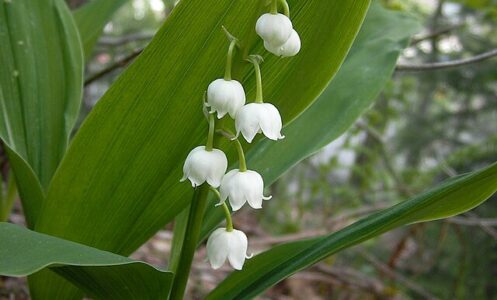
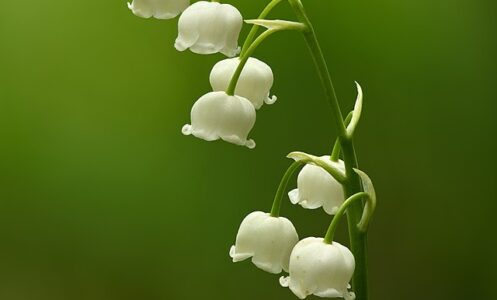
- THE FLOWER ATTACHMENT: If present, the flowers are white, nodding, bell-shaped, and grow along only one side of the central stalk. This is a 100% confirmation of a Level-10 threat.
PRIMARY IDENTIFICATION
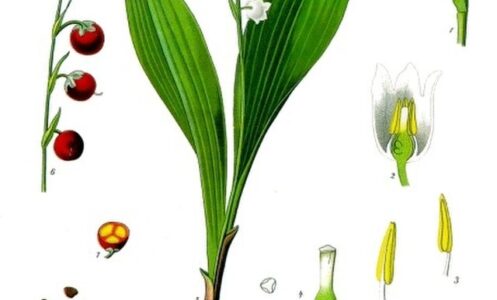
THE STEM: 6–12 inches tall. Smooth, leafless flower stalk (scape) that remains shorter than the surrounding leaves.
THE LEAVES: Usually two (sometimes three) broad, elliptical, upright leaves. They are dark green, thick, and lack the delicate texture of true Ramps.
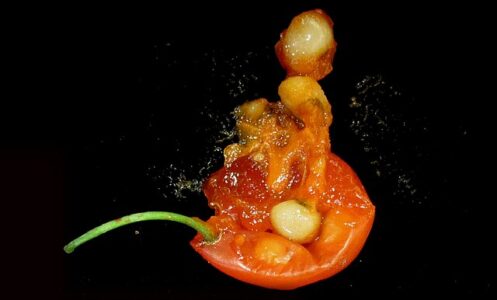
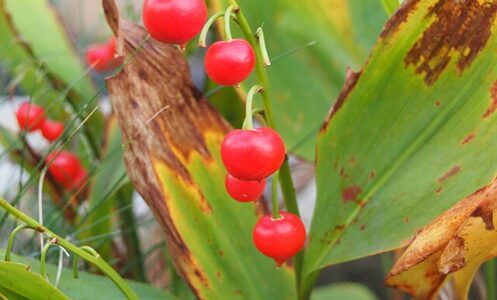
THE FLOWERS: Fragrant, white, waxy bells hanging in a row. These are replaced in late summer by bright orange-red berries.
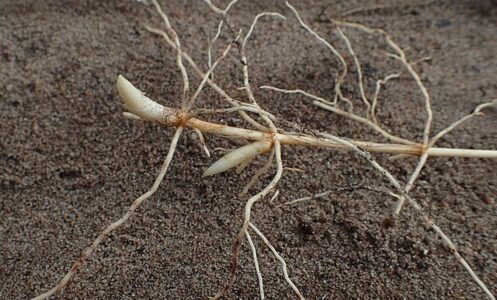
HABITAT: Shaded woodlands, thickets, and abandoned homesteads. It forms dense, invasive mats through underground rhizomes.
THE TOXICITY LOG (ARCHIVAL DATA)
Archival records identify over 30 primary toxins, categorized as cardiac glycosides.
- Mechanism: Direct inhibition of the sodium-potassium pump in cardiac muscle cells, similar to Digitalis.
- The Kill: Triggers severe bradycardia (slowed heart rate), blurred vision, and lethal heart arrhythmias.
- Fatal Dose: Ingestion of any part (leaves, berries, or flowers) can be terminal. Even drinking water from a vase containing the flowers has proven fatal.
| ⚠️ |
Bunker Advisory: Containment |
- ID MANDATORY: Never harvest woodland greens in the dark. Misidentifying a single leaf in a “Ramp patch” can contaminate an entire bunker stew.
- CONTACT RISK: Sap can cause skin irritation. Use tools to verify the “Wrap Check” at the base of the plant.
- BERRY ALERT: The autumn berries are bright red and sweet-tasting, making them a primary threat to untrained scavengers.
- ZERO CURE: There is no field-stable antidote for convallatoxin. Prevention is the only viable bunker strategy.
⚠️ DEADLY DOPPELGÄNGER PROTOCOL: THE MAVENS
The “Heart-Stopper” shares its territory with vital spring tonics. If it doesn’t smell like garlic, it’s a grave-filler.
LILY OF THE VALLEY (The Heart-Stopper)
- Scent: Floral or None. No onion smell.
- Stem: Leaves wrap around each other at the base.
- Effect: Cardiac arrest and shutdown.
WILD RAMPS (The Prize)
- Scent: Powerful, pungent Garlic/Onion.
- Stem: Leaves emerge individually; often burgundy at the base.
- Effect: Nutrient-dense tonic; antimicrobial.
FALSE HELLEBORE (The Choker)
- Leaves: Deeply pleated/ribbed like an accordion.
- Stem: Leaves wrap around a central thick stalk.
- Effect: Rapid drop in blood pressure; respiratory failure.
Log Entry: The nose knows, the heart shows.
“If it smells like a clove, it’s a treasure to trove. If it smells like a rose, keep the airlock door closed.”
I saw a patch of green under the old oak. My stomach growled—it’s been months since we had fresh leeks. I reached for a handful, but something felt wrong. The leaves were too stiff, too upright. I knelt down and performed a Snap Test.
Nothing. No garlic. No onion. Just the smell of wet dirt and crushed grass. I looked at the base; the leaves were rolled together like a cigar. If I had brought those back to the kitchen, the bunker’s heart monitor would have been flatlined by midnight. In the spring, your eyes will lie to you. Trust your nose. If it isn’t pungent, it isn’t food.
BUNKER CLEARANCE:
This information is for identification and avoidance purposes only. KNF7 and the Bunker Archives are not responsible for misidentification. Documentation of historical use is for educational context and is NOT a recommendation for use.
SYSTEM NOTICE: ARCHIVAL SAFETY DATA
This record consists of historical identification markers and toxicological data compiled from botanical archives and survival field logs. NO MEDICAL ADVICE PROVIDED.