
The Silent Assassin
⚠️ TOXICITY LEVEL: FATAL – No antidote, respiratory paralysis while conscious
If there’s one plant that foragers need burned into their memory, it’s this one. Poison Hemlock is common, widespread, and looks disturbingly similar to edible plants. It’s also one of the most toxic plants in North America, and it will kill you while you’re fully aware of what’s happening.
This is the plant that killed Socrates. Let’s make sure it doesn’t kill you.
WHAT MAKES IT DEADLY
Poison Hemlock contains coniine and related alkaloids – neuromuscular blockers that cause what’s called “ascending paralysis.”
Here’s how it kills you:
- Numbness and tingling start in your extremities
- Muscle weakness progresses upward from your legs
- Tremors, loss of coordination, difficulty moving
- Paralysis reaches your respiratory muscles
- You suffocate while remaining fully conscious and aware
- Death by respiratory failure
There is no antidote. Medical treatment is supportive only – mechanical ventilation and hoping you survive until the toxin clears your system. And that’s if you get to a hospital in time.
Fatal dose: Shockingly small. As little as 6-8 leaves or a small piece of root can be lethal. Children are at even higher risk due to smaller body size.
All parts are toxic: Leaves, stems, flowers, seeds, and roots. Fresh or dried. The toxins don’t break down with cooking or drying.
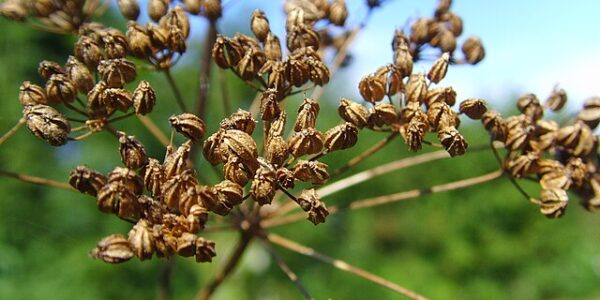
PRIMARY IDENTIFICATION
THE STEM (Your #1 Identifier):
- 3-8 feet tall (often quite tall)
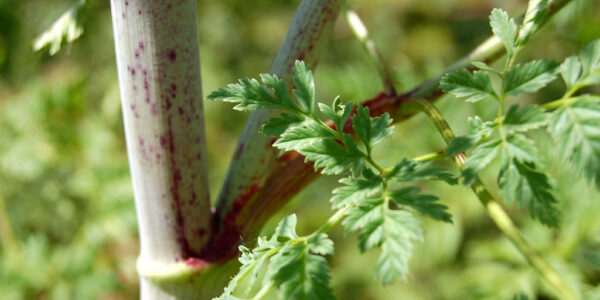
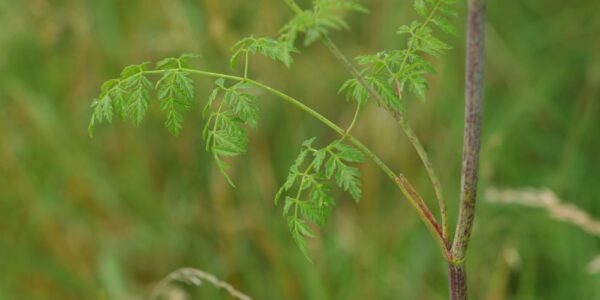
- SMOOTH and HAIRLESS – no fuzz, no texture
- HOLLOW when cut
- Distinctive PURPLE or REDDISH SPLOTCHES that look like bloodstains
- This purple mottling is your smoking gun – if you see it, walk away
THE LEAVES:
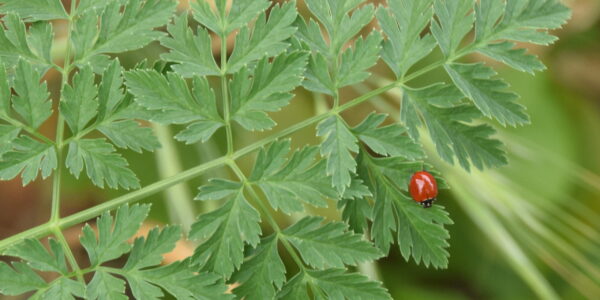
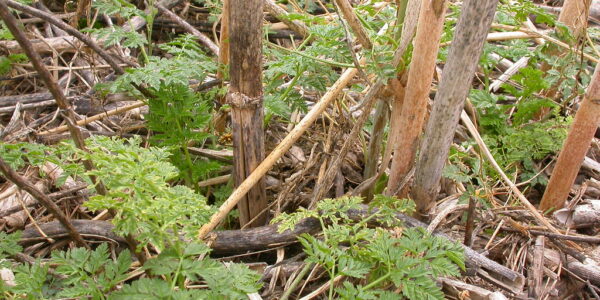
- Finely divided, lacy, triangular outline
- Look similar to parsley, carrot tops, or chervil
- SMOOTH and hairless (this distinguishes it from Wild Carrot which is hairy)
- Bright green to dark green
- Alternate arrangement along the stem
THE FLOWERS:
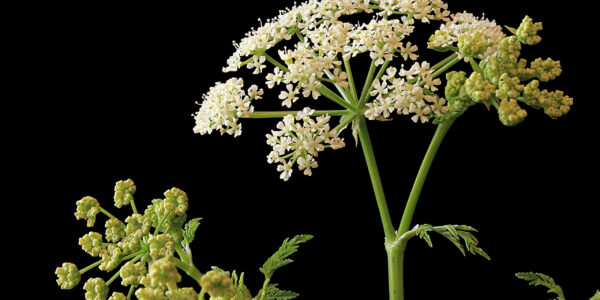
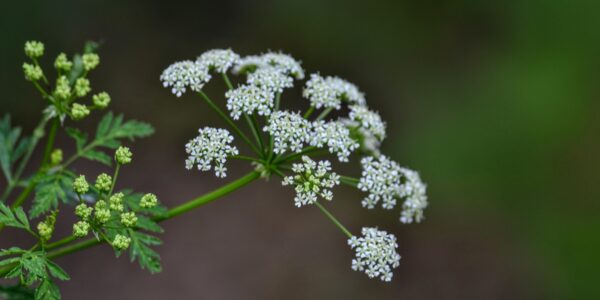
- Small white flowers in umbrella-shaped clusters (umbels)
- Bloom late spring through summer
- Each tiny flower has 5 petals
- Multiple umbels per plant
- No distinctive center floret (unlike Wild Carrot’s purple “Queen’s blood drop”)
THE SCENT:
- Crush a leaf (WEAR GLOVES)
- Smells RANK and unpleasant
- Often described as “mousy,” like mouse urine or a musty animal cage
- Some people describe it as smelling like old parsnips or damp basement
- NOT clean, NOT pleasant, NOT food-like
- If it smells good or medicinal, it’s not Poison Hemlock (might be Yarrow)
THE ROOT:
- White, fleshy taproot
- Looks deceptively edible – can resemble wild parsnip or wild carrot
- This is why people die – they dig up roots thinking they’re harvesting food
- The root is HIGHLY toxic
HABITAT:
- Disturbed soil – roadsides, ditches, field edges, vacant lots
- Prefers some moisture but not true wetlands
- Often grows in the same places as Wild Carrot and other edibles
- Extremely aggressive spreader
- Thrives in waste areas and along fences
THE DEADLY LOOK-ALIKES
Poison Hemlock is dangerous precisely because it looks like several edible or medicinal plants:
Confusable with:
- Wild Carrot / Queen Anne’s Lace – EDIBLE root (See Deadly Doubles: The Lace Trap for side-by-side comparison)
- Yarrow – MEDICINAL herb (See Deadly Doubles: The Soldier and the Assassin)
- Wild Parsnip – EDIBLE root (though causes skin burns)
- Wild Chervil – EDIBLE herb
The key differences:
- Wild Carrot has a HAIRY stem (“Queen Anne has hairy legs”)
- Yarrow has FUZZY, fibrous stems and feathery (not lacy) leaves
- Wild Parsnip is usually yellow-flowered (though can have white variants)
The one rule that will save your life: If the stem is SMOOTH and has PURPLE SPLOTCHES, it’s Poison Hemlock. Period. Leave it alone.
HISTORICAL CONTEXT
Poison Hemlock is infamous as the method of execution in Ancient Greece. Socrates was sentenced to death by drinking hemlock juice in 399 BCE. Historical accounts describe his death: numbness spreading upward from his feet while he remained conscious and conversing with his students until the paralysis reached his chest.
It’s been used as a poison, a method of execution, and a murder weapon throughout history. There’s a reason it has that reputation.
EXPOSURE RISKS
You don’t have to ingest Poison Hemlock to have a problem:
Skin contact:
- Can cause dermatitis and skin irritation
- Some people develop rashes from handling it
- Sap is more problematic than dry plant material
- ALWAYS wear gloves if you must handle it (for removal)
Inhalation:
- NEVER burn Poison Hemlock
- Smoke from burning plants contains toxic alkaloids
- Mowing or weed-whacking can aerosolize plant juices
- Wear a respirator mask if mechanically removing large quantities
Ingestion:
- This is the big one
- Even small amounts are potentially fatal
- Children are at highest risk (smaller body size + curiosity)
- Livestock deaths are common when Hemlock contaminates hay
WHAT TO DO IF EXPOSURE OCCURS
If you suspect someone has ingested Poison Hemlock:
- Call 911 IMMEDIATELY – this is a medical emergency
- Call Poison Control: 1-800-222-1222
- Do NOT induce vomiting unless directed by medical professionals
- Note the time of ingestion if known
- Bring a sample of the plant if possible (in a sealed bag, don’t touch)
- Get to a hospital – supportive care (ventilation) may be needed
Symptoms of poisoning:
- Appear 30 minutes to 3 hours after ingestion
- Nausea, vomiting, abdominal pain
- Excessive salivation
- Burning sensation in mouth and throat
- Dilated pupils
- Tremors, muscle weakness
- Confusion, dizziness
- Slowed heart rate
- Difficulty breathing
- Seizures (in severe cases)
- Respiratory paralysis
Time is critical. Poison Hemlock poisoning can progress rapidly. Do not wait to see if symptoms develop – if ingestion is suspected, seek medical help immediately.
ERADICATION & CONTROL
If you have Poison Hemlock on your property:
Small infestations (a few plants):
- Hand-pull wearing HEAVY GLOVES and long sleeves
- Get the entire taproot
- Bag all plant material (don’t compost)
- Dispose in trash, not yard waste
- Best done when soil is moist for easier root removal
- Do this BEFORE the plant flowers and sets seed
Large infestations:
- May require herbicide treatment
- Contact your local extension office for recommendations
- Mowing is NOT effective – it just stimulates regrowth and spreads seeds
- If mowing is necessary, wear a respirator to avoid inhaling aerosolized plant material
NEVER burn Poison Hemlock – the smoke is toxic.
Prevention:
- Learn to identify it at all life stages
- Teach children never to put wild plants in their mouths
- Don’t use hollow stems as “whistles” or “blowguns” (a common way children get poisoned)
- Clean tools after working in areas with Hemlock
- Wash clothes separately if you’ve been handling it
THE LIFECYCLE
Understanding when Poison Hemlock is most dangerous:
First Year (Rosette):
- Low-growing rosette of fern-like leaves
- Easily confused with edible greens
- Purple splotches may not be visible yet on immature stems
- STILL TOXIC even in rosette stage
Second Year (Flowering):
- Bolts up to 3-8 feet tall
- Produces white umbrella flowers
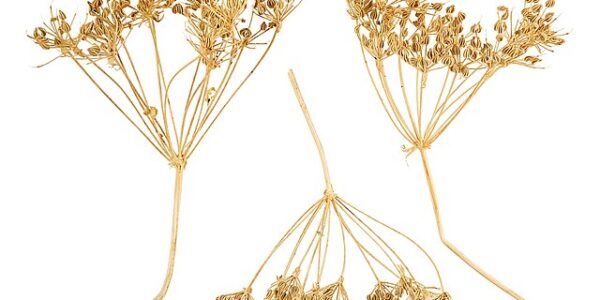
- Sets thousands of seeds
- Purple stem splotches are most visible
- This is when most people recognize it
Seeds:
- Remain viable in soil for years
- Each plant produces thousands of seeds
- This is why Hemlock spreads so aggressively
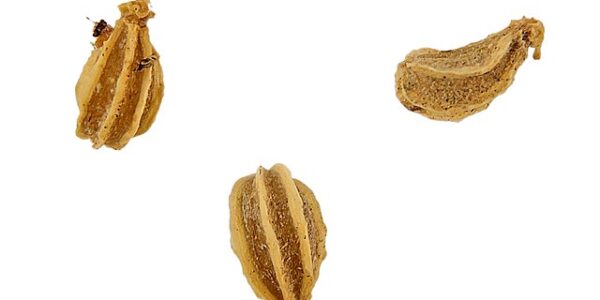
- Seeds are also highly toxic
WHY IT MATTERS
Poison Hemlock deaths still occur in North America every year. Common scenarios:
- Foragers misidentifying Wild Carrot roots
- Children making “soup” or “whistles” from hollow stems
- Homesteaders trying to harvest wild greens
- People making “wild herb tea” without proper identification
- Livestock eating contaminated hay or pasture
The pattern is always the same: someone was confident they knew what they were looking at. Overconfidence is the real killer here.
FINAL THOUGHTS
Poison Hemlock is not rare. It’s not exotic. It’s probably growing within a few miles of where you’re sitting right now. It’s common, widespread, and thrives in disturbed areas where people live and forage.
The good news? It’s actually pretty easy to identify once you know what to look for. Those purple splotches on a smooth stem are distinctive. The mousy smell is unmistakable. The lacy leaves combined with these features make a positive ID straightforward.
The bad news? It looks similar enough to edible plants that mistakes happen. And mistakes with Poison Hemlock are often fatal.
Learn it. Memorize the purple-splotched stem. Teach your kids. And when in doubt – when you have even the slightest uncertainty – leave it alone.
No wild food is worth dying for.
For look-alike comparisons, see Deadly Doubles: The Lace Trap and Deadly Doubles: The Soldier and the Assassin. For other toxic plants, see the Poison Index.