
YARROW (Achillea millefolium) & HEMLOCK(Conium maculatum)
Welcome to the most dangerous game of “spot the difference” in North American foraging. On one side: Yarrow, a battlefield medic in plant form. On the other: two species of Hemlock that will kill you in ways you really don’t want to experience.
The problem? They can look remarkably similar to the untrained eye. White umbrella-like flowers, feathery foliage, growing in similar habitats. One stops bleeding. The others stop breathing. Let’s make sure you can tell them apart.
THE PLAYERS
- Status: Medicinal ally
- Superpower: Hemostatic (stops bleeding)
- Danger Level: Safe when properly identified
- Historical Use: Battlefield medicine for 5,000+ years
POISON HEMLOCK (Conium maculatum)
- Status: Neurotoxic assassin
- Kill Method: Ascending paralysis – you stay conscious while your body shuts down
- Danger Level: FATAL – no antidote
- Famous Victim: Socrates
WATER HEMLOCK (Cicuta maculata)
- Status: The most violently toxic plant in North America
- Kill Method: Immediate, massive grand mal seizures
- Danger Level: FATAL – acts in minutes
- Location: Wet areas only (marshes, ditches, stream banks)
WHY THE CONFUSION HAPPENS
All three plants share some superficial similarities:
- White flowers in umbrella-shaped clusters
- Feathery or divided foliage
- Similar height range (1-4 feet)
- Grow in disturbed areas
- Bloom in summer
To someone casually glancing at a field guide or scrolling through plant ID apps, they can look “close enough.” But “close enough” will get you killed.
THE DEFINITIVE IDENTIFICATION GUIDE
I’m going to give you multiple ways to tell these apart, because your life depends on getting this right.
THE THREE-POINT CLEARANCE (Do ALL three tests)
TEST 1: The Crush Test (Scent)
- YARROW: Clean, medicinal, camphor-like smell. Slightly spicy, herbal. Pleasant in a “medicine cabinet” way.
- POISON HEMLOCK: Mousy, musty smell. Like old gym socks, damp basement, or spoiled vegetables. Distinctly unpleasant.
- WATER HEMLOCK: Can smell deceptively pleasant – like parsnips or carrots. This is a trap.
Rule: If it doesn’t smell clean and medicinal, DROP IT.
TEST 2: The Texture Check (Touch)
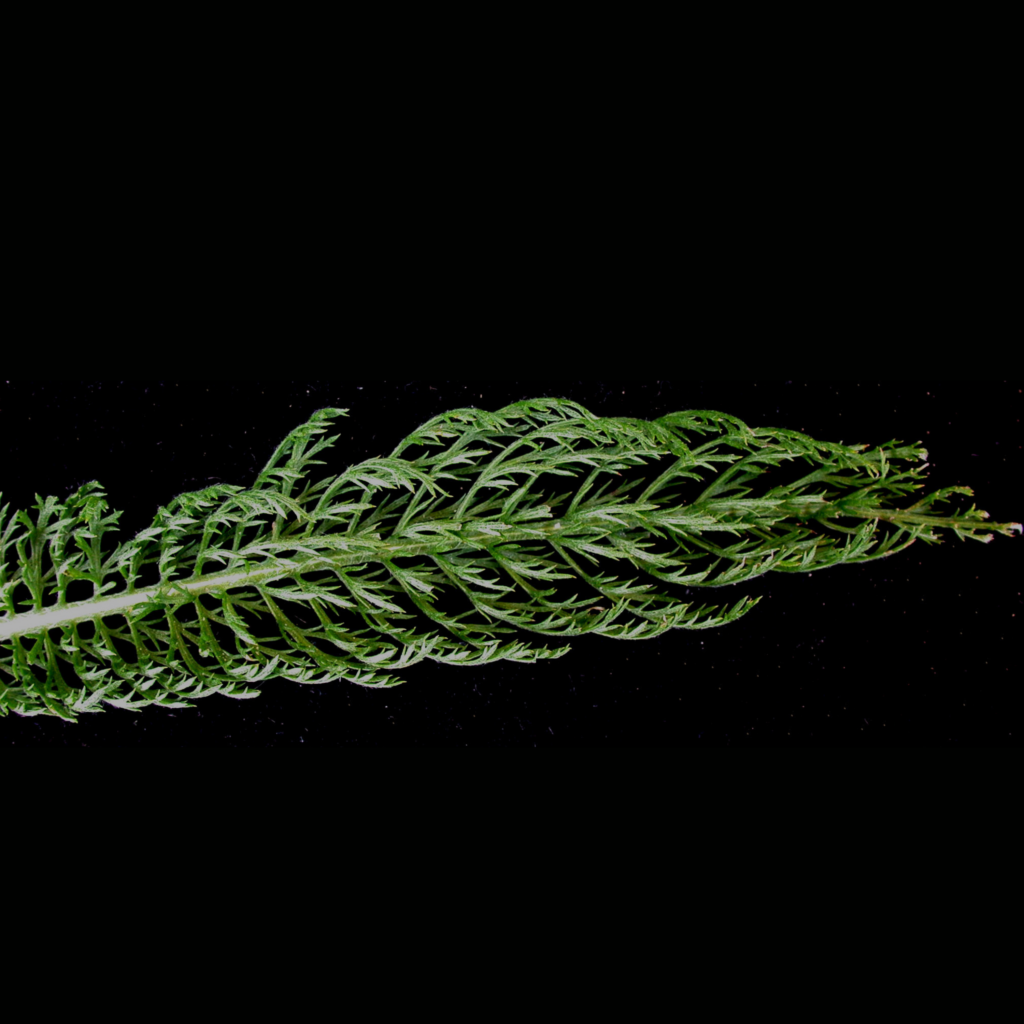
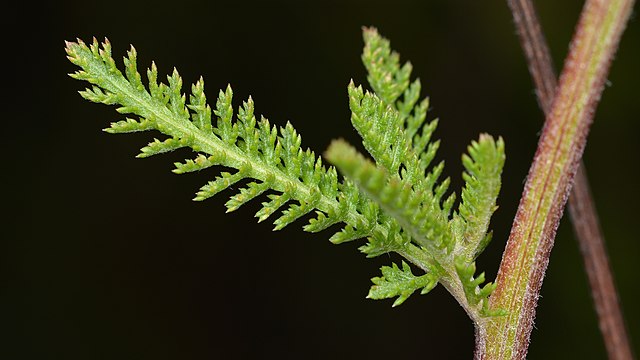
- YARROW: Fuzzy, soft, covered in fine white hairs. Feels woolly. Leaves are delicate and feathery – truly fern-like.
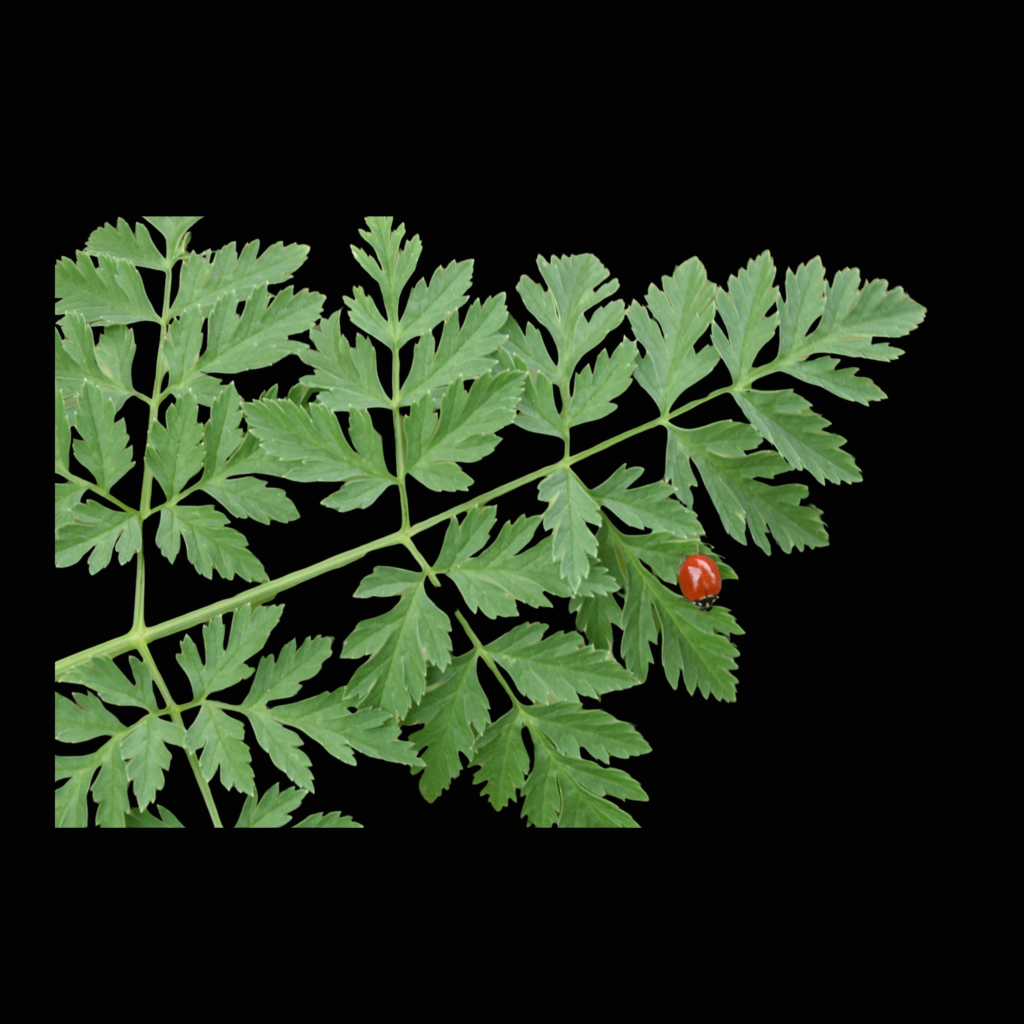
- POISON HEMLOCK: Smooth, hairless. Leaves look more like parsley or carrot tops than ferns.
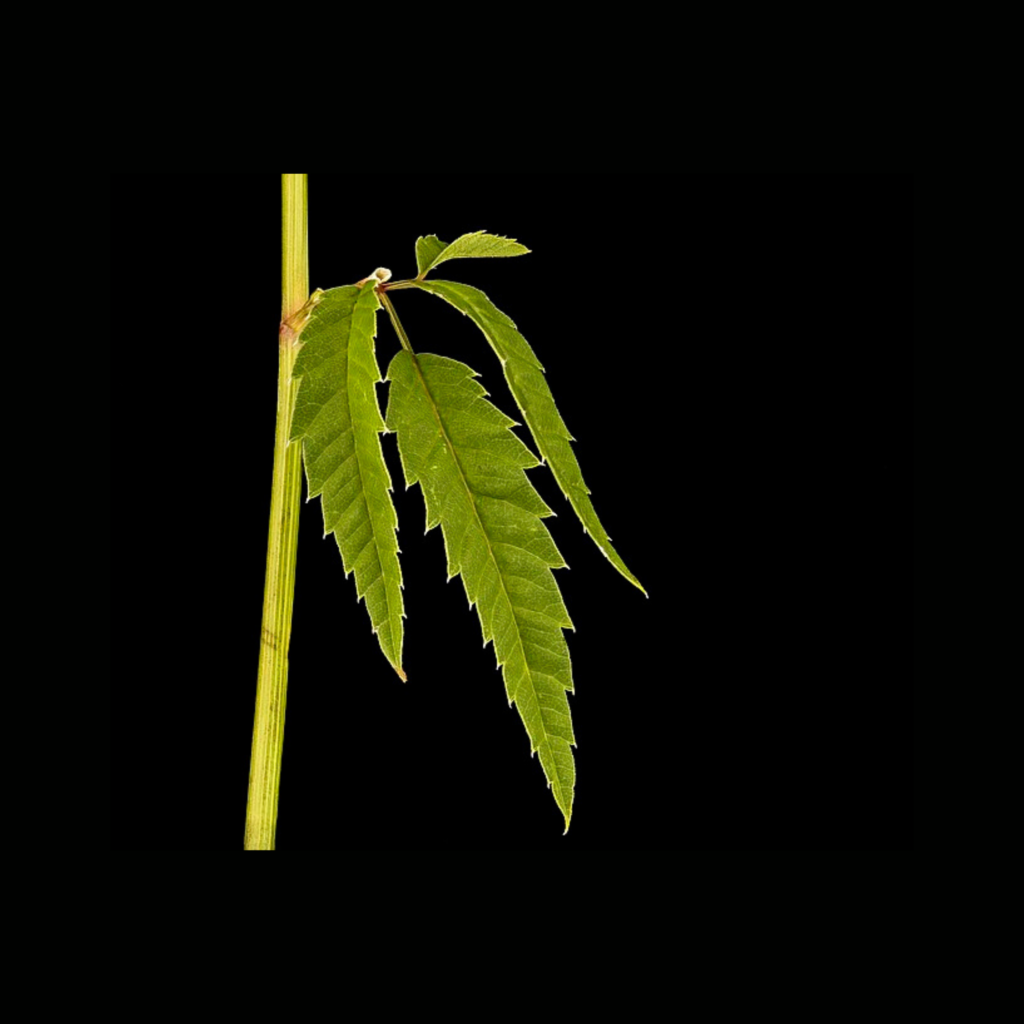
- WATER HEMLOCK: Smooth, hairless. Leaves are more coarsely toothed than Yarrow’s delicate divisions.
Rule: If it’s smooth and hairless, it’s NOT Yarrow.
TEST 3: The Stem Inspection (Visual)
- YARROW: Solid green or yellowish-green. Fibrous, sturdy, covered in fine hairs. NO purple markings.
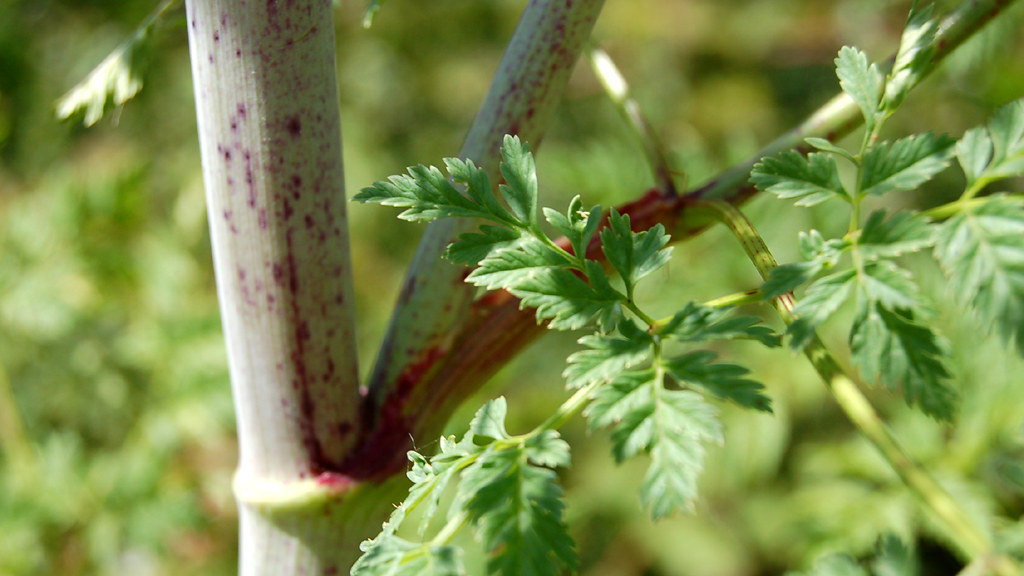
- POISON HEMLOCK: Smooth, hollow, with DISTINCTIVE PURPLE SPLOTCHES or streaks. Looks like bloodstains on a green stem. This is your #1 visual identifier.
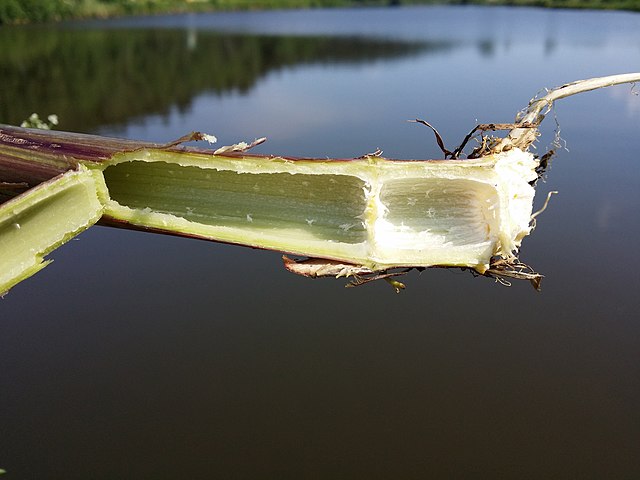
- WATER HEMLOCK: May have purple streaking but less pronounced. The real tell is if you pull it up – chambered hollow base with yellow oily sap.
Rule: Purple spots on a smooth stem = immediate abort. Don’t touch, don’t smell, just leave.
DETAILED COMPARISON TABLE
| Feature | YARROW | POISON HEMLOCK | WATER HEMLOCK |
|---|---|---|---|
| STEM | Fibrous, solid, hairy, green | Smooth, hollow, hairless, PURPLE-SPOTTED | Smooth, chambered base, may have faint purple |
| LEAVES | Bi-pinnate, feathery, FUZZY, soft like ferns | Finely divided, parsley-like, SMOOTH, hairless | Coarsely serrated, lance-shaped, SMOOTH |
| LEAF ARRANGEMENT | Alternating along stem | Alternating | Alternating or whorled |
| SCENT (crushed) | Clean, medicinal, camphor | Mousy, musty, foul | Can smell like carrots/parsnips |
| FLOWERS | Flat-topped corymbs (not true umbels) | True compound umbels | True compound umbels |
| HEIGHT | 1-3 feet | 3-8 feet (often taller) | 2-6 feet |
| HABITAT | Dry fields, roadsides, disturbed soil | Similar to Yarrow | WET AREAS – marshes, ditches, stream banks |
| ROOT SYSTEM | Fibrous | Taproot (white, carrot-like) | Tuberous with CHAMBERED HOLLOW and YELLOW SAP |
| BLOOMING | June-September | June-August | June-August |
| TOXICITY | None (when properly ID’d) | FATAL – Coniine (neurotoxin) | FATAL – Cicutoxin (most toxic plant in North America) |
THE SCENARIOS WHERE PEOPLE DIE
Let me tell you how these mistakes happen, so you don’t become a statistic.
Scenario 1: The Lazy Harvester
Someone sees white flowers and feathery leaves. They’ve seen Yarrow before (or think they have). They grab a handful without doing the three-point check. It’s Poison Hemlock. They make tea. They die.
Lesson: ALWAYS do all three tests. Every. Single. Time. Even if you “know” what Yarrow looks like.
Scenario 2: The Root Confusion
Someone is digging wild carrots or parsnips near a stream. They pull up what looks like a pale root. It smells vaguely like carrots. It’s Water Hemlock. They take a bite to “test” it. They seize within minutes. They die.
Lesson: NEVER forage roots near water without 100% certainty. Water Hemlock roots look deceptively edible.
Scenario 3: The Children
Kids playing near a marsh find plants with white flowers. They make “fairy soup” or use the hollow stems as blowguns. It’s Hemlock. They get exposed. Some survive. Some don’t.
Lesson: Teach your kids to never, ever put wild plants in their mouths. Period.
HOW THE HEMLOCKS KILL YOU
I’m including this not to be morbid, but because understanding the mechanism might save your life or someone else’s.
POISON HEMLOCK (Conium maculatum)
- Active Toxin: Coniine and related alkaloids
- Mechanism: Neuromuscular paralysis
- Timeline: Symptoms begin 30 minutes to 2 hours after ingestion
- Progression:
- Starts with nausea, vomiting, burning in mouth
- Moves to muscle tremors, weakness in legs
- Ascends to respiratory muscles
- You remain fully conscious while your body stops obeying you
- Death by respiratory failure
- Antidote: None. Treatment is supportive only (ventilator, hope)
- Lethal Dose: As little as 6-8 leaves, or a small piece of root
WATER HEMLOCK (Cicuta maculata)
- Active Toxin: Cicutoxin
- Mechanism: Violent overstimulation of the central nervous system
- Timeline: 15 minutes to 1 hour (often much faster)
- Progression:
- Sudden onset of nausea, vomiting, abdominal pain
- Rapid progression to violent, uncontrollable grand mal seizures
- Multiple seizures in quick succession
- Respiratory failure, cardiac arrest
- Death often occurs within 15 minutes
- Antidote: None. Even with immediate medical intervention, mortality rate is high.
- Lethal Dose: One bite of the root can be fatal. It’s THE most toxic plant in North America.
THE WET ZONE RULE
Here’s a simple rule that will keep you alive:
If you’re near standing water, ditches, marshes, stream banks, or any wet area, and you see a plant with white umbrella flowers and feathery leaves – assume it’s Water Hemlock and DON’T TOUCH IT.
Yarrow prefers DRY, sunny, well-drained areas. It grows in fields, roadsides, and waste places. Water Hemlock grows with its feet wet.
If the habitat is wet, the plant is NOT Yarrow. Walk away.
FIELD PROTOCOL: Step-by-Step
Here’s exactly what to do when you encounter a plant you think might be Yarrow:
- Check the Habitat: Is it dry and sunny? Good sign. Is it near water? Abort immediately.
- Visual Inspection from Distance: Look at the stem. Do you see ANY purple markings? If yes, leave. If no, proceed.
- Touch Test: Run your fingers along the stem and leaves. Does it feel fuzzy and soft? If smooth and hairless, leave.
- Crush Test: Rub a small piece of leaf vigorously. Does it smell clean, medicinal, slightly camphor-like? Good. Does it smell mousy, musty, or unpleasant? Leave immediately.
- Final Visual: Examine the stem closely for purple spots you might have missed. Check that leaves are truly fern-like and bi-pinnate, not parsley-like.
- If ALL tests pass: You probably have Yarrow. Harvest responsibly.
- If ANYTHING seems off: Leave it. It’s not worth your life.
WHAT TO DO IF YOU SUSPECT POISONING
If you or someone else has ingested a plant that might be Hemlock:
- Call 911 immediately – not “in a few minutes,” not “let’s see if symptoms develop” – NOW
- Call Poison Control: 1-800-222-1222
- Do NOT induce vomiting unless directed by medical professionals
- If possible, bring a sample of the plant (in a bag, don’t touch it directly) for identification
- Time is critical – especially with Water Hemlock, where minutes matter
Do not attempt to treat Hemlock poisoning with home remedies, activated charcoal, or anything else. Get to a hospital.
WHY THIS MATTERS
Every year, people die from Hemlock poisoning. Usually, it’s because they were confident they “knew” what they were looking at. Overconfidence kills.
The irony? Yarrow and Hemlock aren’t even that similar once you know what to look for. The stem test alone is usually definitive – purple spots = death. But people get lazy, or they’re in a hurry, or they assume they’re expert enough to skip steps.
Don’t be that person.
FINAL THOUGHTS
Foraging should not be a game of Russian roulette. If you want to use Yarrow, take the time to learn it properly. Go on a guided plant walk. Find a mentor. Study multiple specimens over multiple seasons until you can identify it in your sleep.
And remember: when in doubt, leave it alone. There is no wild plant so valuable that it’s worth risking your life over a misidentification.
The difference between Yarrow and Hemlock is the difference between healing and dying. Learn it. Respect it. Live to forage another day.
For detailed Yarrow information, see the Flora Archive. For Hemlock toxicity data, head to the Root Cellar to see the Poison Index.