FIELD IDENTIFICATION
In the ruins of suburban gardens and along abandoned fence lines, Yarrow (Achillea millefolium) stands as a premier survival tool. But beware: it shares a silhouette with the most violent toxin in the northern hemisphere.
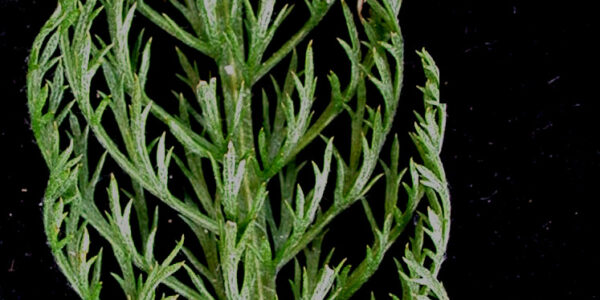
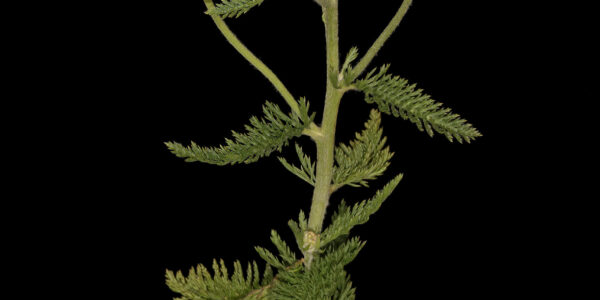
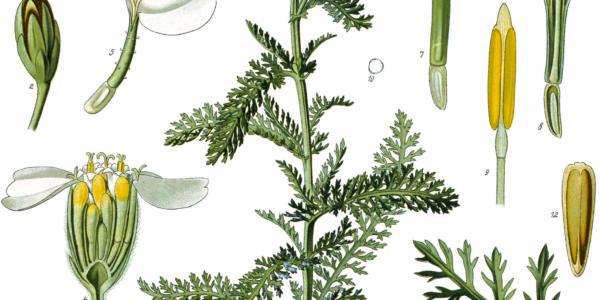
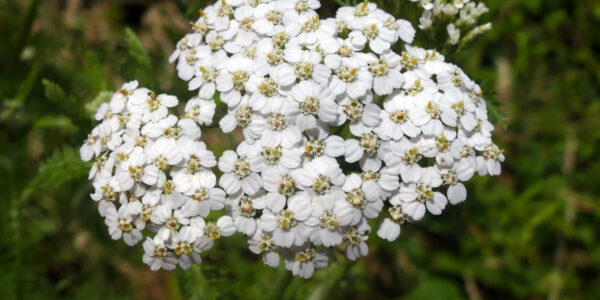
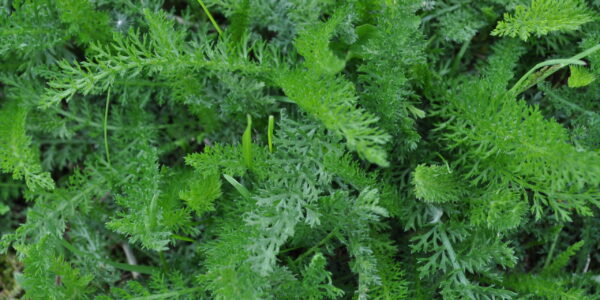
The Fern Test: Look at the leaves. Yarrow leaves are “millefolium”—a thousand tiny, feathery leaflets that look like soft green ferns. The Stem Test: Yarrow stems are fibrous, tough, and covered in fine, white hairs. They are never hairless and never splotched with purple.
Physical Markers (Yarrow):
- Leaves: Soft, feathery, fern-like foliage arranged along the stem
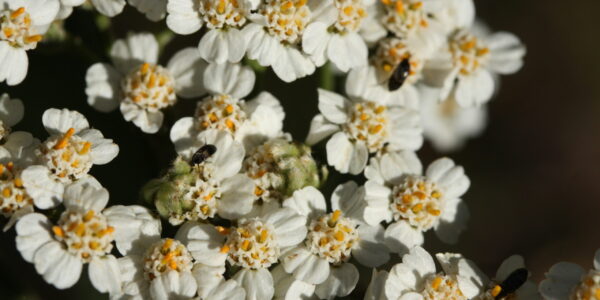
- Flowers: Flat-topped clusters (umbels) of tiny white or pale pink blossoms.
- Scent: Pungent, herbaceous, and slightly medicinal when crushed.
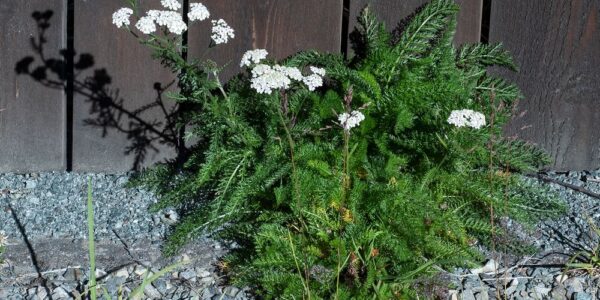
- Height: One to three feet.
Habitat: Disturbed soil, open fields, and dry roadsides. It is drought-tolerant and extremely hardy.
Harvest Notes: Collect leaves year-round; flowers in mid-summer. Use the “Stanching Method”—crush fresh leaves into a pulp (poultice) for immediate use on lacerations.
⚠️ THE DEADLY DOPPELGÄNGER: POISON HEMLOCK
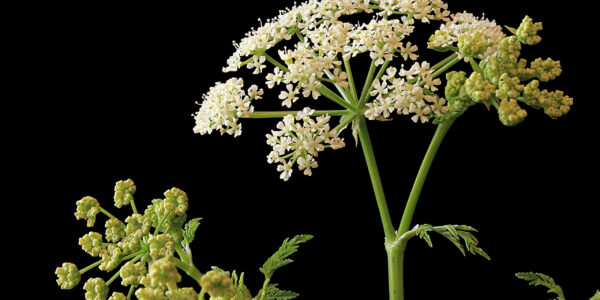
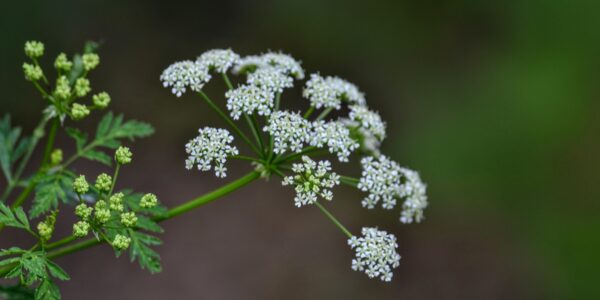
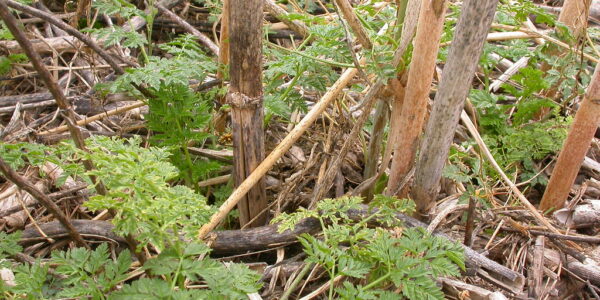
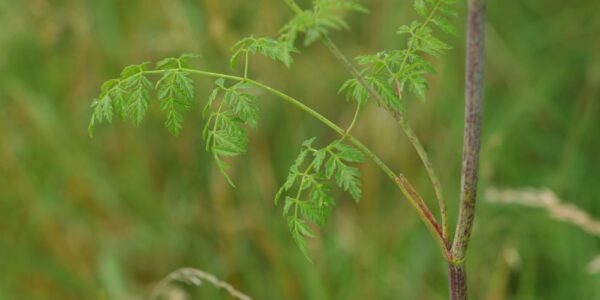
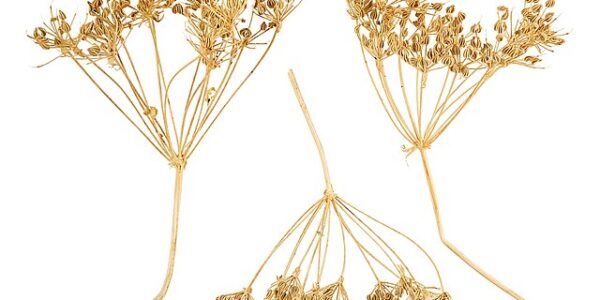
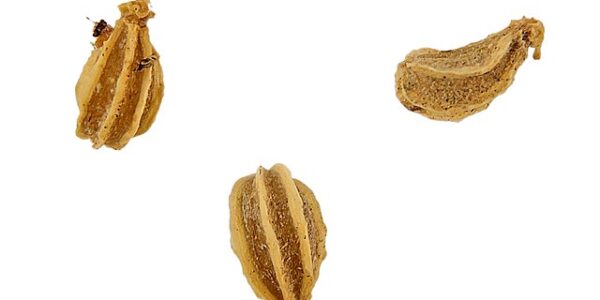
PROTOCOL: DROP IT AND RUN. Poison Hemlock (Conium maculatum) is the “Deadly Doppelgänger” referenced in Field Manual 004. Ingesting even a small amount can be fatal; KNF-7 is not responsible for misidentification in the field.
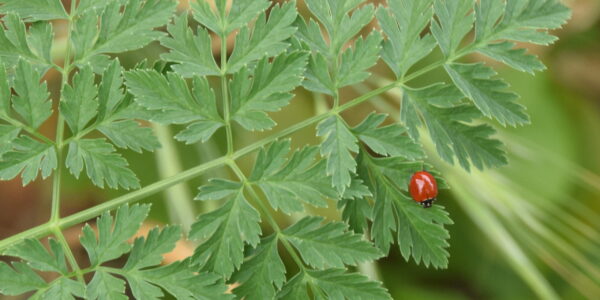
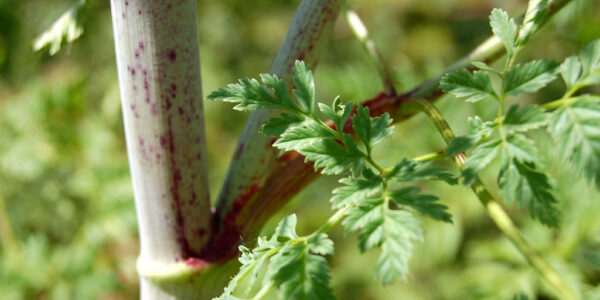
How to tell the difference (Manual Ref: BT-YAR-004):
- The Stem: Poison Hemlock stems are smooth, hairless, and marked with distinct purple splotches or streaks. (Yarrow stems are solid green and slightly hairy).
- The Leaves: Hemlock foliage is hairless and “carrot-like”. (Yarrow leaves are feathery, bi-pinnate, and look like a fern).
- The Scent: If the specimen smells like “old gym socks” or is generally unpleasant, drop it immediately. (Yarrow is pungent, medicinal, and slightly sweet).
HISTORICAL APPLICATIONS
Known as “Soldier’s Woundwort,” Yarrow has a documented history of use on battlefields from Troy to the American Civil War.
Traditional External Applications:
- Hemostatic: Used historically to stop bleeding (stanching) from deep cuts.
- Antiseptic: Applied to wounds to prevent infection in field conditions.
Internal Historical Use:
- The Fever Break: Old records describe Yarrow tea to induce sweating and break stubborn fevers.
- Digestive Tonic: Used historically to address cramping and “the flux.”
The Greek hero Achilles is said to have used it on his soldiers, giving the plant its botanical name.
PREPARATION METHODS (HISTORICAL)
- The Field Poultice: Fresh leaves chewed or crushed and applied directly to a bleeding wound.
- Dried Powder: Leaves dried and ground into a fine dust to be sprinkled into wounds as a clotting agent.
- Survival Tea: 1 tablespoon dried herb per cup of water. Steep covered 10-15 minutes.
Storage Reality: Like most volatile herbs, dried Yarrow loses potency over time. For long-term bunker storage, alcohol extractions (tinctures) are the most practical method.
SAFETY CONSIDERATIONS
- ⚠️ PREGNANCY WARNING: Historical texts strictly forbid Yarrow for pregnant women, as it was used to stimulate uterine contractions.
- Skin Sensitivity: Some survivors report a rash (photosensitivity) when handling the plant in direct, harsh sunlight.
- Allergy Alert: If you react to ragweed or daisies, proceed with extreme caution.
BUNKER CULTIVATION NOTES
Survival Garden Value: High. Yarrow is a “Dynamic Accumulator,” pulling minerals to the surface and improving the soil for your other crops. It requires almost no care beyond containment, as it spreads aggressively through runners.
Key Identification Reminders:
- Feathery leaves (Yarrow) vs. Parsley-like leaves (Hemlock).
- Hairy stem (Yarrow) vs. Smooth, purple-spotted stem (Hemlock).
If the stem is smooth and spotted, LEAVE IT ALONE.
Historical information compiled from traditional herbals and folk medicine records. No medical claims made. Consult qualified healthcare providers for medical advice.