
The Delicate Anise Green
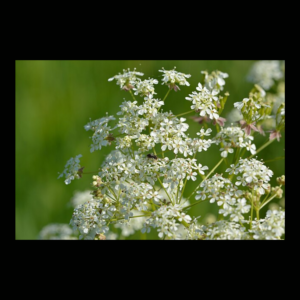
⚠️ IMPORTANT: Wild Chervil has deadly look-alikes. Positive identification is essential before harvest.
Wild Chervil is one of those plants that walks the line between “lovely spring green” and “why are there so many poisonous look-alikes in this family?” It’s edible, flavorful, and abundant – but it’s also a member of the carrot family (Apiaceae), which means it shares its silhouette with some genuinely dangerous plants.
Learn it well. The margin for error is zero.
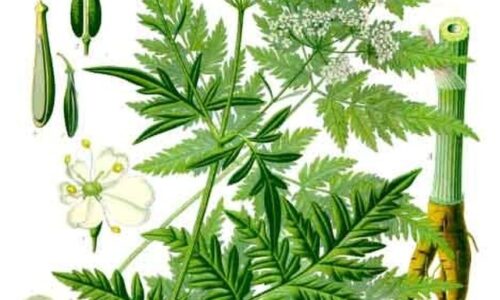
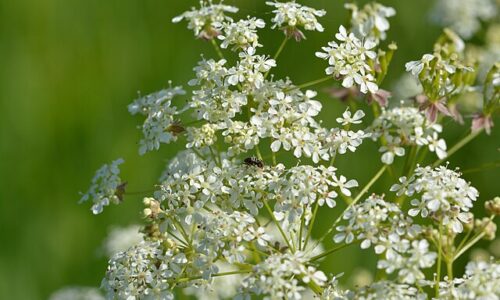
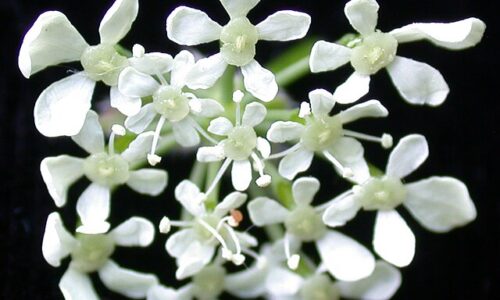
IDENTIFICATION: PRIMARY MARKERS
THE LEAVES:
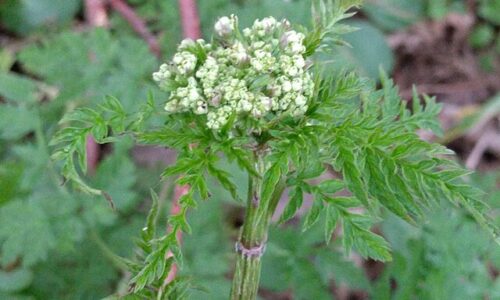
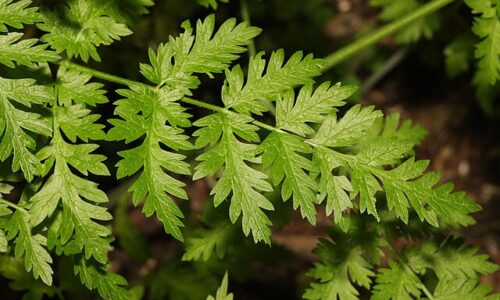
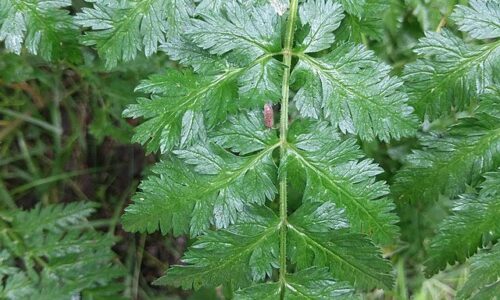
- Finely divided, fern-like, triangular outline
- Bright green to medium green
- Soft, delicate texture – not coarse or thick
- Slightly hairy (this is important – NOT smooth and hairless like Poison Hemlock)
- Arranged alternately along the stem
- When crushed, smells mildly of anise or parsley – pleasant, not rank
THE STEM:
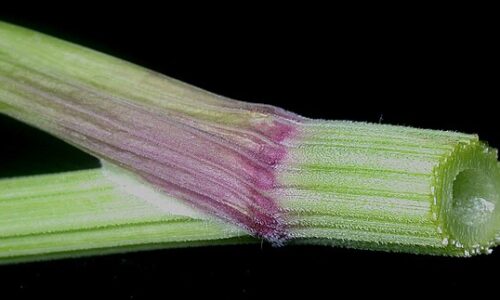
- Hollow, grooved lengthwise
- Slightly hairy (fine hairs, not as pronounced as Wild Carrot)
- Green with NO purple splotches (purple spots = Poison Hemlock, abort immediately)
- 2-4 feet tall when mature
- Ridged or furrowed texture
- Dies back completely in winter
THE FLOWERS:
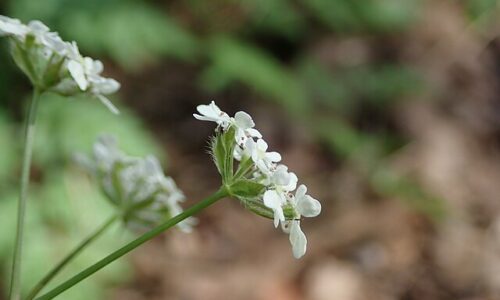
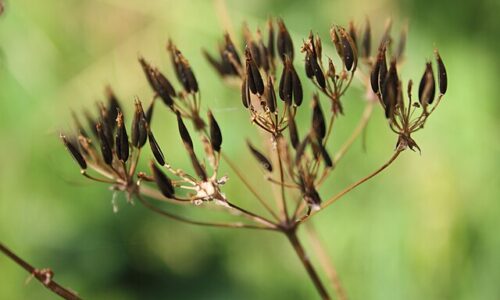
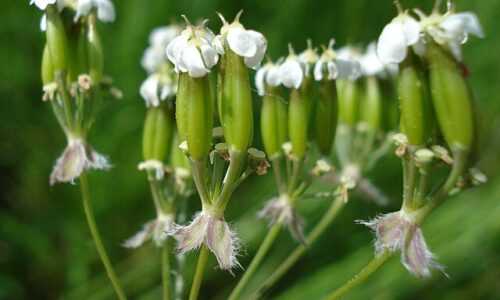
- Small white flowers in umbrella-shaped clusters (umbels)
- Bloom April through June (early spring)
- Delicate, lacy appearance
- Umbels are not as flat-topped as some relatives
- Flowers appear before many other white-flowered carrot family members
THE ROOT:
- Thin, fibrous taproot (not thick like carrot or parsnip)
- Not typically harvested – the greens are the prize
THE SCENT:
- Mild anise or parsley-like smell when crushed
- Pleasant, slightly sweet
- NOT mousy, NOT rank, NOT unpleasant
- If it smells bad, it’s not Wild Chervil – likely Poison Hemlock
HABITAT:
- Edges of woodlands, hedgerows, partially shaded areas
- Roadsides and disturbed ground
- Prefers some shade – not full sun like many carrot family members
- Often found near streams or in damper areas
- Common in Europe, naturalized in North America
THE HARVEST WINDOW
Wild Chervil is best harvested early in the season – late winter through early spring before it flowers.
Young leaves (best):
- Tender, mild flavor
- Anise notes without bitterness
- Harvest before flowering for peak flavor
- The plant is most easily distinguished from look-alikes when young, so be extra cautious
Mature leaves (edible but not ideal):
- Become tougher and more bitter after flowering
- Still edible but less palatable
- Better for cooking than raw use
After flowering:
- Leaves become very bitter
- Nutritional value decreases
- Best to leave it and wait for next year
TRADITIONAL USES
Wild Chervil has been used in European cuisine for centuries, particularly in France and Britain.
Culinary:
- Fresh in salads (young leaves only)
- Cooked as a potherb – similar to spinach
- Added to soups and stews for delicate anise flavor
- Used as a garnish or fresh herb
- Pairs well with eggs, fish, and spring vegetables
- Often used in “spring green” mixes with nettles, chickweed, and dandelion
Flavor Profile:
- Delicate anise/parsley taste
- Slightly sweet
- Milder than cultivated chervil (Anthriscus cerefolium)
- Less pronounced than fennel
Preparation:
- Wash thoroughly (grows close to ground, can be gritty)
- Use fresh when possible – doesn’t dry well
- Add at end of cooking to preserve flavor
- Can be frozen in ice cubes or pesto for later use
MEDICINAL HISTORY
Historically, Wild Chervil was used in folk medicine, though it’s primarily valued as food today.
Traditional applications included:
- Spring tonic (rich in vitamins after winter)
- Mild digestive aid
- Topical poultice for minor skin irritations
Modern use:
- Primarily culinary
- Nutritional value: vitamin C, iron, and minerals
- Considered a “spring cleansing” herb in traditional herbalism
Safety note: I’m providing historical context, not medical advice. Wild Chervil is used as food, not medicine in contemporary herbalism.
⚠️ THE DEADLY LOOK-ALIKES
This is where we get serious. Wild Chervil shares its appearance with several dangerous plants:
POISON HEMLOCK (Conium maculatum) – FATAL
How to tell the difference:
- Poison Hemlock: SMOOTH stem with PURPLE SPLOTCHES, smells RANK/MOUSY
- Wild Chervil: Slightly hairy stem, NO purple spots, smells PLEASANT/ANISE-LIKE
The key test: If the stem is smooth and has purple spots, it’s Poison Hemlock. DROP IT.
See: Poison Hemlock profile and Deadly Doubles: The Lace Trap
FOOL’S PARSLEY (Aethusa cynapium) – TOXIC
How to tell the difference:
- Fool’s Parsley: Distinctive downward-pointing bracts under flower umbels (like a “beard”), smells unpleasant when crushed, leaves darker green and shinier
- Wild Chervil: No prominent bracts, pleasant anise smell, leaves lighter green and matte
The key test: Those downward bracts under the flowers are diagnostic for Fool’s Parsley. Also, the smell – Fool’s Parsley has an unpleasant, somewhat chemical smell.
WATER HEMLOCK (Cicuta maculata) – FATAL
How to tell the difference:
- Water Hemlock: Grows in WET areas (marshes, ditches, streams), leaf veins run to NOTCHES not tips, chambered root base with yellow oily sap
- Wild Chervil: Prefers woodland edges and semi-shade, NOT true wetlands
The key test: Habitat. If you’re in standing water or true wetland, it’s not Wild Chervil.
See: Water Hemlock profile
WILD CARROT / Queen Anne’s Lace (Daucus carota) – SAFE/EDIBLE
How to tell the difference:
- Wild Carrot: VERY HAIRY stem (covered in stiff hairs), often has purple center floret in umbel, carrot smell, blooms mid-summer
- Wild Chervil: Slightly hairy stem (fine hairs), no purple center floret, anise smell, blooms early spring
The key test: Timing (Wild Chervil flowers spring, Wild Carrot flowers summer) and stem hairiness (Wild Carrot is MUCH hairier)
THE IDENTIFICATION PROTOCOL
Before you harvest anything you think is Wild Chervil:
STEP 1: Check the Season
- Early spring (March-May)? Good sign for Wild Chervil
- Mid-summer? Probably not Wild Chervil (likely Wild Carrot or something else)
STEP 2: Check the Habitat
- Woodland edge, hedgerow, partial shade? Good for Wild Chervil
- True wetland, standing water? NOT Wild Chervil – could be Water Hemlock, ABORT
STEP 3: The Stem Test
- Run your fingers along the stem
- Slightly hairy with fine hairs? Good sign
- SMOOTH and hairless? NOT Wild Chervil – could be Poison Hemlock, ABORT
- Check for purple splotches: ANY purple spots = Poison Hemlock, LEAVE IMMEDIATELY
STEP 4: The Scent Test
- Crush a small piece of leaf
- Pleasant anise/parsley smell? Good sign for Wild Chervil
- Rank, mousy, unpleasant smell? Poison Hemlock, DROP IT
- Chemical or strange smell? Fool’s Parsley, leave it
STEP 5: The Visual Check
- Leaves finely divided, fern-like, soft texture? Wild Chervil
- Leaves look similar but plant is smooth and tall? Poison Hemlock
- Flowers have downward “beard” bracts? Fool’s Parsley
- In wet area with lance-shaped leaves? Water Hemlock
IF ALL TESTS PASS: You probably have Wild Chervil. Harvest a small amount first to verify flavor.
IF ANYTHING SEEMS OFF: Leave it. Your life is more valuable than a handful of greens.
HARVESTING GUIDELINES
If you’re confident in your identification:
Best practices:
- Harvest young leaves before flowering
- Take only the top 1/3 of the plant
- Leave the root intact for regrowth
- Harvest from multiple plants, not just one
- Avoid roadside plants (pollution, herbicides)
- Wash thoroughly before use
What to harvest:
- Young, tender leaves and stems
- Before or just as flowering begins
- Early morning after dew dries for best flavor
What to avoid:
- Mature, tough leaves after flowering
- Plants growing in questionable areas
- Any plant you’re not 100% certain about
PREPARATION & STORAGE
Fresh use (best):
- Wash thoroughly
- Add to salads, omelets, soups
- Use as garnish
- Mix with other spring greens
Cooking:
- Add at end of cooking (delicate flavor)
- Sauté briefly with butter
- Add to cream soups
- Mix into spring risotto or pasta
Storage:
- Refrigerate in damp cloth or container (3-5 days)
- Freeze in ice cubes with water or oil
- Make pesto and freeze in portions
- Does NOT dry well – loses most flavor
WHY BOTHER WITH WILD CHERVIL?
With all these dangerous look-alikes, why harvest Wild Chervil at all?
Reasons people still forage it:
- It’s abundant and free
- Delicious, delicate flavor when young
- One of the first spring greens available
- High in nutrients after a long winter
- Historical and cultural connection to traditional foods
Reasons to skip it:
- Too many deadly look-alikes
- Cultivated chervil is safe and available
- The risk outweighs the reward for beginners
- Other spring greens (dandelion, chickweed) are easier to ID
My take: Wild Chervil is edible and tasty, but it requires expert-level identification skills. If you’re new to foraging, start with plants that have fewer deadly doppelgängers. If you’re experienced and confident, it’s a lovely spring treat.
FINAL THOUGHTS
Wild Chervil sits in that frustrating category of “delicious but dangerous to identify.” The plant itself is harmless. The problem is that several lethal plants look similar enough to cause confusion.
The key to safely foraging Wild Chervil:
- Learn it at multiple life stages
- Master the look-alike identification (especially Poison Hemlock)
- Always use multiple identification points (never rely on just one feature)
- When in doubt, leave it alone
Is it worth the effort? That’s up to you. There’s something special about eating the first spring greens after a long winter. But there are also easier, safer wild foods out there.
Choose wisely.
For look-alike comparisons, see Deadly Doubles: The Lace Trap. For toxic plant information, see Poison Hemlock and Water Hemlock in the Poison Index. For other edible plants, see the Flora Archive.