
The Safe Yellow Umbel
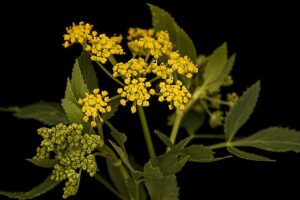
Golden Alexanders is the yellow-flowered native that doesn’t burn you.
If you see flat-topped clusters of bright yellow flowers in spring, and you’re worried it might be Wild Parsnip (which causes horrific chemical burns), there’s a good chance you’re looking at Golden Alexanders instead. It blooms earlier, it’s shorter, and most importantly – it’s completely harmless to touch.
It’s a prairie native, a pollinator powerhouse (especially for Black Swallowtail butterflies), and historically used as a medicinal herb by Indigenous peoples and early settlers. The root was made into fever remedies and poultices. The seeds were used like caraway or fennel.
But the real value of knowing this plant is avoiding misidentification with Wild Parsnip. Wild Parsnip sap + sunlight = severe chemical burns and blisters that can last for months. Golden Alexanders? You can handle it with bare hands all day.
The key differences: bloom time (spring vs. summer), stem (smooth vs. deeply grooved), and leaves (triple-compound vs. single-compound). Once you know these, you’ll never confuse them.
Let’s talk about how to identify Golden Alexanders, why it’s called that, and how to make absolutely sure you’re not looking at Wild Parsnip.
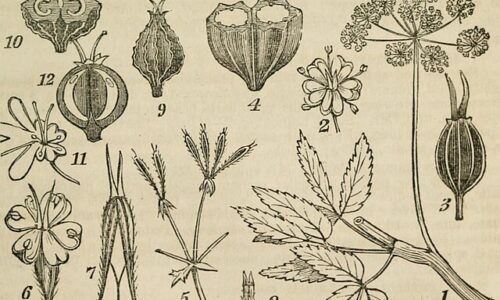
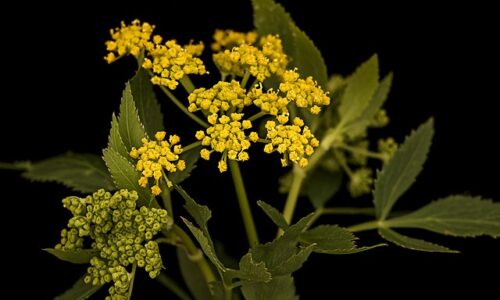
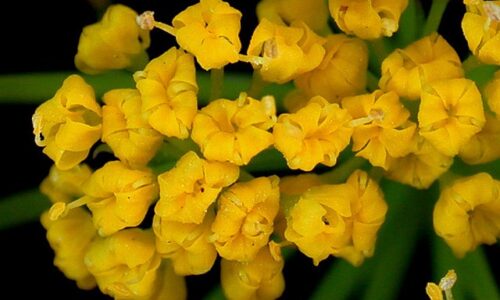
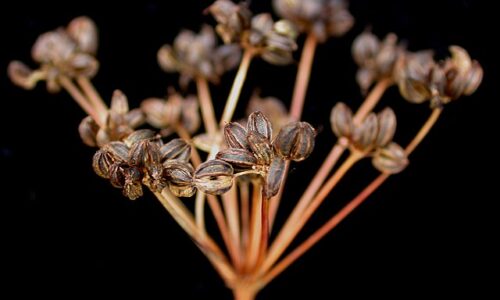
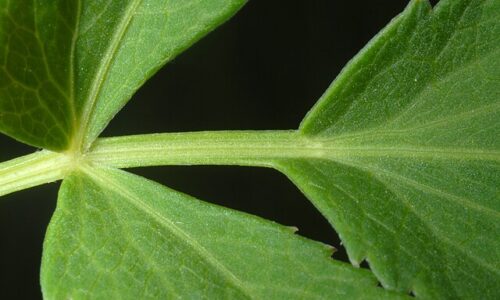
WHAT IS GOLDEN ALEXANDERS?
Botanical Name: Zizia aurea
Common Names: Golden Alexanders, Golden Zizia, Early Meadow Parsnip
Family: Apiaceae (Carrot/Parsley family)
Golden Alexanders is a native perennial herb found throughout eastern North America. It’s named after Johann Baptist Ziz, a German botanist, and “aurea” means golden (for the flower color).
What It Looks Like:
- 1-3 feet tall
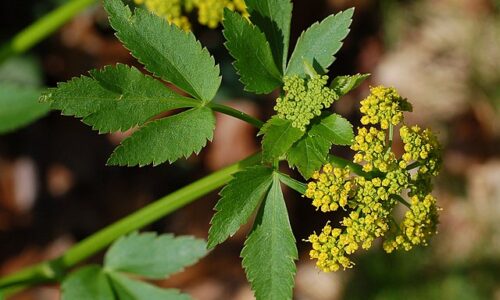
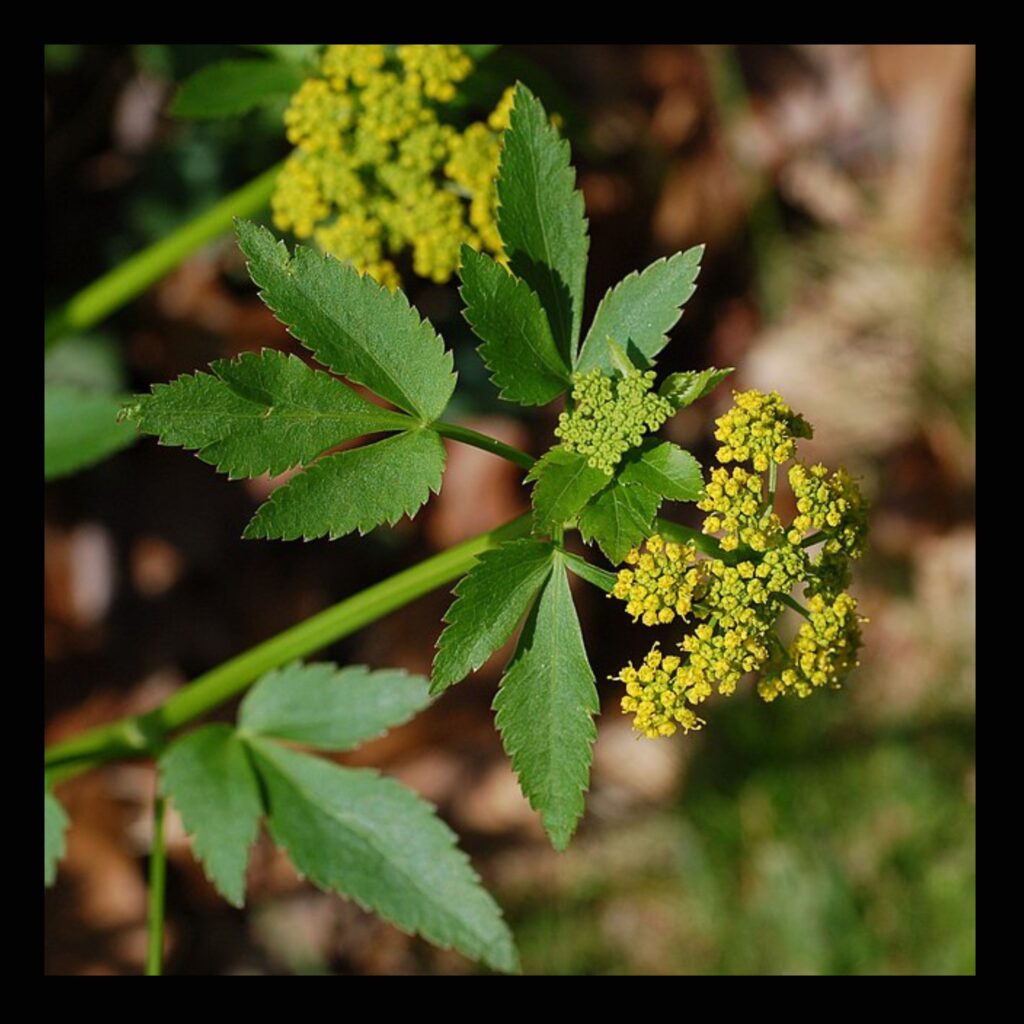
- Bright yellow, flat-topped flower clusters (umbels)
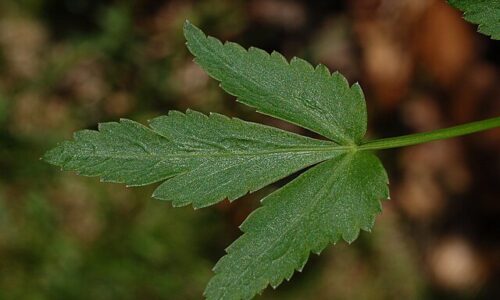
- Triple-compound leaves (divided into groups of three)
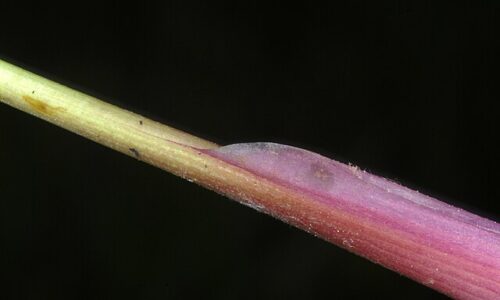
- Smooth, round, hairless stem
- Blooms April-June (earlier than Wild Parsnip)
- Prairie and woodland edge habitat
The Signature:
Yellow umbel flowers + triple-compound leaves + smooth round stem + spring bloom = Golden Alexanders (and NOT Wild Parsnip).
IDENTIFICATION
THE FLOWERS:
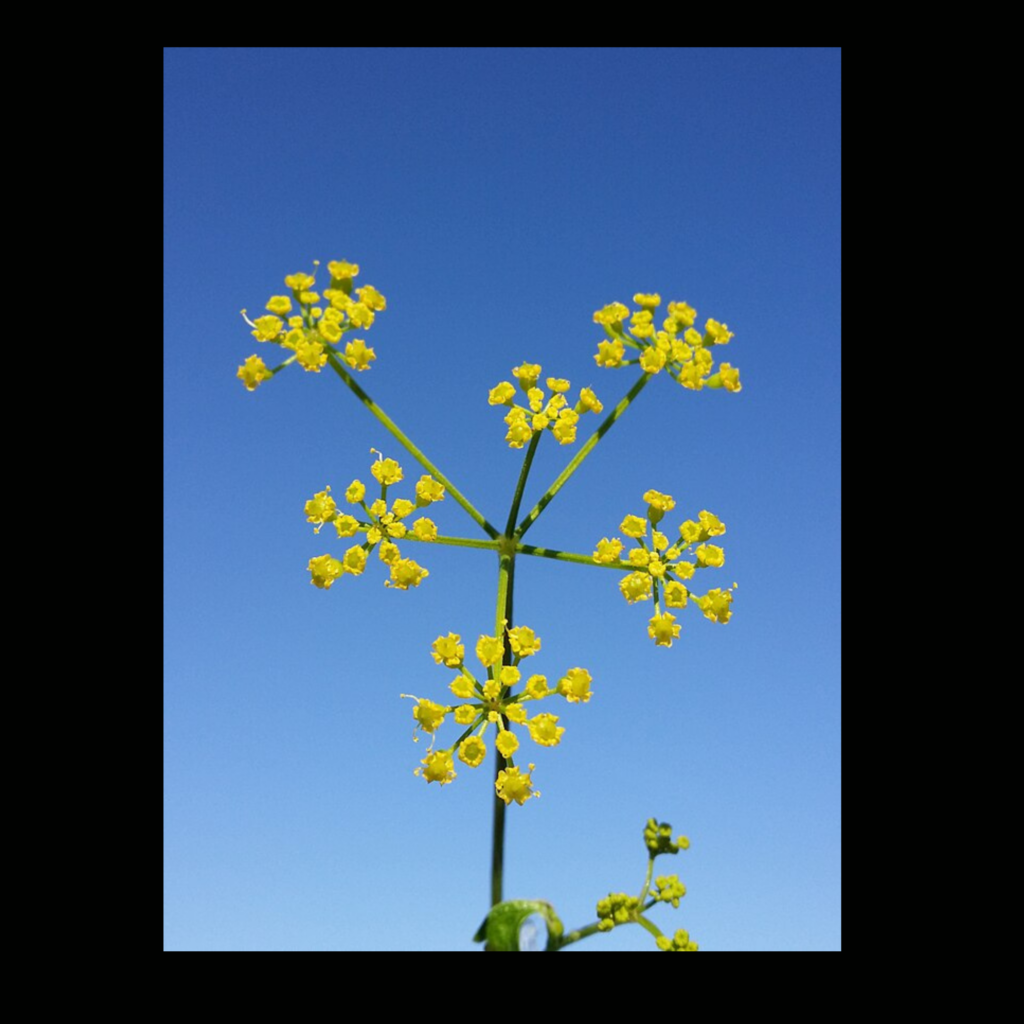
- Shape: Compound umbels (flat-topped clusters, like Queen Anne’s Lace but yellow)
- Color: Bright golden yellow
- Structure: Multiple small umbels arranged in a larger umbrella-like cluster
- Distinctive feature: Central flower of each small umbel is sessile (has no stalk) – this is a key botanical marker
- Size: Overall flower cluster 2-3 inches across
- Individual flowers: Tiny, 5 petals each
- Bloom time: April to June (early spring/early summer)
- Blooms BEFORE Wild Parsnip (critical timing difference)
THE LEAVES:
This is critical for safe identification:
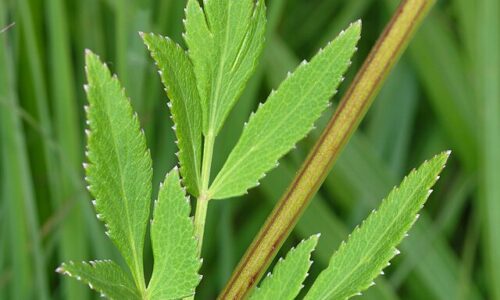
- Division: Triple-compound (divided THREE times)
- Appearance: Leaves divided into THREE main sections, each further divided
- Leaflet shape: Oval to lance-shaped
- Edges: Finely serrated (toothed)
- Texture: Smooth, not coarse
- Basal leaves: Long-stalked, form a rosette
- Stem leaves: Smaller, fewer divisions as you go up the stem
- NOT like celery: Finer, more delicate than Wild Parsnip’s coarse leaves
THE STEM:
Critical safety feature:
- Shape: Round (not grooved)
- Texture: Smooth, hairless
- Color: Green, sometimes with purple tinge at base
- Size: Slender to medium (not thick/robust)
- NOT ridged: This is the key – Wild Parsnip has deeply grooved, ridged stems like celery
- Roll it between your fingers: If it’s round and smooth, safe; if ridged/grooved, danger
THE ROOTS:
- Type: Taproot (like a carrot but smaller)
- Color: White to yellowish
- Size: Finger-sized, not huge
- Odor: Slightly aromatic (carrot family scent)
THE SEEDS:
- Shape: Small, oblong, ribbed
- Color: Dark brown to black when mature
- Arrangement: In umbels (same structure as flowers)
- Season: Late summer/fall
- Aromatic: Smell like caraway or anise when crushed
THE HABITAT:
- Prairies: Mesic to moist prairies (classic habitat)
- Meadows: Open meadows, old fields
- Woodland edges: Light shade to full sun
- Roadsides: Sometimes (but prefer natural areas)
- Soil: Moist to medium, well-drained
- NOT in: Deep woods or full wetlands
GOLDEN ALEXANDERS VS. WILD PARSNIP (CRITICAL)
This is life-or-death information. Wild Parsnip causes severe chemical burns.
| Feature | GOLDEN ALEXANDERS | WILD PARSNIP |
|---|---|---|
| SAFETY | SAFE – harmless to touch | DANGER – sap causes severe burns |
| Bloom time | April-June (SPRING) | June-August (SUMMER) |
| Height | 1-3 feet | 2-5 feet (taller) |
| Stem | Smooth, round | Deeply grooved/ridged (like celery) |
| Leaves | Triple-compound (3 divisions) | Single-compound (one long row) |
| Leaf texture | Fine, delicate | Coarse, celery-like |
| Flower color | Bright yellow | Yellow-green to dull yellow |
| Native status | Native | INVASIVE |
| Central flower | Sessile (no stalk) | Stalked |
| Root | Small taproot | Large, edible root (like carrot) |
THE THREE CRITICAL TESTS:
1. BLOOM TIMING:
- See yellow umbels in May? Probably Golden Alexanders (safe)
- See yellow umbels in July? Probably Wild Parsnip (DANGER)
2. STEM CHECK (DO NOT TOUCH IF UNSURE):
- Roll the stem gently between your fingers
- Round and smooth = Golden Alexanders (safe)
- Grooved/ridged like celery = Wild Parsnip (DO NOT TOUCH, wear gloves)
3. LEAF PATTERN:
- Triple-compound (divided into groups of three) = Golden Alexanders
- Single-compound (one long row of leaflets, like celery) = Wild Parsnip
Memory aid:
“Three-part leaves and a smooth stem mean you’re safe. Celery stem and single leaves mean DANGER.”
Wild Parsnip Burns (Phytophotodermatitis):
If you get Wild Parsnip sap on your skin and it’s exposed to sunlight:
- Severe burns and blistering (can appear within 24-48 hours)
- Blisters can last weeks to months
- Scarring and discoloration can last for years
- Extremely painful
If exposed:
- Wash immediately with soap and water
- Keep affected area OUT OF SUNLIGHT for 48 hours
- Seek medical attention for severe reactions
GOLDEN ALEXANDERS VS. OTHER YELLOW APIACEAE
There are other yellow-flowered plants in the carrot family that could be confused:
HEARTLEAF ALEXANDERS (Zizia aptera):
- Very similar to Golden Alexanders
- Difference: Heart-shaped basal leaves (not divided)
- Safety: Also safe, native, same uses
- Blooms same time
YELLOW PIMPERNEL (Taenidia integerrima):
- Similar yellow umbels
- Difference: Leaves are simple or barely divided
- Safety: Safe, native
- Blooms same time
WILD PARSNIP (Pastinaca sativa):
- See table above
- DANGER
All the native yellow Apiaceae (Golden Alexanders, Heartleaf Alexanders, Yellow Pimpernel) are safe. The invasive Wild Parsnip is the dangerous one.
WHY IT’S CALLED “GOLDEN ALEXANDERS”
“Golden” – for the bright golden-yellow flowers
“Alexanders” – named after “Alexanders” (Smyrnium olusatrum), an Old World herb in the same family that was used similarly. Early European settlers in North America saw the resemblance and called it “Golden Alexanders” to distinguish it from the European plant.
Genus name (Zizia) – honors Johann Baptist Ziz (1779-1829), a German botanist
Species name (aurea) – Latin for “golden”
Other names:
- Golden Zizia – emphasizes the genus
- Early Meadow Parsnip – describes habitat and early bloom (but can cause confusion with Wild Parsnip)
WHERE TO FIND GOLDEN ALEXANDERS
Habitat:
- Prairies – mesic to moist (not dry sand prairie)
- Open woodlands – edges, light gaps
- Meadows – old fields, abandoned pastures
- Savannas – oak savannas with partial shade
- Roadsides – occasionally (prairie remnants)
- NOT in: Deep shade, full wetlands, disturbed urban areas
Season:
- Early growth: March-April
- Blooms: April-June (peak May)
- Seeds mature: July-August
- Dies back: Fall/winter (perennial, returns in spring)
Distribution:
- Native to: Eastern North America
- Range: Quebec to Saskatchewan, south to Texas and Florida
- Common in: Midwest prairies (Illinois, Wisconsin, Iowa, Minnesota)
- Elevation: Lowlands to moderate elevations
Climate:
- Hardiness: Zones 3-8
- Tolerates: Cold winters, hot summers
- Prefers: Consistent moisture but not waterlogged
- Adapts: To various prairie and woodland conditions
EDIBILITY
Historically edible, but NOT commonly used as food today.
Golden Alexanders is in the carrot family (Apiaceae), which includes many edible plants (carrots, parsnips, celery) but also some of the deadliest plants on Earth (Poison Hemlock, Water Hemlock). Because of this, and because of look-alike concerns, it’s not recommended as a food plant unless you’re absolutely certain of identification.
Historical Use:
SEEDS:
- When: Late summer when mature and dark
- Use: Aromatic seeds used like caraway or fennel
- Preparation: Collected and dried, added to food for flavor
- Taste: Similar to caraway, anise, or fennel (carrot family aromatics)
- Historical: Used by Indigenous peoples and settlers as seasoning
ROOTS:
- When: Spring or fall (when energy is stored in roots)
- Use: Historically eaten by some Indigenous groups
- Preparation: Cooked (like parsnips)
- Note: Small compared to Wild Parsnip roots
- Not recommended today – too much confusion risk
LEAVES:
- Not typically eaten
- Some sources mention young leaves cooked, but this is uncommon
Modern Recommendation:
Leave it for pollinators and medicine. There are safer, more productive food plants. The risk of confusing it with toxic look-alikes (even though Golden Alexanders itself is safe) makes it not worth pursuing as food.
If you harvest seeds: Be ABSOLUTELY certain of identification. Only harvest from known, tagged plants you’ve watched through the full growing season.
MEDICINAL USES (Historical & Traditional)
Disclaimer: I’m not a doctor. This is historical and traditional information, not medical advice.
Golden Alexanders was used medicinally by various Indigenous peoples and adopted by European settlers.
Traditional Applications:
Fever Reduction:
- Use: Root decoction for “intermittent fevers” (likely malaria-type fevers)
- Classification: Febrifuge (fever-reducer)
- Method: Root tea, cooled, taken in small doses
- Historical context: 19th century herbalism
Respiratory Issues:
- Use: For “pains in the side” (pleurisy), lung congestion
- Method: Root infusion or decoction
- Traditional: Combined with other respiratory herbs
Headaches:
- Use: Tea combinations for headache relief
- Often combined: With other prairie herbs
- Method: Root or seed infusion
Topical/External:
- Use: Poultice for inflammation, swelling, “cold swellings”
- Method: Fresh root crushed and applied
- Why: Anti-inflammatory properties (theoretical)
- Safety: Unlike Wild Parsnip, this is SAFE to apply topically
Digestive:
- Use: Seeds in infusion for digestive support
- Similar to: Fennel, caraway, anise (related plants)
- Method: Warm tea after meals
Vulnerary:
- Use: Wound healing (historical classification)
- Method: Topical application of root poultice
- Note: Limited documentation on effectiveness
Active Constituents:
- Essential oils – in seeds (carrot family aromatics)
- Coumarins – possible (many Apiaceae contain them)
- Various terpenes – typical of the family
- Note: Not as well-studied as many other medicinal plants
Preparation Methods:
ROOT INFUSION/DECOCTION:
- Ingredients: 1 tablespoon dried chopped root, 1 pint water
- Method: Bring water to boil, add root, simmer 20 minutes, strain
- Dose (historical): 2-3 ounces, 3 times daily
- Taste: Aromatic, slightly bitter
POULTICE (Topical):
- Time: Harvest roots in early spring or late fall
- Method: Clean and wash thoroughly, crush to pulp, apply to affected area, wrap with clean cloth
- Use: Inflammation, swelling
- Duration: 20-30 minutes, repeat as needed
SEED INFUSION:
- Ingredients: 1 teaspoon seeds, 1 cup water
- Method: Pour boiling water over crushed seeds, steep covered 10 minutes, strain
- Use: Digestive support
- Taste: Caraway/anise-like
⚠️ SAFETY WARNINGS
IDENTIFICATION IS CRITICAL:
- Apiaceae family is one of the most dangerous plant families to forage
- Contains both edible and deadly poisonous species
- Never consume any plant in this family unless 100% certain
- Even experts can make mistakes with Apiaceae
LOOK-ALIKE DANGERS:
WILD PARSNIP:
- Causes severe chemical burns (see comparison table above)
- If you have ANY doubt, assume it’s Wild Parsnip and don’t touch
POISON HEMLOCK (Conium maculatum):
- DEADLY – one of the most poisonous plants in North America
- White flowers (not yellow), but can be confused in vegetative stage
- Purple-blotched stems
- Killed Socrates
- Never forage Apiaceae unless you can identify Poison Hemlock on sight
WATER HEMLOCK (Cicuta spp.):
- DEADLIEST plant in North America
- White flowers, grows in wet areas
- Can kill an adult in 15 minutes
- This is why you don’t forage Apiaceae casually
PREGNANCY:
- Avoid medicinal use – insufficient data
- Apiaceae family often has uterine-stimulating properties
- Better safe than sorry
ALLERGIES:
- Apiaceae allergies are common (carrot, celery, parsley family)
- Contact dermatitis possible (though not common with this species)
- Oral allergy syndrome possible if allergic to related plants
GENERAL CAUTION:
- This is not a beginner foraging plant
- The risk-to-reward ratio is not favorable
- Better alternatives exist for food and medicine
- Primarily valuable as a pollinator plant and prairie restoration species
HARVESTING GOLDEN ALEXANDERS
Only harvest if you are absolutely, positively certain of identification and have extensive Apiaceae experience.
When to Harvest:
ROOTS:
- Early spring (before flowering) or late fall (after die-back)
- This is when maximum energy is stored in roots
- 1st year or 2nd year roots (older roots get woody)
SEEDS:
- Late summer (July-August)
- When seeds turn dark brown/black
- When umbels begin to dry
- Before seeds drop naturally
How to Harvest:
ROOTS:
- Dig carefully – taproot goes deep
- Use digging fork to loosen soil
- Take only a few – leave most plants to reproduce
- Replant a section if possible
- Clean thoroughly before use
SEEDS:
- Cut seed heads when mature but before shattering
- Place in paper bag to finish drying
- Shake to release seeds
- Screen to remove chaff
Drying & Storage:
ROOTS:
- Wash thoroughly
- Chop while fresh (easier than when dry)
- Dry on screens or dehydrator at 95-115°F
- Dry until brittle
- Store in airtight containers, cool dark place
- Shelf life: 1-2 years
SEEDS:
- Dry completely in paper bags
- Store in airtight containers
- Keep cool and dark
- Shelf life: 2-3 years (longer if kept cool)
Ethical Harvesting:
- Never take more than 10% of a population
- Leave most plants for pollinators and reproduction
- This plant is valuable wildlife food – prioritize that over human use
- Consider growing your own rather than wild-harvesting
GROWING GOLDEN ALEXANDERS
This is a much better approach than wild-harvesting. It’s a beautiful, low-maintenance native plant.
From Seed:
- Stratification required: Seeds need cold, moist period
- Method: Sow in fall (nature stratifies over winter) OR refrigerate 30-60 days before spring planting
- Planting: Barely cover seeds, keep moist
- Germination: Can be slow and erratic
- Time to bloom: 2-3 years from seed
From Plants:
- Easier than seed
- Transplant in spring or fall
- Available from: Native plant nurseries
- Establishment: Water regularly first year
From Division:
- Mature plants can be divided
- Best time: Early spring or fall
- Method: Dig clump, separate into sections with roots, replant
Growing Conditions:
SOIL:
- Type: Loam, clay loam, sandy loam
- Moisture: Moist to medium (not wet, not dry)
- Drainage: Moderate (not waterlogged)
- pH: Adaptable (slightly acidic to neutral)
- Fertility: Medium (not nutrient-poor, not overly rich)
SUN:
- Full sun to partial shade
- Best flowering: Full sun
- Tolerates: Light shade (woodland edge conditions)
WATER:
- Established plants: Moderately drought-tolerant
- First year: Water regularly
- Prefers: Consistent moisture but not wet
- Avoid: Prolonged drought
TEMPERATURE:
- Hardy: Zones 3-8
- Cold-tolerant
- Heat-tolerant (with adequate moisture)
Maintenance:
LOW-MAINTENANCE PLANT:
- No fertilization needed
- No pruning needed (can deadhead to prevent self-seeding if desired)
- No serious pests or diseases
- Dies back in winter (cut back dead growth in fall or spring)
Self-Seeding:
- Will self-seed readily in favorable conditions
- Can spread over time (not aggressively)
- Good for naturalization and prairie restoration
- Deadhead if you want to control spread
Companion Plants (Native Prairie/Woodland):
- Wild Quinine
- Shooting Star
- Prairie Coreopsis
- Black-eyed Susan
- Wild Bergamot
- Nodding Onion
ECOLOGICAL VALUE
This is where Golden Alexanders really shines.
Pollinator Support:
BLACK SWALLOWTAIL BUTTERFLIES:
- Host plant for Black Swallowtail larvae (caterpillars)
- One of their preferred native host plants
- Leave foliage intact through larval season (spring/summer)
- Caterpillars are green with black bands and yellow spots
OTHER POLLINATORS:
- Bees: Native bees, honeybees
- Flies: Various species
- Beetles: Some species
- Butterflies: Adults nectar on flowers
Native Bees:
- Early bloom provides crucial nectar/pollen when few other sources available
- Long bloom period (several weeks in spring)
Birds:
- Seed-eating birds consume seeds in fall/winter
- Insect-eating birds benefit from insects attracted to plant
Habitat:
- Part of native prairie and savanna ecosystems
- Supports biodiversity
- Indicator of quality habitat
PRAIRIE RESTORATION VALUE
Golden Alexanders is excellent for restoration projects:
- Native to most of eastern North America
- Easy to establish from seed or plants
- Low-maintenance once established
- Valuable pollinator plant
- Attractive (ornamental value)
- Not aggressive (won’t take over)
- Adapts to various soil types and light conditions
- Early bloom extends seasonal interest
FINAL THOUGHTS
Golden Alexanders is the yellow-flowered native that gets overshadowed by the fear of Wild Parsnip – and that’s partly fair, because confusing the two could land you in the hospital with chemical burns.
But once you know the differences – spring bloom vs. summer bloom, smooth round stem vs. grooved celery stem, triple-compound leaves vs. single-compound leaves – they’re not that hard to tell apart.
The real value of this plant isn’t as food or medicine (though it has historical uses). It’s as pollinator support, especially for Black Swallowtail butterflies. Those bright yellow umbels in May are an early nectar source when bees need it most. The foliage feeds caterpillars. The seeds feed birds.
If you want to grow it, do it. It’s a beautiful, low-maintenance native that belongs in prairie gardens, pollinator gardens, and restoration sites. If you want to forage it, think twice – the risk-to-reward ratio isn’t great, and there are safer alternatives.
But learn to identify it. Know what it looks like. Because the next time you see yellow umbel flowers and your brain screams “Wild Parsnip danger!”, you can check the bloom time, feel the stem, look at the leaves, and realize you’re looking at something completely harmless.
And that’s worth knowing.
For Wild Parsnip identification and safety, see the Poison Index and Deadly Doubles.