
When Pretty Means Ecological Disaster:
The Three-Way Confusion
Here’s a scenario: you’re walking near a wetland and you see beautiful purple spikes of flowers. “Lavender!” you think. Or maybe water mint. You collect seeds to plant in your garden. Congratulations – you’ve just introduced one of the most aggressive invasive species in North America to your property.
This is The Purple Spike Trap, and while it won’t kill you directly, it can absolutely devastate your local ecosystem, choke out medicinal plants, and destroy wetland habitats. Let’s make sure you know the difference.
THE THREE PLAYERS
THE MEDICINAL ONES:
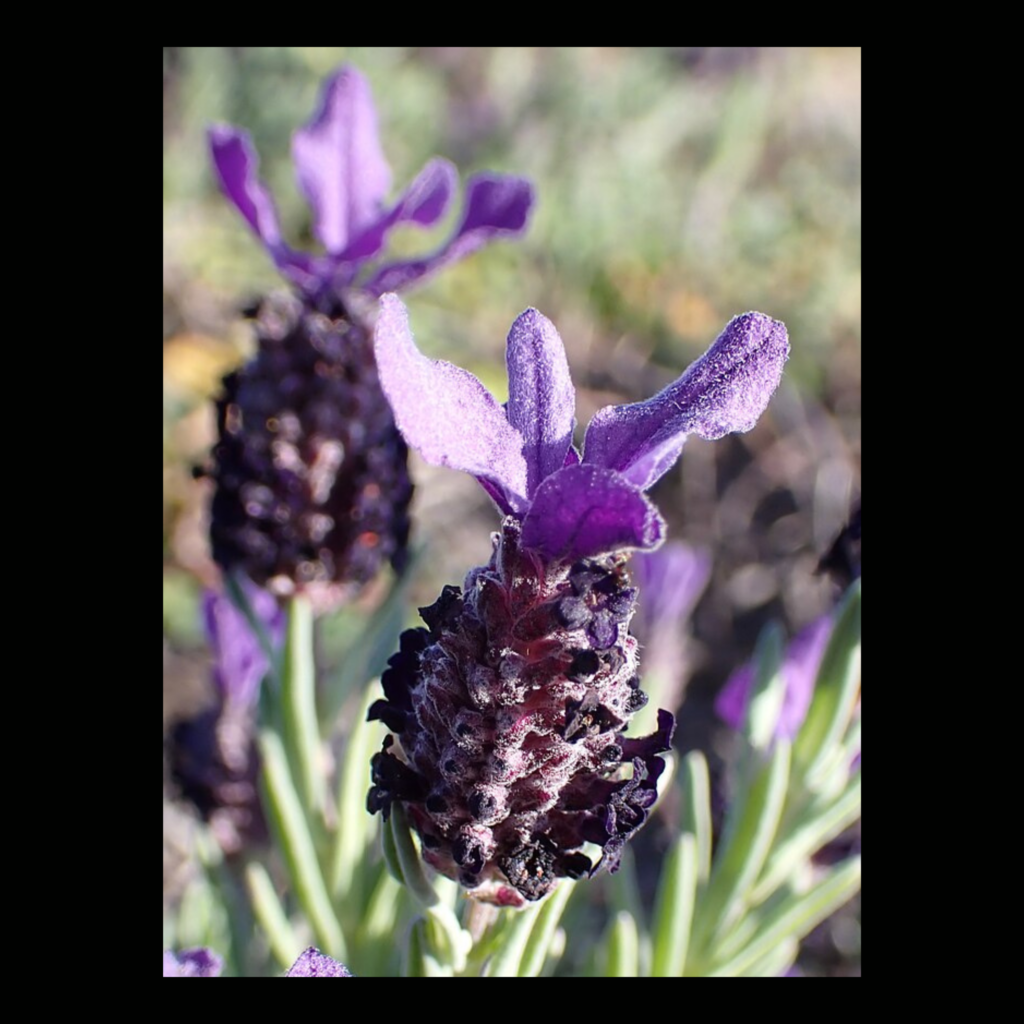
- Spanish Lavender (Lavandula stoechas) – Aromatic antiseptic herb with distinctive “rabbit ear” bracts
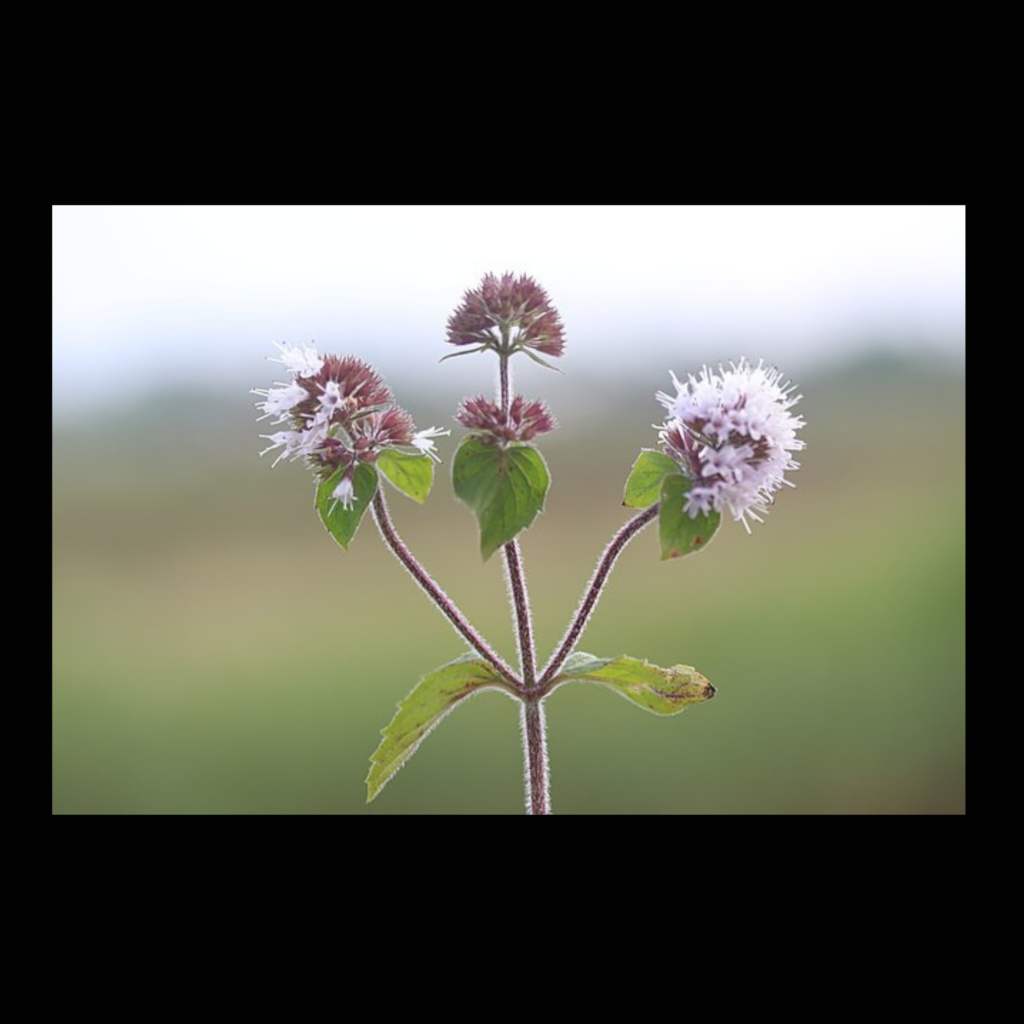
- Aquatic Mints (Mentha aquatica and relatives) – Water-loving digestive herbs with spherical flower clusters
THE ECOLOGICAL DISASTER:
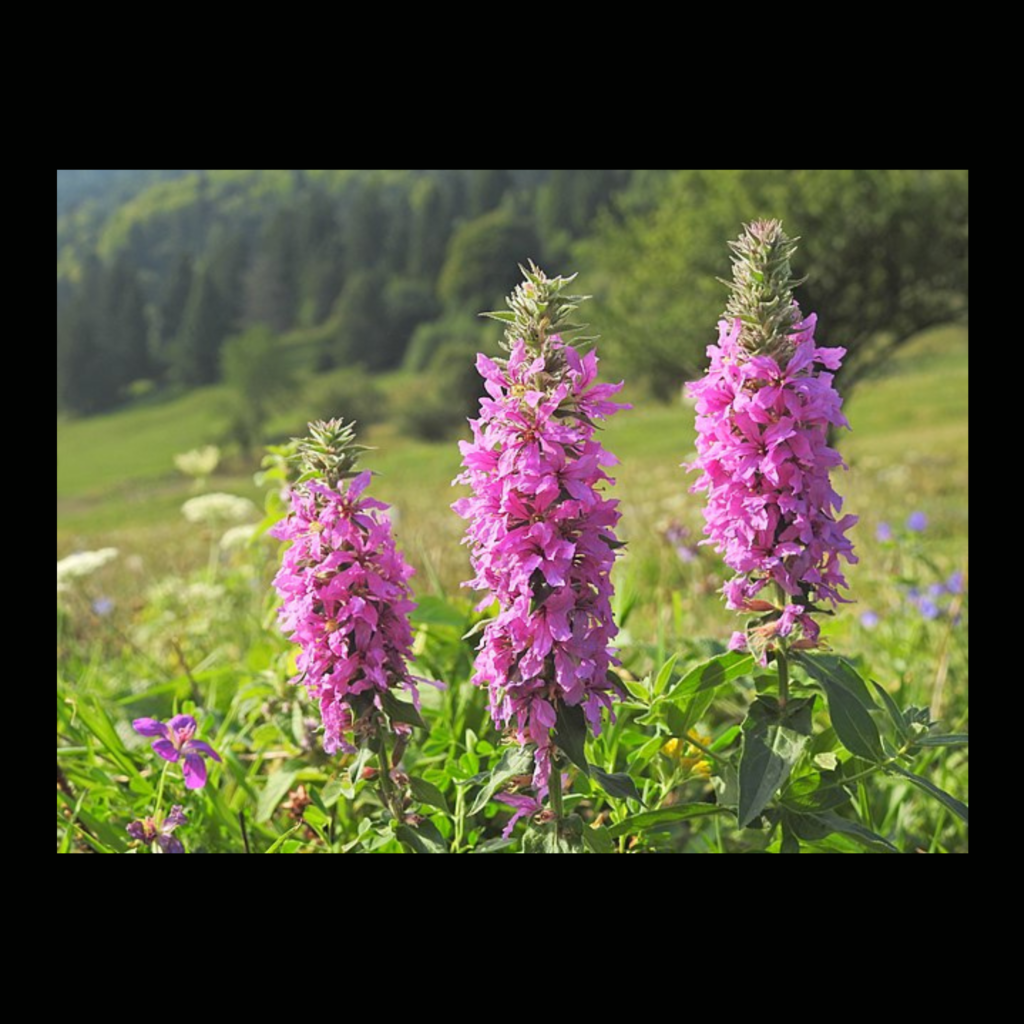
- Purple Loosestrife (Lythrum salicaria) – Aggressive wetland invader that destroys native plant communities and wildlife habitat
All three have purple spike-like flowers. All three can grow in similar areas. But only one will turn your local wetland into a monoculture wasteland.
THE QUICK-REFERENCE COMPARISON
| Feature | SPANISH LAVENDER | AQUATIC MINTS | PURPLE LOOSESTRIFE |
|---|---|---|---|
| SCENT | STRONG camphor/pine | STRONG menthol/mint | NONE or faint “green” |
| FLOWERS | Compact spike with “BUNNY EARS” (bracts) on top | Spherical whorls up the stem | Long magenta spikes, 5-7 petals each |
| FLOWER SHAPE | Pinecone-like with showy bracts | Globes/balls of tiny flowers | Individual flowers with crinkled petals |
| STEM | Square, woody, shrubby | Square, soft, sometimes reddish | Square to hexagonal, woody at base |
| LEAVES | Narrow, gray-green, aromatic | Opposite, toothed, aromatic | Opposite or whorled, lance-shaped, SESSILE (no stem) |
| HEIGHT | 1-3 feet (compact shrub) | 1-3 feet | 3-7 feet (often tall) |
| HABITAT | Dry, well-drained Mediterranean gardens | Wet areas, stream edges, marshes | Wetlands, ditches, anywhere with moisture |
| NATIVE STATUS | Mediterranean (garden escapee) | Native to Europe/North America | INVASIVE – listed as noxious weed |
| USE | Antiseptic, aromatic | Digestive aid, tea | DO NOT HARVEST OR SPREAD |
THE SCENT TEST (Your First Line of Defense)
Here’s your shortcut to avoid ecological catastrophe:
If you can’t smell it, DON’T collect it.
Both Spanish Lavender and Aquatic Mints are HIGHLY aromatic. You can smell them from several feet away. Crush a leaf and the scent is unmistakable – camphor and pine for lavender, menthol for mint.
Purple Loosestrife? No scent. Or at best, a faint “green” plant smell that tells you nothing useful.
The rule: No strong scent = Not lavender, not mint = Probably the invader.
But let’s break down each plant so you know exactly what you’re looking at.
SPANISH LAVENDER (Lavandula stoechas) – The Antiseptic
Primary Identification:
- Flowers: This is the giveaway – each flower spike looks like a tiny pinecone topped with SHOWY “BUNNY EARS” (actually bracts). These bracts are large, petal-like, and stick up from the top of the flower spike like rabbit ears or butterfly wings. Usually bright purple or magenta.
- Scent: STRONG. Camphor-like, pine-like, with that distinctive lavender smell but sharper and more medicinal than English lavender. You can smell it from feet away.
- Stem: Square (member of the mint family), woody at the base. Forms a compact shrub.
- Leaves: Narrow, gray-green, aromatic when crushed
- Height: Typically 1-3 feet, bushy growth habit
- Habitat: Prefers dry, well-drained soil. Mediterranean climate lover. NOT a wetland plant.
The Key Test: Those “bunny ears” on top of the flower spike are completely unique to Spanish Lavender. If you see them + smell that strong camphor scent, you’ve found it.
What It’s Good For: Traditionally used as a strong antiseptic wash for wounds, skin infections, and cleaning surfaces. The essential oil is potent. Primarily external use due to the strength of the volatile compounds.
Garden Note: Spanish Lavender is a beautiful ornamental that’s escaped cultivation in some areas, but it’s not invasive. It prefers dry conditions and won’t take over wetlands.
AQUATIC MINTS (Mentha aquatica and relatives) – The Shoreline Sentry
Primary Identification:
- Flowers: Distinctive SPHERICAL WHORLS – the flowers form round globes or balls clustered up the stem, usually at leaf nodes and at the top. Purple to lilac colored.
- Scent: STRONG menthol/mint smell. Unmistakable. This is mint, and your nose knows it.
- Stem: Square (mint family trademark), soft and herbaceous. Often has a reddish tinge, especially in sunny locations.
- Leaves: Opposite, toothed edges, aromatic. Look like… well, mint leaves.
- Height: 1-3 feet
- Habitat: Loves wet feet – stream edges, pond margins, marshes, ditches. Anywhere damp to wet.
The Key Tests:
- Spherical flower clusters (not spikes)
- Unmistakable mint smell
- Square stem
- Wet habitat
What It’s Good For: Digestive aid, particularly for cramping and spasms. Makes a pleasant tea. Traditionally used for upset stomachs, gas, and nausea.
IMPORTANT WARNING: Aquatic mints growing in standing water or areas with livestock grazing can harbor liver flukes (parasitic flatworms). If you’re harvesting from wild wet areas, dry the herb thoroughly before use, or better yet, cultivate your own. Never consume aquatic plants raw from questionable water sources.
Garden Note: Water mint is a vigorous grower (like all mints) and will spread, but it’s not considered invasive in the same destructive way as Purple Loosestrife. It’s a native plant in many regions and provides value to pollinators.
PURPLE LOOSESTRIFE (Lythrum salicaria) – The Ecological Disaster
Primary Identification:
- Flowers: LONG, showy magenta spikes made up of individual flowers. Each flower has 5-7 crinkled petals. The spikes can be 1-2 feet long. Truly spectacular – which is why people planted it in gardens and created this mess.
- Scent: NONE, or just a faint “green plant” smell. This is your red flag.
- Stem: Square to hexagonal in cross-section. Woody at the base. Often reddish.
- Leaves: Lance-shaped, opposite or in whorls of 3. The key feature: they’re SESSILE – meaning they attach directly to the stem with no leaf stalk (petiole). This is a diagnostic feature.
- Height: 3-7 feet. Often much taller than lavender or mint.
- Habitat: Wetlands, marshes, ditches, stream banks, pond edges. Any area with consistent moisture.
- Spread: One plant can produce 2-3 MILLION seeds per year. Seeds remain viable in the soil for years.
The Key Tests:
- NO strong scent
- Individual crinkled flowers (5-7 petals) on long spikes
- Sessile leaves (no leaf stems)
- Wetland habitat
- Often quite tall (taller than mints or garden lavender)
Why It’s Dangerous:
Purple Loosestrife isn’t toxic to humans. In fact, it has mild medicinal properties (astringent, used historically for diarrhea). So why is it in the “Deadly Doubles” category?
Because it’s an ECOLOGICAL ASSASSIN.
Here’s what happens when Purple Loosestrife invades a wetland:
- It outcompetes native plants, forming dense monocultures
- It provides little to no food value for native wildlife (unlike the native plants it replaces)
- It alters water flow and sediment patterns
- It destroys critical habitat for waterfowl, amphibians, and fish
- Once established, it’s incredibly difficult to eradicate
It’s listed as a noxious weed in most U.S. states and Canadian provinces. In many places, it’s ILLEGAL to plant, propagate, or transport Purple Loosestrife.
What NOT To Do:
- ❌ Don’t collect the flowers or seeds
- ❌ Don’t plant it in your garden (even if it’s pretty)
- ❌ Don’t compost it (seeds can survive)
- ❌ Don’t move soil or plants from infested areas
What TO Do If You Find It:
- Report it to your local extension office or invasive species coordinator
- If it’s on your property and caught early, you can hand-pull it (get the ENTIRE root, and bag all flowers/seeds for disposal in trash, not compost)
- Large infestations require professional management
THE IDENTIFICATION PROTOCOL: Step-by-Step
When you see purple spike-like flowers, especially near water:
STEP 1: The Scent Test (MOST IMPORTANT)
- Crush a leaf or gently rub the flowers
- STRONG camphor/pine smell? → Spanish Lavender
- STRONG menthol/mint smell? → Aquatic Mint
- NO smell or faint “green” smell? → Probably Purple Loosestrife. STOP HERE. Do not collect seeds or cuttings.
STEP 2: The Habitat Check
- Dry, well-drained garden bed? → Spanish Lavender
- Wet, marshy, near water? → Either aquatic mint OR Purple Loosestrife
- If wet habitat + no scent → Almost certainly Purple Loosestrife
STEP 3: The Flower Structure
- Pinecone with “bunny ears” on top? → Spanish Lavender
- Spherical whorls/globes of flowers? → Aquatic Mint
- Long spike of individual crinkled flowers? → Purple Loosestrife
STEP 4: The Leaf Check
- Narrow, gray-green? → Spanish Lavender
- Opposite, toothed, minty? → Aquatic Mint
- Opposite/whorled, lance-shaped, NO LEAF STEM (sessile)? → Purple Loosestrife
IF IN DOUBT: Don’t collect it. Take a photo and ask your local extension office or a knowledgeable forager for ID.
WHY THIS MATTERS: The Accidental Invasion
Here’s how Purple Loosestrife became one of North America’s worst invasive species:
In the 1800s, people thought it was beautiful (it is) and brought it from Europe for gardens. Some escaped cultivation. Others were deliberately planted along waterways because “pretty flowers.”
By the mid-1900s, it had spread across the continent, choking out native wetland plants. Millions of dollars are now spent annually trying to control it.
And it still spreads – often because well-meaning foragers collect “lavender” or “that pretty purple flower” and bring seeds home on their clothes, boots, or in collected plant material.
Don’t be part of the problem.
THE CONFUSION SCENARIOS
Scenario 1: The Garden Escape
Someone sees purple flowers in a garden center. “Spanish Lavender!” they think. They plant it. It’s actually Purple Loosestrife mislabeled (yes, this happens). It spreads to the nearby wetland. Decades later, that wetland is an ecological dead zone.
Lesson: Buy plants from reputable nurseries. Check for “noxious weed” lists in your state before planting anything.
Scenario 2: The Wildcrafter’s Mistake
A forager sees beautiful purple spikes near a stream. “Water mint!” they think, based on habitat. They don’t smell it. They collect seeds. They plant them in their medicinal herb garden near a pond. Five years later, their entire wetland garden is overrun with Loosestrife and nothing else will grow.
Lesson: ALWAYS use the scent test. Mints smell like mint. Loosestrife smells like nothing.
Scenario 3: The Boot Transport
A hiker walks through a beautiful purple field. They don’t harvest anything. But seeds cling to their boots and pants. They hike somewhere else. They’ve just spread thousands of seeds to a new location.
Lesson: Clean your gear after hiking through areas with Purple Loosestrife. This is how invasives spread.
SIDE-BY-SIDE VISUAL SUMMARY
SPANISH LAVENDER:
- ✅ Pinecone flowers with “bunny ears” = Unique identifier
- ✅ Strong camphor scent = Aromatic confirmation
- ✅ Dry habitat = Habitat mismatch with Loosestrife
- ✅ Woody shrub form = Growth habit different
AQUATIC MINTS:
- ✅ Spherical flower whorls = Unique structure
- ✅ Strong mint scent = Unmistakable
- ✅ Square soft stem = Mint family trait
- ✅ Wet habitat + aromatic = Safe mint
PURPLE LOOSESTRIFE:
- ⚠️ Long magenta spikes = Showy but dangerous
- ⚠️ NO scent = Major red flag
- ⚠️ Sessile leaves = Diagnostic feature
- ⚠️ Wet habitat + no scent = Invasive species
- ☠️ Do not collect, plant, or spread
WHAT TO DO IF YOU’VE ALREADY SPREAD IT
If you realize you’ve accidentally planted or spread Purple Loosestrife:
- Don’t panic – you’re not the first, and education is the solution
- Remove it immediately – hand-pull small infestations, getting all roots
- Bag all plant material – don’t compost, don’t leave on site. Trash only.
- Monitor the area – check for regrowth for the next few years
- Report it – let your local invasive species coordinator know
- Spread the word – help others avoid the same mistake
FINAL THOUGHTS: Pretty Isn’t Always Harmless
The Purple Spike Trap isn’t about personal danger – it’s about ecological responsibility. Purple Loosestrife is beautiful. That’s the problem. Beauty doesn’t equal safety, and in this case, it equals environmental devastation.
Learn to identify it. Learn to smell the difference. And most importantly, leave it alone.
When you see those gorgeous purple spikes in a wetland, appreciate them from a distance, take a photo if you want, and then walk away. Don’t touch, don’t collect, don’t spread.
Because the real “deadly” part of this particular double isn’t what it does to you – it’s what it does to everyone else’s ecosystem for generations to come.
For individual plant profiles, see the Flora Archive. For detailed toxicity information, visit the Poison Index.