
The Mint That Lives in Water
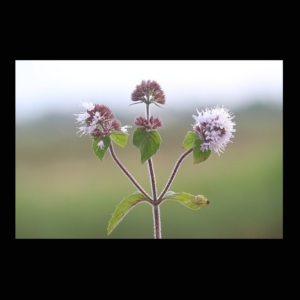
Water Mint is the wild, swamp-dwelling cousin of the peppermint you grow in pots.
It grows with its feet in the water – literally. Marshes, ditches, stream edges, pond margins, anywhere the ground is perpetually soggy. It’s tougher and more pungent than garden mint, with an earthy, almost muddy undertone beneath that classic menthol punch.
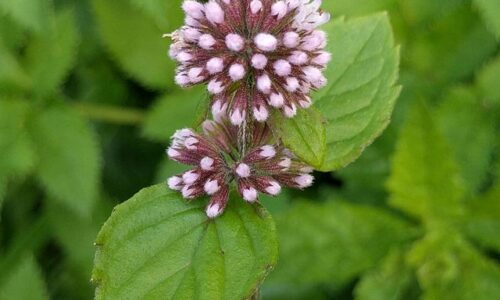
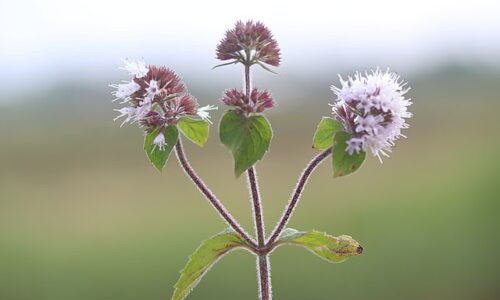
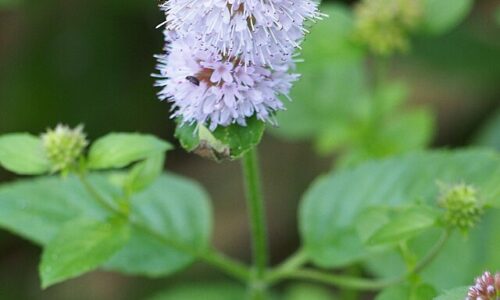
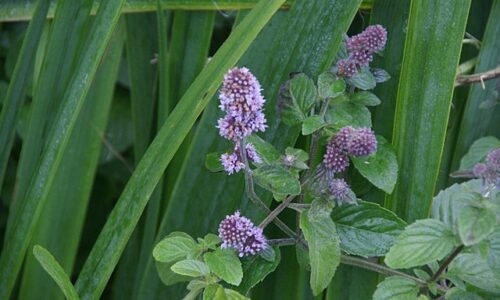
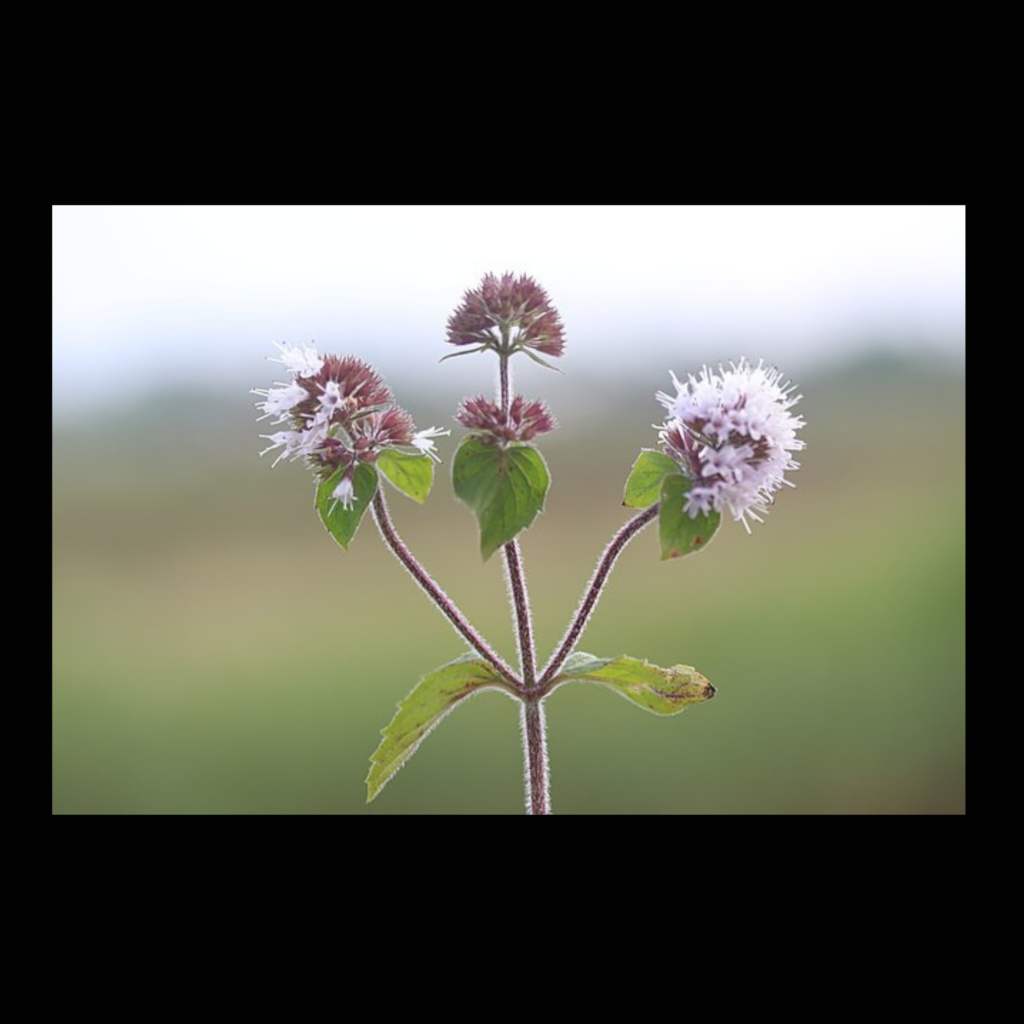
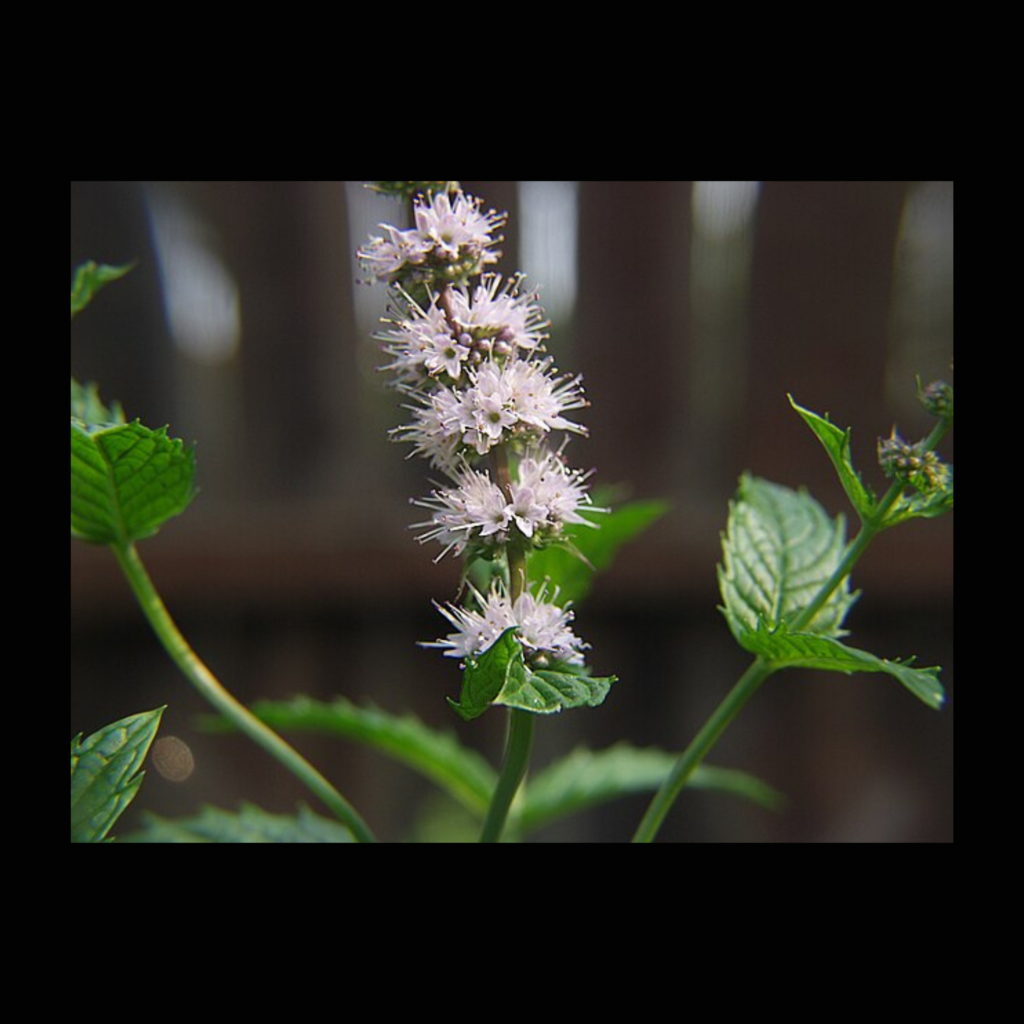
The flowers are different too – distinctive spherical clusters that look like fuzzy purple pom-poms perched on top of the stems. Once you see them, you’ll recognize Water Mint immediately.
It’s been used medicinally for thousands of years – the Romans drank it for stomach issues, medieval herbalists used it for fever, and it’s one of the parent plants of modern peppermint (a hybrid cross between Water Mint and Spearmint). It’s edible, medicinal, and useful.
But there’s a critical safety issue: waterborne parasites. Water Mint grows in habitats shared by livestock and wildlife, which means liver fluke risk. Never eat it raw. We’ll talk about that.
Let’s cover identification, how to tell it apart from other mints, and why you need to boil it before use.
WHAT IS WATER MINT?
Botanical Name: Mentha aquatica
Common Names: Water Mint, Marsh Mint, Wild Mint
Family: Lamiaceae (Mint family)
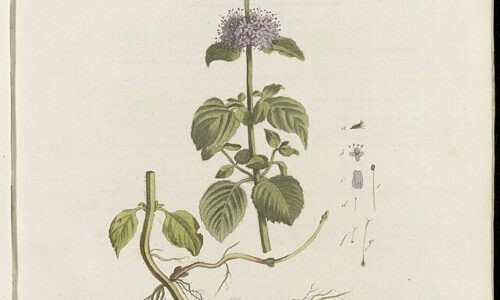
Water Mint is a perennial herb native to Europe, western and central Asia, and North Africa. It’s naturalized in North America and found anywhere with wet, marshy conditions.
What It Looks Like:
- 6-36 inches tall (depending on water depth and conditions)
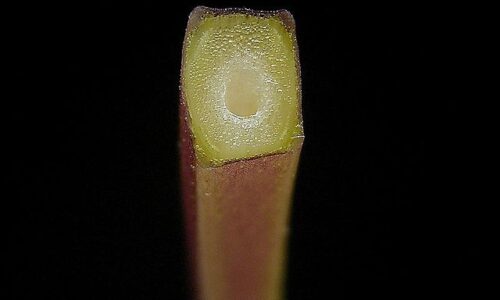
- Square stems (mint family signature)
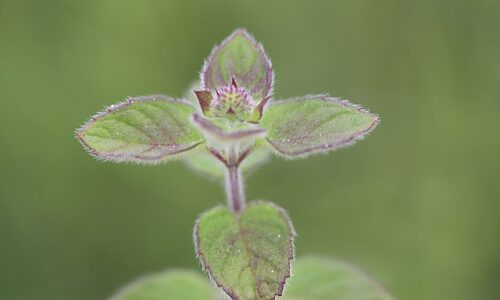
- Purple-tinged stems and leaf edges
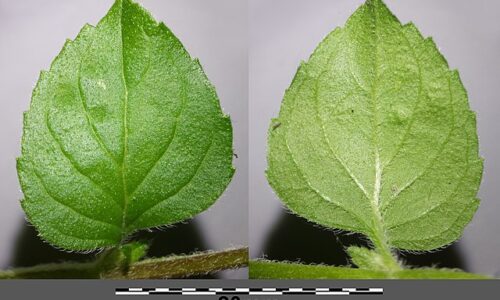
- Opposite, toothed leaves
- Spherical clusters of purple-pink flowers (distinctive)
- Strong menthol scent when crushed
- Spreads aggressively by rhizomes
The Signature:
Grows IN or next to water + square stem + menthol scent + spherical terminal flower clusters = Water Mint.
IDENTIFICATION
THE FLOWERS:
- Shape: Dense, spherical clusters (like fuzzy balls)
- Color: Lilac to pale purple to pink
- Size: ½ to ¾ inch diameter clusters
- Structure: Terminal (on top of stem) and sometimes in upper leaf axils
- Individual flowers: Tiny, tubular (typical mint structure)
- Bloom time: July to September
- Distinctive: The round, pom-pom shape is unique among common mints
THE LEAVES:
- Arrangement: Opposite pairs (each pair rotates 90° from the pair below)
- Shape: Oval to heart-shaped
- Edges: Toothed/serrated
- Size: 1-3 inches long
- Color: Bright green to dark green, often with purple tinges
- Texture: Slightly hairy, especially on undersides
- Scent when crushed: Strong menthol with earthy undertone
THE STEM:
- Shape: Square (roll it between your fingers – you’ll feel four distinct edges)
- Color: Green to deep purple or reddish (especially near water)
- Texture: Hairy
- Growth: Upright or ascending from creeping rhizomes
- Nodes: Swollen at leaf attachment points
THE ROOTS:
- Type: Rhizomes (horizontal underground stems)
- Spread: Aggressive – forms large colonies
- Color: White to purple
- Texture: Thick, fleshy
THE HABITAT:
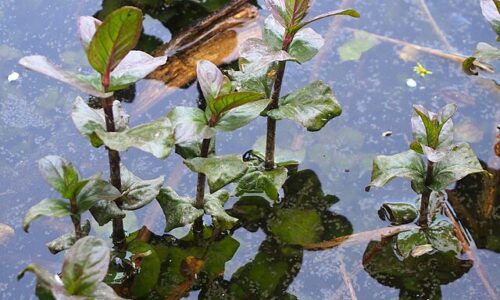
- Strictly wet areas: This is the key identifier
- Found in: Marshes, fens, stream banks, ditches, pond edges
- Water depth: Shallow water to wet mud
- Often: Growing partially submerged
- Soil: Wet, heavy, often nutrient-rich
- Never: In dry upland areas
WATER MINT VS. OTHER MINTS
Mints hybridize freely and there are dozens of species and cultivars. Here’s how to distinguish Water Mint:
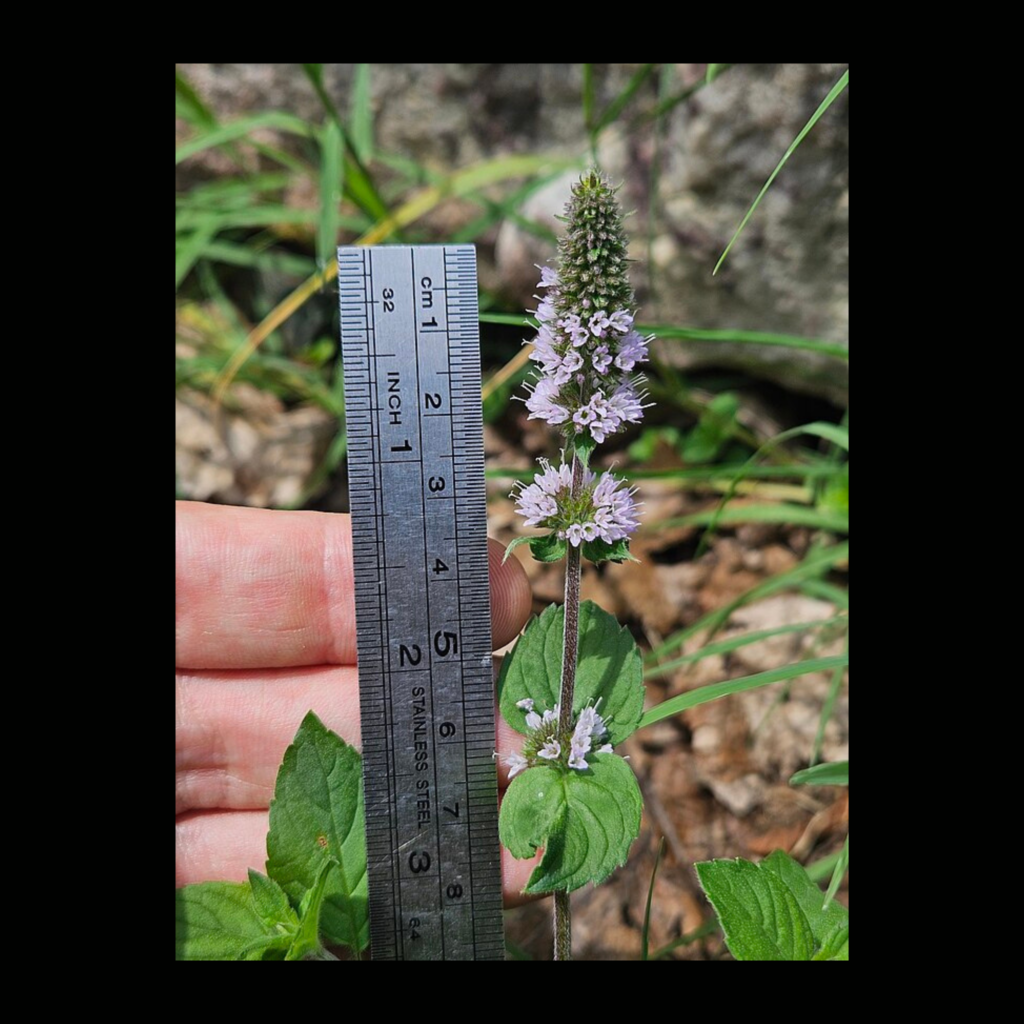
| Feature | WATER MINT | PEPPERMINT | SPEARMINT |
|---|---|---|---|
| Habitat | IN or near water (wet) | Garden, moist areas | Garden, moist areas |
| Flower shape | Spherical clusters (pom-poms) | Terminal spike + leaf axil clusters | Terminal spike (pointed) |
| Stem color | Often purple/red tinged | Green to purple | Green |
| Scent | Menthol + earthy/muddy | Strong, sharp menthol | Sweeter, milder |
| Leaf shape | Oval to heart-shaped | Lanceolate (narrower) | Lanceolate with sharper points |
| Flower color | Lilac/pale purple | Pale purple/white | Pale purple/white |
| Growth habit | Sprawling, water-loving | Upright | Upright |
The Quick Tests:
- Check habitat: Growing IN water = probably Water Mint
- Check flowers: Round, fuzzy pom-poms on top = Water Mint
- Smell it: Strong menthol = any mint (but Water Mint has earthier undertone)
- Feel stem: Square = any mint (Lamiaceae family)
Note: Peppermint (Mentha × piperita) is actually a natural hybrid of Water Mint and Spearmint, so they can look similar. Habitat and flower shape are your best clues.
WHY IT’S CALLED “WATER MINT”
Simple: it grows in water.
Unlike most mints that prefer moist but well-drained soil, Water Mint thrives with its roots submerged or in constantly saturated mud. It’s adapted to life at the water’s edge – the transition zone between dry land and open water.
Ecological Role:
- Stabilizes stream banks and pond edges
- Provides habitat for aquatic insects
- Filters nutrients from water runoff
- Spreads to colonize disturbed wet areas
- Part of wetland plant communities
Other Names:
- Marsh Mint – for obvious habitat reasons
- Wild Mint – less specific, but used in some regions
WHERE TO FIND WATER MINT
Habitat:
- Marshes and fens
- Stream banks and river edges
- Pond margins
- Ditches (especially slow-moving)
- Wet meadows
- Shallow water (partially submerged)
- Any area with permanent soil saturation
Season:
- Foliage: Spring through fall (dies back in winter in cold climates)
- Flowers: July to September (peak late summer)
- Best harvest: Just before or during flowering (peak oils)
Distribution:
- Native: Europe, western and central Asia, North Africa
- Naturalized: North America (common in northeastern U.S. and Canada)
- Widespread: Anywhere with suitable wet habitat
Climate:
- Hardiness: Zones 3-9
- Very cold-tolerant (rhizomes survive freezing)
- Prefers: Temperate climates
- Tolerates: Full sun to partial shade (more shade near water)
EDIBILITY
YES – but with critical safety warnings.
Water Mint is edible and has been used culinarily for centuries. However, because it grows in water, there are serious parasite risks if not handled properly.
YOUNG LEAVES & SHOOTS:
- When: Spring through summer
- Preparation: MUST be thoroughly cooked or boiled
- NEVER eat raw – see safety warnings below
- Taste: Strong menthol with earthy, slightly muddy undertone
- Use: Tea, cooked greens, flavoring for dishes
FLOWERS:
- When: Summer (July-September)
- Preparation: Must be thoroughly washed and heated
- Taste: Milder menthol, slightly sweet
- Use: Tea, garnish (after proper treatment)
CULINARY USES:
TEA (Primary Use):
- 1 handful fresh leaves (thoroughly washed)
- 2 cups boiling water
- Boil leaves for at least 5 minutes
- Steep covered for 10 minutes (cover traps volatile oils)
- Strain and drink
FLAVORING:
- Add to cooked dishes (soups, stews)
- Mint sauce (after boiling leaves first)
- Flavoring for game or lamb
- Added to grains or legumes while cooking
NOT RECOMMENDED:
- Raw in salads (parasite risk)
- Fresh garnish without heat treatment
- Cold infusions or sun tea
TASTE PROFILE:
Stronger and earthier than cultivated peppermint. The menthol kick is present, but there’s a distinct “swampy” or muddy undertone that some find off-putting. Cooking helps mellow this.
MEDICINAL USES (Historical & Traditional)
Disclaimer: I’m not a doctor. This is historical and traditional information, not medical advice.
Water Mint has been used medicinally since Roman times. Its properties are similar to peppermint but often stronger.
Traditional Applications:
Digestive Issues:
- Use: Tea for nausea, gas, bloating, stomach cramps, indigestion
- Why: Antispasmodic – relaxes smooth muscle in digestive tract
- Traditional: “Stomach settler” tea after meals
- Method: Hot infusion (see recipe below)
- Historical: Roman soldiers drank it for “stomach complaints from bad water”
Respiratory Support:
- Use: Expectorant for chest congestion, coughs
- Why: Menthol opens airways, thins mucus
- Method: Tea or steam inhalation
- Traditional: “Heavy chest” remedy
Fever Reduction:
- Use: Diaphoretic (promotes sweating)
- Method: Hot tea to “break a fever”
- Historical: Medieval fever remedy
- Note: Induces sweating to help regulate body temperature
Headaches:
- Use: Cooling effect for tension headaches
- Method: Tea or topical application (crushed fresh leaves on temples)
- Why: Menthol has mild analgesic properties
Mental Alertness:
- Use: Stimulating effect
- Historical: Ancient Greeks used the scent to revive “faintness”
- Method: Inhaling crushed leaves or strong tea
- Why: Menthol stimulates cold receptors, increases alertness
Topical Uses:
- Insect bites: Crushed fresh leaves applied directly (cooling, anti-itch)
- Minor skin irritations: Poultice of crushed leaves
- Why: Cooling sensation, mild antiseptic properties
Active Constituents:
- Menthol – analgesic, cooling, decongestant
- Menthone – antispasmodic
- Pulegone (small amounts) – insect repellent, can be toxic in high doses
- Limonene – antimicrobial
- Various terpenes – antioxidant, anti-inflammatory
Preparation Methods:
DIGESTIVE TEA:
- Ingredients: 1 handful fresh leaves (or 1-2 tsp dried), 2 cups water
- Method: Bring water to boil, add leaves, boil 5 minutes (kills parasites), remove from heat, cover, steep 10 minutes, strain
- Dose: 1 cup after meals or as needed
- Why covered: Traps volatile oils (menthol evaporates quickly)
RESPIRATORY STEAM:
- Ingredients: Large handful fresh leaves, bowl of just-boiled water
- Method: Place leaves in bowl, pour boiling water over, cover head with towel, inhale steam 5-10 minutes
- Use: For congestion, coughs
- Caution: Don’t burn yourself, keep eyes closed
TINCTURE (Shelf-Stable):
- Ingredients: Fresh leaves (loosely packed), high-proof alcohol (vodka or grain alcohol)
- Ratio: 1 part herb to 2 parts alcohol
- Method: Macerate 4 weeks, shaking daily, strain
- Dose: 10-20 drops in water
- Shelf life: 3-5 years
- Note: Heat-treating leaves first is safest
POULTICE (Topical):
- Method: Crush fresh leaves to release oils, apply directly to skin
- Use: Insect bites, minor irritations
- Duration: 15-20 minutes
- Note: This is topical only – still don’t ingest raw leaves
⚠️ CRITICAL SAFETY WARNINGS
LIVER FLUKE (Fasciola hepatica):
This is the big one. Pay attention.
- Water Mint grows in habitats shared by livestock (sheep, cattle) and wildlife
- These animals can carry liver fluke parasites
- Liver fluke larvae attach to aquatic plants
- If you eat raw Water Mint with larvae, you can get liver fluke infection
- Liver flukes migrate to your liver and bile ducts
- Infection causes severe abdominal pain, liver damage, can be serious
PREVENTION:
- NEVER eat Water Mint raw
- Always boil leaves for at least 5 minutes (kills larvae)
- Don’t make cold infusions or sun tea
- Don’t use fresh leaves as garnish without boiling first
- Thoroughly wash plants before cooking (removes some larvae)
- Dry heat works too – drying leaves thoroughly also kills larvae
This applies to ALL aquatic plants, not just Water Mint.
OTHER WARNINGS:
PREGNANCY:
- Avoid concentrated doses – menthol and pulegone can stimulate uterine contractions
- Mild tea occasionally is likely fine, but avoid medicinal doses
- Historically used as emmenagogue (to bring on menstruation)
GERD / ACID REFLUX:
- Mint relaxes the lower esophageal sphincter
- This can make heartburn WORSE
- If you have GERD, avoid mint
GALLSTONES:
- May stimulate bile flow
- Could theoretically dislodge gallstones (causing blockage)
- Use caution if you have gallbladder issues
ALLERGIES:
- Rare but possible – allergic reactions to mint family plants
- Symptoms: Mouth tingling, rash, difficulty breathing
- If first time using: Start with small amount
PULEGONE CONTENT:
- Water Mint contains pulegone (also found in pennyroyal)
- Much lower levels than pennyroyal, but still present
- High doses over time could be toxic
- Don’t use Water Mint as your only beverage
PETS:
- Mint is generally non-toxic to dogs and cats in small amounts
- Large amounts can cause stomach upset
- Essential oils are more concentrated and can be problematic
HARVESTING WATER MINT
When to Harvest:
- For medicine: Just before or during flowering (peak oils)
- For culinary: Young leaves in spring/early summer (milder)
- Time of day: Morning after dew dries
- Season: Late spring through summer
How to Harvest:
- Cut stems 4-6 inches above ground
- Leave roots intact (plant will regrow)
- Take no more than 1/3 of a patch
- Use clean scissors or knife
- Harvest from clean water (avoid obviously polluted sites)
Washing & Treatment:
This is critical for safety:
- Rinse thoroughly under running water
- Inspect for snails (can carry parasites)
- Remove any debris or damaged leaves
- Boil before use (5+ minutes minimum)
- OR dry thoroughly (sun-drying or dehydrator at 115°F+ for several days)
Drying:
- Bundle stems with rubber band
- Hang upside down in warm, dry, ventilated area
- OR use dehydrator at 95-115°F
- Dry until: Leaves crumble easily, stems snap
- Time: 5-10 days (depending on humidity)
- Drying kills parasites if done properly (low moisture + heat)
Storage:
- Strip leaves from stems once dry
- Store in airtight containers (glass jars)
- Keep in cool, dark place
- Shelf life: 1 year for best flavor/potency
- Check for: Moisture (causes mold), loss of scent
GROWING WATER MINT
From Divisions:
- Easiest method: Dig up rhizome sections with roots
- When: Spring or fall
- Size: 3-4 inch sections
- Plant immediately in wet soil or shallow water
- Success rate: Very high (almost impossible to fail)
From Cuttings:
- Method: Cut 4-6 inch stem sections
- Remove lower leaves
- Place in water (they’ll root in 1-2 weeks)
- OR plant directly in wet soil
- Keep constantly moist
From Seed:
- More difficult and less common
- Seeds need light to germinate
- Stratification helps (cold period)
- Germination: 10-20 days
- Better to use divisions
Growing Conditions:
WATER:
- Critical requirement: Constant moisture to standing water
- Depth: Can grow in 2-6 inches of standing water
- Or: Saturated, boggy soil
- Will die: If soil dries out
SOIL:
- Type: Heavy clay, muck, bog soil
- pH: Adaptable (5.5-7.5)
- Fertility: Prefers nutrient-rich soil
- Drainage: POOR drainage desired (opposite of most herbs)
SUN:
- Prefers: Full sun to partial shade
- Tolerates: More shade than most mints
- Best flowering: In full sun
TEMPERATURE:
- Hardy: Zones 3-9
- Very cold-tolerant
- Dies back: In winter (in cold climates)
- Regrows: From rhizomes in spring
Maintenance:
CONTAINMENT:
- Spreads aggressively by rhizomes
- Will take over wet areas
- Difficult to eradicate once established
- Containment strategy: Plant in submerged containers or use barriers
PRUNING:
- Cut back: After flowering to encourage fresh growth
- Harvest regularly: Keeps plants bushier
- Remove dead growth: In fall or spring
PESTS:
- Generally pest-free
- Occasional: Aphids, spider mites (rare in wet conditions)
- Rust fungus: Can occur in humid conditions
Best Uses in Garden:
- Pond edges
- Bog gardens
- Rain gardens
- Wetland restoration
- Containers in water features
- Erosion control on stream banks
NOT suitable for:
- Dry herb gardens
- Formal beds
- Small spaces (unless contained)
WATER MINT IN HISTORY
Ancient Use:
- Romans: Used for digestive complaints, flavored wine and water
- Greeks: Scent used for mental clarity and to revive faintness
- Medieval Europe: Common fever remedy and digestive aid
Etymology:
- Mentha: Named after Minthe, a nymph in Greek mythology who was transformed into a mint plant
- aquatica: Latin for “of water” or “growing in water”
Historical Cultivation:
- Not typically cultivated (grows wild abundantly)
- Gathered from wild populations
- Eventually hybridized with spearmint to create peppermint (18th century)
Folk Uses:
- Rodent repellent: Dried flowers placed in grain stores
- Strewing herb: Spread on floors for fresh scent and insect repellent
- Sleep aid: Placed in pillows
- Purification: Used in bathing and washing
WATER MINT AS PARENT OF PEPPERMINT
Water Mint is one of the parent species of modern peppermint.
The Hybrid:
- Peppermint (Mentha × piperita) = Water Mint × Spearmint
- Natural hybrid first identified in England (17th century)
- Sterile – doesn’t produce viable seed
- Propagated only by cuttings/divisions
Why the hybrid is popular:
- Combines strong menthol (from Water Mint) with milder flavor (from Spearmint)
- More upright growth habit (easier to harvest)
- Less “muddy” flavor than Water Mint
- Became commercial standard for mint
Water Mint is still valuable in its own right, but peppermint is now more widely cultivated.
FINAL THOUGHTS
Water Mint is what mint looked like before we domesticated it – wild, sprawling, growing with its feet in the muck, aggressive and impossible to kill.
It’s not as neat as the peppermint in your garden. It’s not as sweet. And you can’t just pop a raw leaf in your mouth without thinking about liver flukes. But it’s tougher, more adaptable, and it grows where other herbs won’t – in the soggy edges where land meets water.
Those distinctive spherical flower clusters make identification easy. That square stem and menthol scent confirm it. And the fact that it’s growing with its roots in water seals the ID.
If you harvest it, boil it first. Always. This isn’t optional. Water Mint grows in shared habitat, and that means parasites. Five minutes of boiling isn’t a big ask for a plant that’s been helping humans with stomach issues since Roman times.
It’s useful, it’s free, it’s everywhere there’s water. Just treat it with the respect its habitat demands.
For other mint species, see Peppermint and Spearmint in the Flora Archive. For aquatic plant safety, see the Waterborne Parasite Guide. For other Lamiaceae family plants, see the Mint Family Overview.