
[SYSTEM WARNING: ⚠️ LEVEL-10 TOXICITY ALERT]
Specimen: Veratrum viride. Identification: The Choker. Status: EXTREMELY LETHAL. Hazard: Hypotensive Shock / Respiratory Failure. OVERVIEW: False Hellebore is a massive systemic disruptor. It often emerges in the same damp, woodland patches as Wild Leeks, leading to “Group Ingestion” incidents. While Lily of the Valley attacks the heart’s rhythm, The Choker causes a rapid, catastrophic drop in blood pressure and suppresses the drive to breathe. Its architecture is its giveaway; it is far more rigid and “pleated” than any edible green in the sector.
FIELD IDENTIFICATION: THE TRIAD CLEARANCE
To clear this specimen for “The Grave” (exclusion), you must verify the Three-Point Clearance. If the specimen fails even one of these checks, it is a “Red Zone” hazard.
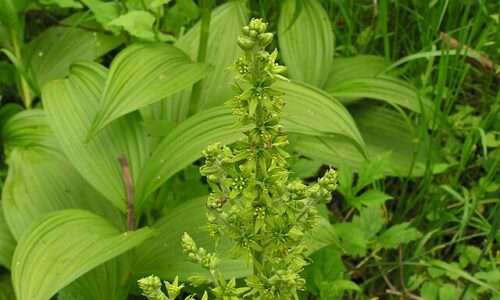
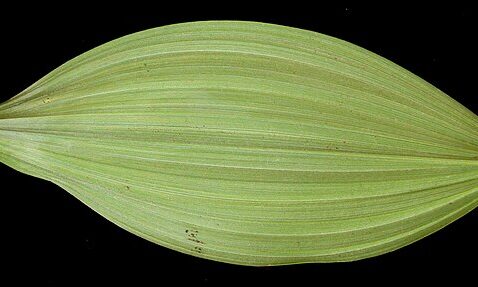
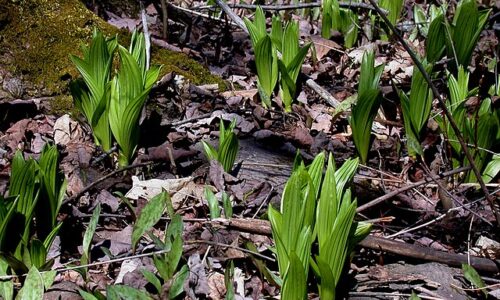
- THE PLEAT PROTOCOL (The “Accordion” Check): This is the primary tactical indicator. False Hellebore leaves are deeply pleated or ribbed. They look like an accordion or a folded fan. Edible Ramps have smooth, flat leaf surfaces. If the leaf has ridges you can feel with your thumb, it is The Choker.
- THE CENTRAL STALK ARCHITECTURE: Inspect the growth habit. False Hellebore leaves do not emerge individually; they spiral around a thick, fleshy central stalk. This stalk can grow significantly taller than a Ramp ever will.
- THE SCENT TEST: Like Lily of the Valley, False Hellebore lacks any onion or garlic aroma. When crushed, the smell is bitter, foul, or simply “green.” If it doesn’t stink of garlic, it is a Level-10 threat.
PRIMARY IDENTIFICATION
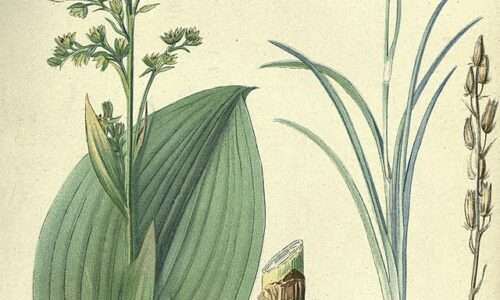
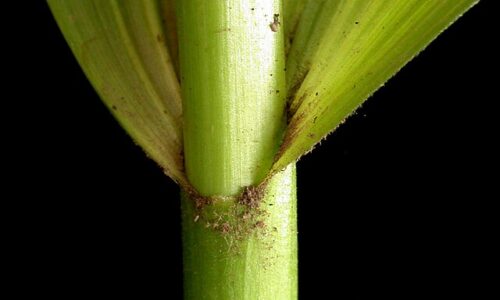
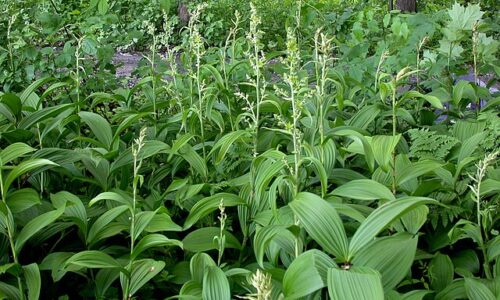
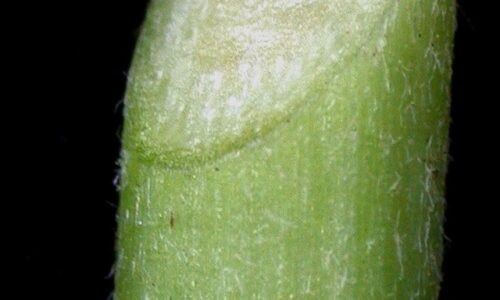
THE STEM: Thick, leafy, and unbranched. It is far more robust and “sturdy” than the delicate, floppy stems of Wild Ramps.
THE LEAVES: Large, broad, and oval. The veins are so prominent they create the “pleated” appearance. They are arranged spirally up the stem.
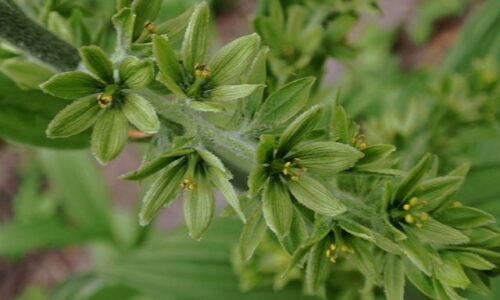
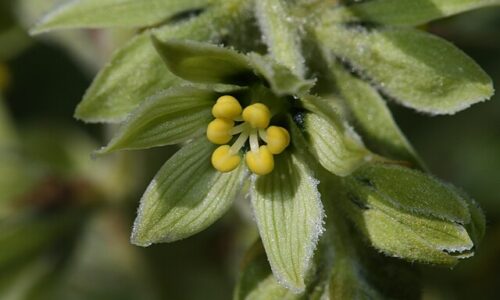
THE FLOWERS: Star-shaped, yellow-green to dull green flowers that grow in large, branched clusters at the top of the plant. They do not look like the white globes of Ramps.
HABITAT: Swamps, wet woods, and mountain seeps. It prefers much “muddier” ground than True Ramps.
THE TOXICITY LOG (ARCHIVAL DATA)
Archival records identify the primary toxins as Veratrum alkaloids.
- Mechanism: Strong activation of the baroreceptor reflex, causing the body to believe blood pressure is too high.
- The Kill: Causes a violent drop in heart rate (bradycardia) and blood pressure (hypotension). This leads to dizziness, total muscle weakness, and eventual respiratory collapse.
- Fatal Dose: Highly toxic. Symptoms begin within 30 minutes to 4 hours after ingestion.
| ⚠️ |
Bunker Advisory: Containment |
- VISUAL DEFENSE: The “Accordion” leaves are visible from 20 feet away. If the patch looks “ribbed,” do not even enter the sector for foraging.
- GROUP RISK: Because Ramps and Hellebore grow together, scavengers often “grab-bag” handfuls of greens. One Hellebore leaf in a pound of Ramps is enough to hospitalize a bunker squad.
- NO TASTE TESTING: The alkaloids are rapid-acting. Never use “taste” as a diagnostic for Veratrum.
- DECON: If you accidentally harvest Hellebore, discard the entire basket. The sap is sticky and can contaminate the edible Ramps.
⚠️ DEADLY DOPPELGÄNGER PROTOCOL: THE MAVENS
FALSE HELLEBORE (The Choker)
- Leaves: Deeply pleated/ribbed. Accordion-like.
- Scent: None or Foul.
- Effect: Hypotensive shock and respiratory failure.
WILD RAMPS (The Prize)
- Leaves: Smooth and flat.
- Scent: Powerful Garlic/Onion.
- Effect: Medicinal tonic and food.
LILY OF THE VALLEY (The Heart-Stopper)
- Leaves: Smooth, wrap around each other at the base.
- Scent: Floral/None.
- Effect: Terminal cardiac arrest.
Log Entry: The Accordion Trap.
“If the leaf is pleated, the eater is defeated.”
I found a “super-patch” of greens near the creek yesterday. At first glance, it looked like a Ramp goldmine. But when I got closer, I noticed the texture. The leaves weren’t smooth; they looked like they’d been folded by a machine. I didn’t even have to smell them. That’s Hellebore.
People think because it grows in the same mud as Ramps, it must be related. It’s not. It’s a killer. It waits for the person who is too tired or too hungry to check the ribbing. If you see pleats, keep your hands in your pockets. The forest doesn’t offer “textures” for fun—it uses them as a warning.
BUNKER CLEARANCE:
This information is for identification and avoidance purposes only. KNF7 and the Bunker Archives are not responsible for misidentification.
SYSTEM NOTICE: ARCHIVAL SAFETY DATA
This record consists of historical identification markers and toxicological data compiled from botanical archives and survival field logs. NO MEDICAL ADVICE PROVIDED.