
When Brain Mushrooms Pretend to Be Morels
The False Morel Identification Challenge
Here’s a scenario that’s killed people: You’re walking through the woods in spring, scanning for morels – those honeycomb-textured delicacies that mushroom hunters dream about. You spot what looks like a morel. Brown, wrinkled, roughly the right shape and size. You harvest it, cook it, eat it.
Except it wasn’t a morel. It was a False Morel – a mushroom that looks similar but contains gyromitrin, a toxin that converts to monomethylhydrazine in your body. That’s rocket fuel. Literally. The same compound used as rocket propellant.
You might survive. You might not. And if you do survive, your liver might not.
Welcome to The Honeycomb Trap.
THE STAKES
True Morels (Morchella species) are one of the most prized edible mushrooms in the world. Chefs pay premium prices. Foragers guard their morel spots like treasure maps. They’re delicious, meaty, and utterly distinctive.
False Morels (Gyromitra species) look similar enough to cause deadly confusion. They contain gyromitrin, which metabolizes into a compound that destroys red blood cells, causes liver and kidney failure, and can be fatal.
Some people eat False Morels and survive. Some eat them for years without incident. Then one day, the toxin accumulates to a critical level and they die. Or someone eats them raw (never cook ANY wild mushroom raw, but especially not these) and dies faster.
This is Russian roulette with fungi. Let’s make sure you know the difference.
THE PLAYERS
THE PRIZE:
- True Morels (Morchella esculenta, M. elata, and other species) – Edible, prized, delicious
THE DANGEROUS LOOK-ALIKES:
- False Morels / Brain Mushrooms (Gyromitra esculenta, G. infula, and other species) – Contain gyromitrin (rocket fuel precursor), can cause liver failure and death
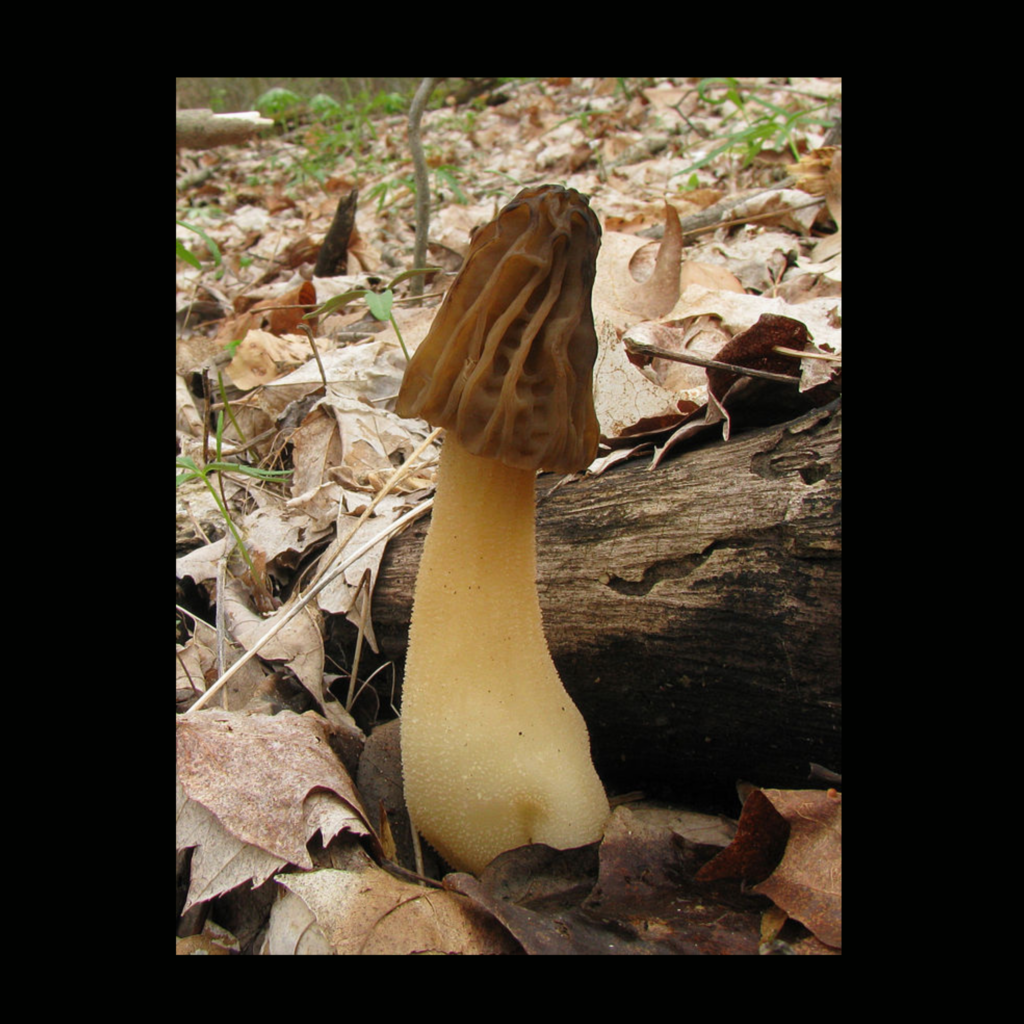
- Half-Free Morels (Morchella punctipes) – Technically edible but less desirable, easily confused with early-stage False Morels
- Verpa species (Thimble Morels / Early Morels) – Edible but can cause gastric upset in some people, often confused with true morels
All appear in spring (though some Gyromitra appear in fall). All are brownish. All grow in similar woodland habitats. But only True Morels are worth the risk.
THE QUICK-REFERENCE COMPARISON
| Feature | TRUE MORELS | FALSE MORELS | HALF-FREE MORELS | VERPA |
|---|---|---|---|---|
| CAP TEXTURE | HONEYCOMB with pits and ridges | BRAIN-LIKE, wrinkled/convoluted | Honeycomb on top half only | Thimble-like, wrinkled |
| CAP ATTACHMENT | FULLY attached to stem | Free-hanging, wavy bottom edge | Only attached at top | Hangs free like a skirt |
| CAP INTERIOR | COMPLETELY HOLLOW | Cottony/chambered, NOT hollow | Hollow but stem has cottony filling | Hollow |
| STEM | HOLLOW, continuous with cap | Solid or cottony-filled | Cottony-filled | Cottony-filled |
| COLOR | Tan, yellow, gray, black (varies) | Reddish-brown, brown, burgundy | Tan to brown | Tan to yellowish |
| SHAPE | Conical to rounded, vertical pits | Irregular, brain-like, lobed | Conical with cap halfway down | Bell or thimble-shaped |
| SMELL | Pleasant, earthy, mushroomy | Sometimes chemical or unpleasant | Earthy | Earthy |
| SEASON | Spring (April-May) | Spring AND fall | Spring (early) | Spring (early) |
| STATUS | EDIBLE – The Prize | TOXIC – Can be fatal | Edible but mediocre | Edible (with caution) |
THE CRITICAL IDENTIFICATION RULES
Here are the non-negotiable rules for identifying True Morels:
RULE #1: The Honeycomb Test
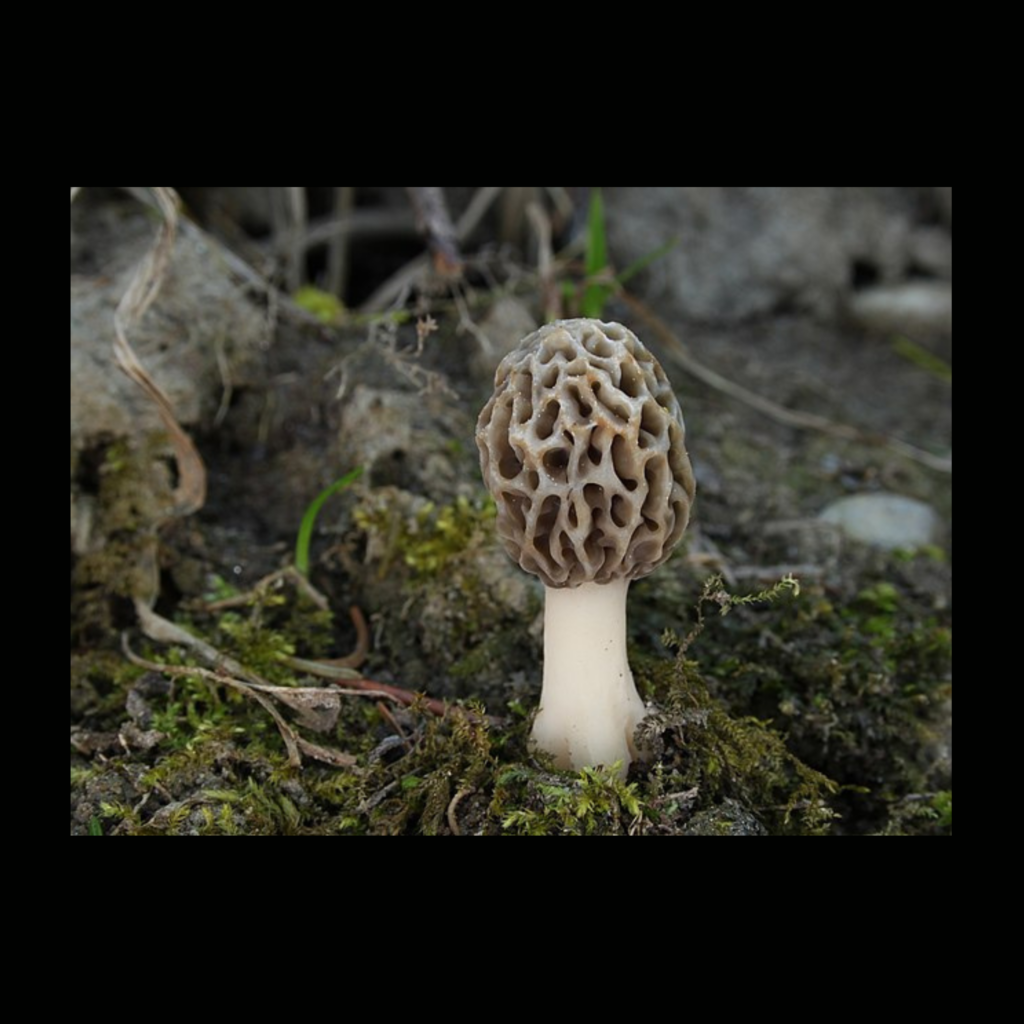
True Morels have a DISTINCT HONEYCOMB pattern – clearly defined pits and ridges that look geometric, organized, vertical.
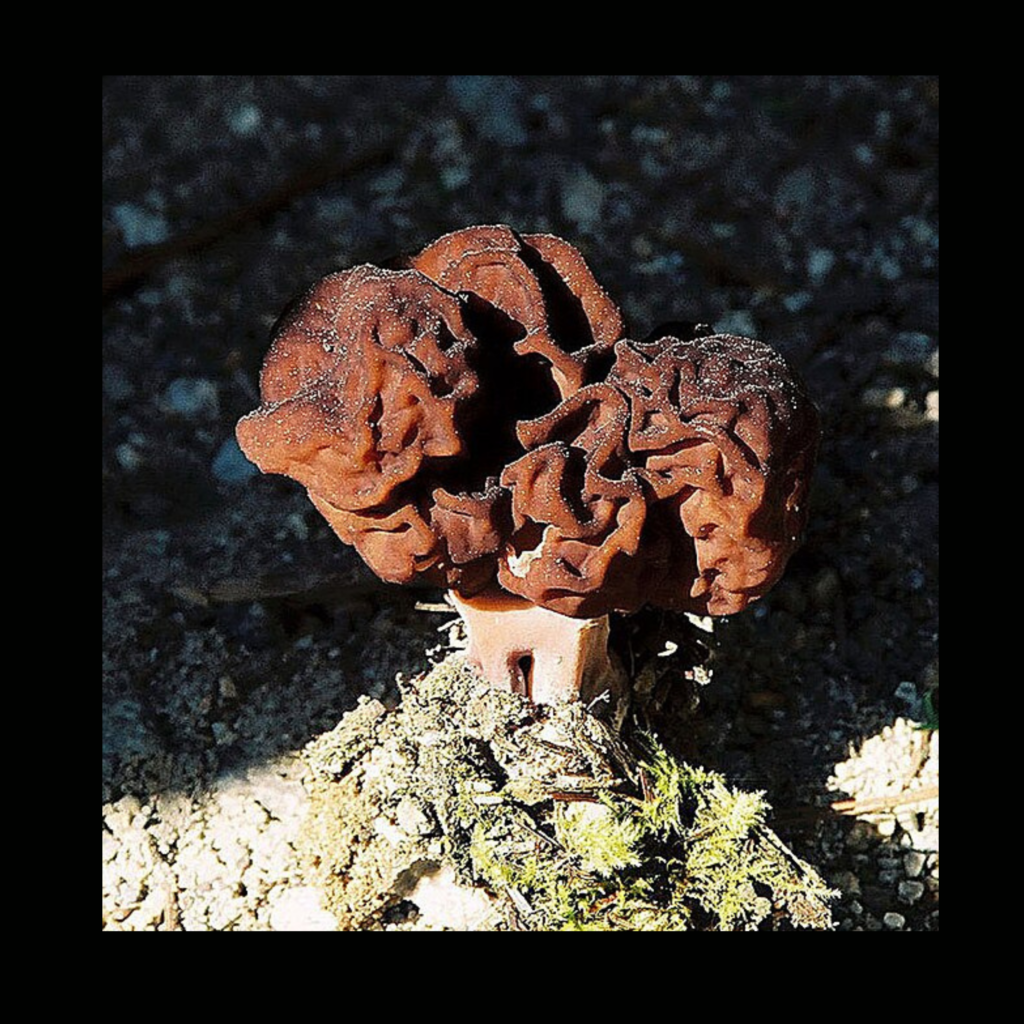
False Morels look like BRAINS – wrinkled, convoluted, irregular, wavy. The folds are random, not organized.
If it looks like someone took a brain and stuck it on a stem, it’s NOT a morel.
RULE #2: The Hollow Test (THE MOST IMPORTANT)
Cut the mushroom in half lengthwise from cap to stem base.
TRUE MOREL: Completely hollow inside. One continuous chamber from cap tip to stem bottom. Like a hollow cone or bell. NO cottony material inside.
FALSE MOREL: Cottony, chambered, or partially solid inside. Not one smooth hollow chamber. May have irregularly shaped chambers or cotton-like material filling spaces.
This is the definitive test. If you only learn one identification feature, make it this one.
RULE #3: The Attachment Test
Look at where the cap meets the stem.
TRUE MOREL: The cap is FULLY ATTACHED to the stem all the way around the bottom edge. It’s one continuous piece.
FALSE MOREL: The cap hangs free from the stem at the bottom edge, like a wavy skirt. There’s a gap between cap and stem.
HALF-FREE MOREL: The cap is only attached at the TOP, hanging free halfway down (hence “half-free”).
TRUE MORELS (Morchella species) – The Prize
Species Note: There are multiple Morchella species in North America – black morels, yellow morels, and others. They vary in color and size but share the same key identification features.
Primary Identification:
THE CAP:
- HONEYCOMB texture with clearly defined pits (holes) and ridges
- Pits are mostly vertical, organized, geometric-looking
- Color ranges from blonde/yellow to tan to gray to black (depends on species and age)
- Conical, oval, or rounded shape
- NO brain-like convolutions
THE STEM:
- Hollow
- White to cream colored (usually paler than cap)
- Smooth or slightly granular texture
- Continuous with the cap (they’re one piece)
- Attached to cap all the way around at the bottom
THE INTERIOR (when cut lengthwise):
- COMPLETELY HOLLOW
- One smooth chamber from top of cap to bottom of stem
- No cottony material
- No irregular chambers
- Clean, empty space inside
THE SIZE:
- Varies by species
- Can be 2-6 inches tall (some larger)
- Width varies
THE SMELL:
- Pleasant, earthy, mushroomy
- NOT chemical or unpleasant
THE HABITAT:
- Hardwood forests, especially near ash, elm, apple, aspen, oak
- Sometimes near dying or dead trees
- Old burn sites (fire morels can appear the year after forest fires)
- Woodchips, disturbed soil
- Spring – typically April through May (earlier in South, later in North)
THE ECOLOGY:
- Morels are mycorrhizal – they form relationships with tree roots
- They fruit when soil temperature reaches about 50-60°F
- Often appear after warm spring rains
- Same spots can produce year after year (or not – morels are fickle)
CULINARY USE:
Morels are genuinely delicious – meaty, nutty, earthy flavor.
Preparation:
- ALWAYS cook morels thoroughly (20+ minutes of cooking)
- Never eat raw (can cause gastric upset even with true morels)
- Cut in half to check for insects (bugs love morel interiors)
- Soak briefly in salted water to remove debris and bugs
- Sauté in butter, add to pasta, use in cream sauces
- Can be dried and rehydrated later
IMPORTANT: Even true morels can cause stomach upset in some people, especially if:
- Eaten raw or undercooked
- Consumed with alcohol
- Eaten in large quantities
- First time trying morels (start small)
FALSE MORELS (Gyromitra species) – The Brain Mushrooms
Species Note: Several Gyromitra species exist – G. esculenta (most common), G. infula, G. gigas, and others. All should be treated as potentially deadly.
Primary Identification:
THE CAP:
- BRAIN-LIKE texture – wrinkled, convoluted, irregular folds
- Looks like cerebral tissue or intestines
- NOT honeycomb – no clear pits and ridges
- Reddish-brown, burgundy, dark brown, sometimes yellowish
- Lobed, irregular, wavy shape
- Often wider than it is tall
THE STEM:
- NOT hollow or only partially hollow
- Often has cottony/chambered interior
- White to cream colored
- Can be thick and robust
- Cap hangs free at bottom edge (doesn’t attach fully around)
THE INTERIOR (when cut lengthwise):
- Cottony, chambered, or solid
- NOT a single smooth hollow chamber
- May have irregular pockets or chambers
- Often has cotton-like material inside
- This is THE definitive difference
THE SIZE:
- Highly variable
- Can be quite large (several inches across)
THE SMELL:
- Sometimes pleasant
- Sometimes chemical or faintly unpleasant
- Not reliable for ID
THE HABITAT:
- Similar to true morels – hardwood and conifer forests
- Sandy soil, disturbed areas
- Spring AND fall (some species)
- Can fruit at same time and place as true morels (which is the danger)
HOW IT POISONS YOU:
False Morels contain gyromitrin, which:
- Metabolizes in your body to monomethylhydrazine (MMH)
- MMH is literally rocket fuel (used as rocket propellant)
- Destroys red blood cells (hemolysis)
- Causes liver damage and failure
- Damages kidneys
- Affects the central nervous system
- Can be fatal
The Problem with “Some People Eat Them”:
You’ll hear stories: “My grandfather ate False Morels his whole life and lived to 90!” or “Europeans eat them after par-boiling!”
Here’s the truth:
- Toxin levels vary between mushrooms, locations, and species
- Toxin can accumulate in your body over time
- What doesn’t kill you this year might kill you next year
- Par-boiling reduces but doesn’t eliminate toxins (and you’re breathing toxic fumes while boiling them)
- Some people have genetic differences in how they metabolize gyromitrin
- “Russian roulette” is not a food safety strategy
Symptoms of Gyromitra Poisoning:
- Appear 6-24 hours after ingestion (delayed onset)
- Nausea, vomiting, diarrhea
- Abdominal pain
- Headache, dizziness
- Jaundice (yellowing skin/eyes from liver damage)
- Seizures (in severe cases)
- Coma
- Death from liver failure
There is no specific antidote. Treatment is supportive (fluids, manage symptoms, dialysis if kidneys fail, hope liver recovers).
The Key Differences from True Morels:
- Brain-like wrinkles vs honeycomb pits
- Cottony/chambered interior vs completely hollow
- Cap hangs free at bottom vs fully attached cap
- Irregular wavy shape vs more geometric shape
HALF-FREE MORELS (Morchella punctipes) – The Confuser
Primary Identification:
THE CAP:
- Honeycomb texture on the TOP half
- Bottom half of cap hangs FREE from the stem (hence “half-free”)
- Looks like a morel wearing a skirt that’s too big
- Tan to brown color
THE STEM:
- Hollow but often has cottony filling (unlike true morels)
- White to cream
- Proportionally long compared to cap
THE INTERIOR:
- Cap is hollow
- Stem may have cottony material inside
- Not completely hollow like true morels
WHY IT’S CONFUSING:
- Early in the season when caps are small, can look like early-stage False Morels
- The free-hanging cap looks similar to Gyromitra’s free-hanging cap
- Foragers debate whether they’re “true morels” or not
ARE THEY EDIBLE?
Technically yes, but:
- Less desirable than true morels (tougher texture)
- Some people experience gastric upset
- Easy to confuse with dangerous species when young
- Many experienced foragers skip them to avoid confusion
The Key Difference:
- TRUE MOREL: Cap attached all the way around
- HALF-FREE: Cap attached only at top, free halfway down
- FALSE MOREL: Cap completely free at bottom with wavy edge AND brain-like texture
VERPA (Verpa bohemica and V. conica) – The Early Deceivers
Common Names: Thimble Morels, Early Morels, Peckerheads, False Morels (confusing, since Gyromitra are also called False Morels)
Primary Identification:
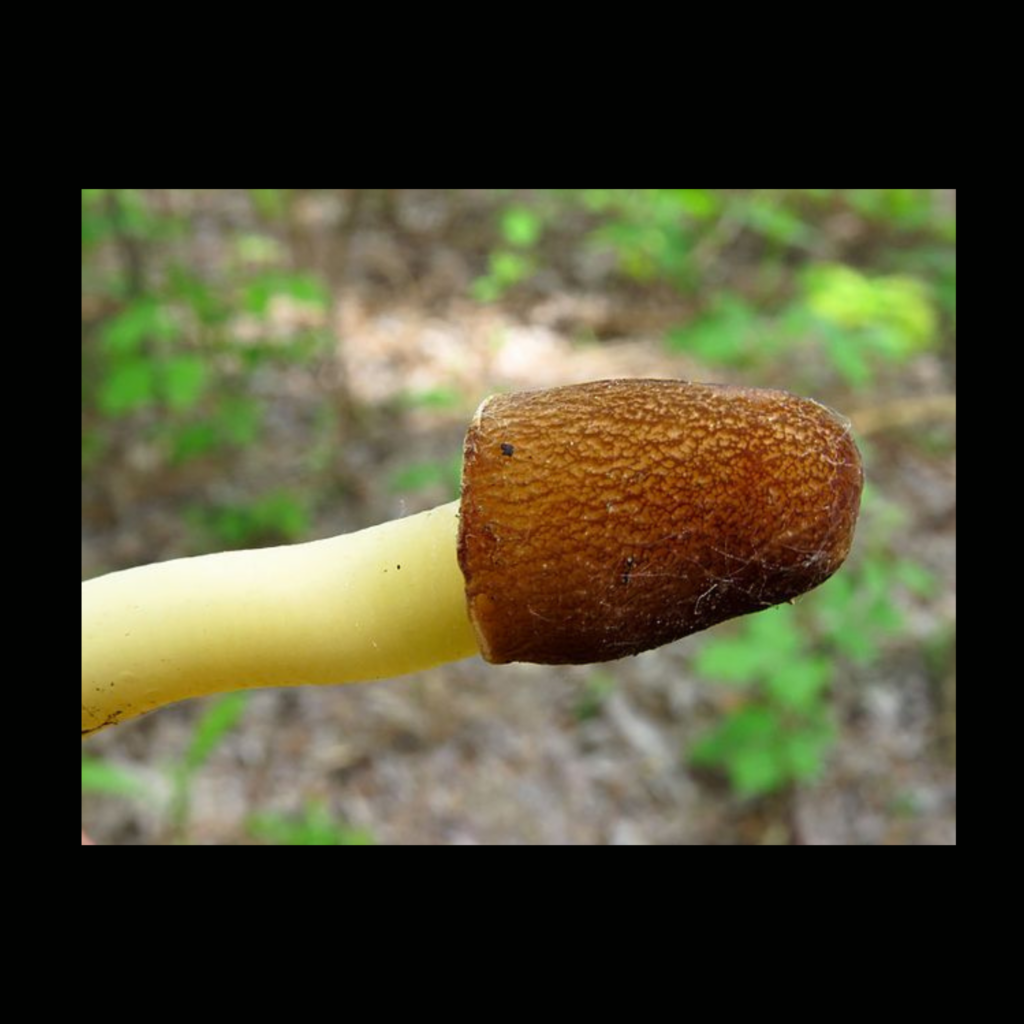
THE CAP:
- Thimble or bell-shaped
- Wrinkled surface but NOT honeycomb-patterned
- Hangs FREE from stem like a skirt (only attached at very top)
- Tan to yellowish-brown
THE STEM:
- Long (proportionally longer than cap)
- White to cream
- Cottony/stuffed interior (not hollow like true morels)
THE TIMING:
- Appear EARLY in spring, often before true morels
- This early timing causes confusion
ARE THEY EDIBLE?
Technically edible BUT:
- Can cause gastric upset in some people
- Contain small amounts of hydrazines (same chemical family as Gyromitra toxins, but lower levels)
- Not worth the risk for most foragers
- Easy to mistake for early Gyromitra
The Key Differences:
- Much longer stem proportionally
- Cap hangs completely free (only attached at very tip-top)
- Cottony stem interior
- Earlier season
- Not honeycomb-patterned
THE IDENTIFICATION PROTOCOL: Step-by-Step
When you find a mushroom you think might be a morel:
STEP 1: The Visual Pattern Check
- Look at the cap texture
- Clear honeycomb with pits and ridges? → Possible morel, proceed
- Brain-like, wrinkled, convoluted? → Gyromitra (False Morel), LEAVE IT
- Wrinkled but thimble-shaped with super long stem? → Probably Verpa, leave it
STEP 2: The Attachment Check
- Look at where the cap meets the stem
- Cap attached all the way around the bottom? → True morel characteristic
- Cap hangs free at bottom? → Not a true morel (could be Gyromitra, Half-Free, or Verpa)
STEP 3: The Hollow Test (THE CRITICAL TEST)
- Cut the mushroom in half lengthwise (top to bottom)
- Completely hollow inside – one smooth empty chamber? → TRUE MOREL
- Cottony material, chambers, or partially solid? → NOT a true morel, DON’T EAT
This is the definitive test. When in doubt, cut it open.
STEP 4: The Smell Check
- Smell the mushroom
- Pleasant, earthy, mushroomy? → Good sign
- Chemical or unpleasant? → Suspicious
STEP 5: The Habitat/Timing Verification
- Spring season? → Good for morels
- Hardwood forest or near specific trees? → Good habitat
- Fall? → Could be Gyromitra (some species fruit in fall)
IF ALL TESTS PASS: You probably have a true morel. Cook thoroughly before eating.
IF ANY TEST FAILS: Don’t eat it. When in doubt, throw it out.
WHY PEOPLE GET POISONED WITH FALSE MORELS
Mistake #1: “They Look Close Enough”
Someone sees a brownish, wrinkled mushroom in spring. “Close enough to a morel!” they think. They don’t cut it open to check if it’s hollow. It’s Gyromitra. They get very sick or die.
Lesson: Morel identification requires multiple checks. Visual similarity isn’t enough.
Mistake #2: “My Family Has Always Eaten Them”
Someone’s grandparents ate “morels” that were actually Gyromitra. They survived (luck, or low toxin levels, or good genes). The person assumes they’re safe. The toxin accumulates over years, or this batch has higher toxin levels. They die.
Lesson: “Tradition” and “I haven’t died yet” are not food safety strategies.
Mistake #3: “I’ll Par-Boil Them First”
Someone knows False Morels are toxic but thinks par-boiling (boiling and discarding water) removes the toxins. It reduces them but doesn’t eliminate them. They still get poisoned.
Lesson: Don’t try to “detoxify” poisonous mushrooms. Just eat safe species.
Mistake #4: Not Using the Hollow Test
Someone checks the cap pattern, checks the attachment, but doesn’t cut the mushroom open. They miss the most definitive identification feature. It’s Gyromitra.
Lesson: ALWAYS cut a suspect mushroom in half and check if it’s hollow.
MOREL HUNTING ETHICS AND ECOLOGY
The Conservation Angle:
Morels are increasingly commercialized. Some areas experience overharvesting.
Sustainable Practices:
- Don’t harvest tiny, immature morels (let them mature and spread spores)
- Use a mesh bag (allows spores to spread as you walk)
- Cut, don’t pull (leaves base to potentially regrow)
- Don’t rake or disturb soil excessively
- Keep some morel spots secret (reduce harvesting pressure)
- Never harvest ALL morels from a spot
The Reality:
Morels are ephemeral – they appear, fruit, and disappear quickly. Whether harvesting impacts future fruiting is debated. But sustainable practices can’t hurt.
COOKING MORELS SAFELY
Even TRUE morels require proper preparation:
NEVER eat raw morels – they contain small amounts of compounds that can cause gastric upset when raw.
Proper Preparation:
- Cut in half lengthwise (check for bugs and verify it’s hollow)
- Soak briefly in salted water (removes dirt and bugs)
- Pat dry
- Cook thoroughly – minimum 20 minutes
- Don’t eat large quantities your first time (start small to check tolerance)
- Some people react badly to morels + alcohol – avoid drinking when eating morels
Best Methods:
- Sauté in butter until fully cooked
- Add to cream sauces
- Cook with pasta
- Stuff and bake
- Dry for later use (rehydrate in warm water)
THE MEMORY RHYME
“Honeycomb pits and hollow all through,
Cap hugs the stem like a morel should do.
If it looks like a brain or hangs like a skirt,
Leave it alone or you’re gonna get hurt.
Cut it in half and see it’s not filled –
That’s how you know you won’t get killed.”
FINAL THOUGHTS: The Honeycomb Trap Is Real
Morels are worth learning to identify correctly. They’re delicious, prized, and bring foragers into the woods every spring in almost religious quests.
But False Morels kill people. Not often, but often enough that every mushroom field guide has a dire warning. And the confusion is real – they grow in similar places, at similar times, and from a distance look similar enough to fool people.
The good news: The hollow test is definitive. If you cut every suspect morel in half and confirm it’s completely hollow inside, you’ll never be poisoned by False Morels.
The bad news: People get lazy. They assume. They trust tradition over biology. And that’s when accidents happen.
My advice:
- Learn true morels at multiple life stages
- ALWAYS cut mushrooms in half to verify hollowness
- When in doubt, throw it out
- Never eat any mushroom you’re not 100% certain about
- Consider taking a mushroom foraging class or going with an experienced hunter
- If it looks like brains, leave it alone
Morels are magical. False Morels are deadly. The difference is literally a matter of whether there’s air or cottony stuff inside the mushroom.
Cut. Check. Then cook and enjoy. Or leave it and stay safe.
Those are your only two good options.
For other edible mushrooms, see the Flora Archive. For toxic mushroom information, see the Poison Index.