
The Honeycomb Treasure
If there’s one wild food that turns otherwise reasonable people into secretive, obsessive treasure hunters, it’s morels. People guard their morel spots like nuclear launch codes. They call in sick to work when conditions are right. They wade through tick-infested woods, poison ivy, and mud for a chance at finding these honeycomb-capped fungi.
And honestly? They’re worth it.
WHAT ARE MORELS?
Morels are wild mushrooms in the genus Morchella – a group of edible fungi prized worldwide for their meaty texture, nutty flavor, and the fact that they can’t be commercially cultivated (at least not reliably or affordably). This makes them a true wild food – you either forage them yourself or pay premium prices.
There are multiple species of true morels in North America:
- Yellow/Blonde Morels (Morchella esculenta and related species) – lighter colored
- Black Morels (Morchella elata and related species) – darker, often appear earlier
- Burn Morels (Morchella tomentosa and related) – appear in areas after forest fires
- Half-Free Morels (Morchella punctipes) – technically morels but less desirable
Note: Morel taxonomy is messy and constantly being revised by mycologists. What matters for foragers: they all share the same key identification features.
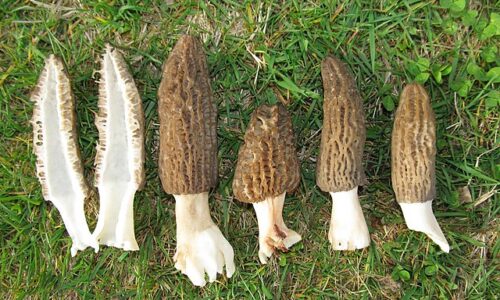
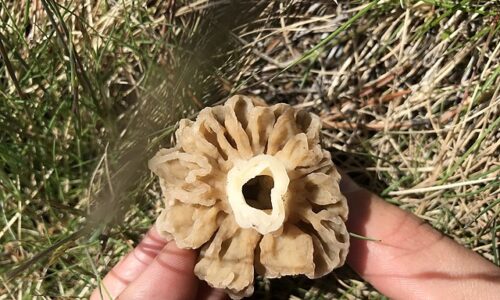
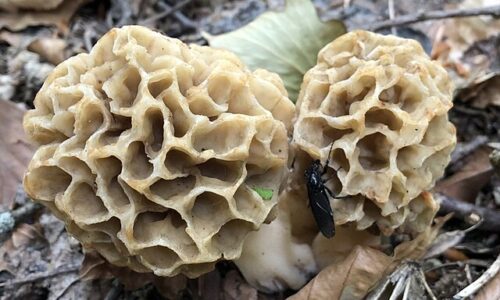
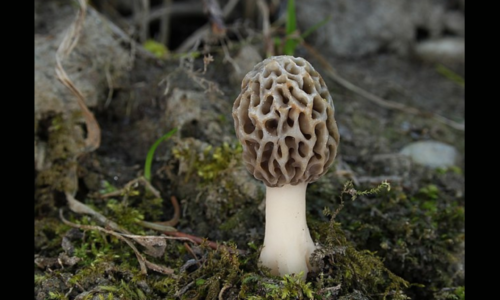
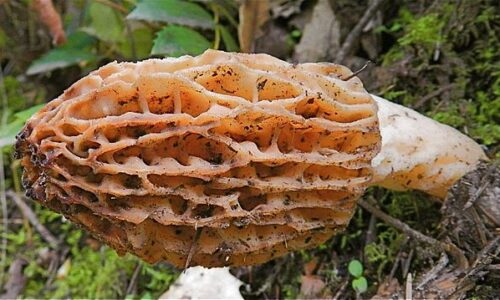
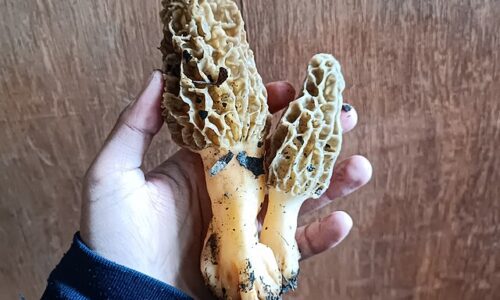
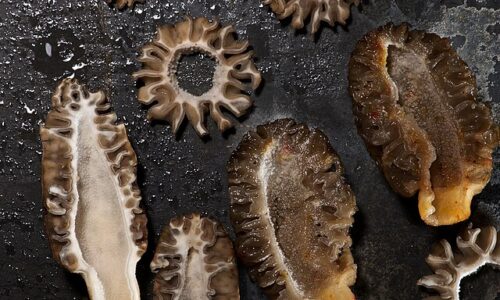
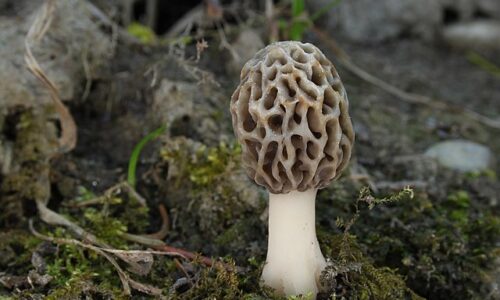
IDENTIFICATION: THE HONEYCOMB SIGNATURE
THE CAP:
- The defining feature: distinct honeycomb pattern with pits (holes) and ridges
- Pits are arranged in vertical rows, fairly organized and geometric
- NOT brain-like, NOT randomly wrinkled
- Conical, oval, or rounded shape
- Color varies by species and age:
- Yellow/blonde morels: tan, cream, golden
- Black morels: gray, dark brown, nearly black
- Can darken with age
- Size: 2-6 inches tall typically (some larger specimens exist)
THE STEM:
- White to cream colored (usually paler than the cap)
- Hollow inside
- Smooth or slightly granular texture
- Attached to the cap all the way around the bottom edge (this is critical – the cap and stem are one continuous piece)
- Proportional to cap size (not super long like Verpa)
THE INTERIOR (Cut lengthwise to verify):
- COMPLETELY HOLLOW from top of cap to bottom of stem
- One smooth, empty chamber
- No cottony material inside
- No separate chambers or compartments
- This is THE definitive identification feature
THE SMELL:
- Pleasant, earthy, mushroomy
- Mild when fresh
- Stronger when cooking
THE SPORE PRINT:
- Cream to yellow (though you rarely need this for ID)
WHERE AND WHEN TO FIND MORELS
HABITAT:
Morels are mycorrhizal – they form symbiotic relationships with tree roots. Different species prefer different trees:
Yellow Morels prefer:
- Ash trees (especially dying ash from Emerald Ash Borer)
- Elm (particularly dead or dying elms)
- Apple orchards (old orchards are gold mines)
- Tulip poplar
- Sycamore
Black Morels prefer:
- Oak
- Aspen
- Conifer forests (some species)
- Mixed hardwood forests
Other Good Morel Habitat:
- Old burn sites (fire morels can fruit prolifically 1-2 years after forest fires)
- Disturbed soil
- Wood chip mulch (sometimes)
- Creek bottoms and valleys
- South-facing slopes (warm up first)
Soil: Morels prefer well-drained soil with some organic matter. Not usually found in dense clay or pure sand.
SEASON:
Spring – but timing varies dramatically by location:
- Deep South: Late February – March
- Mid-South/Lower Midwest: March – April
- Upper Midwest/Northeast: April – May
- Mountain West/Pacific Northwest: May – June
Temperature is the key: Morels typically fruit when:
- Soil temperature reaches 50-60°F
- Daytime air temps consistently hit 60-70°F
- After spring rains
- When leaves on trees are about the size of a squirrel’s ear (old-timer’s rule)
Weather patterns: Look for warm spring rains followed by sunny days. Morels can “pop” overnight when conditions are perfect.
THE MOREL LIFECYCLE
Understanding morel ecology helps you find them:
Fruiting Trigger:
Morels fruit in response to environmental stress – temperature changes, moisture cycles, dying trees. The mushroom you see is just the fruiting body – the actual organism (mycelium) lives underground year-round.
Same Spot, Different Years:
Morel spots can be:
- Productive every year for decades
- Productive for a few years then done
- Productive one year, nothing the next
- Completely unpredictable
This fickleness is part of the obsession.
Short Season:
Individual morels last about 7-10 days before they deteriorate. The overall season in any location is 3-4 weeks. Miss the window and you’re done until next year.
THE HUNT: HOW TO FIND MORELS
Scout Habitat:
- Focus on the right trees (ash, elm, apple especially)
- Look for dying or recently dead trees
- Check old burn sites
Look LOW:
Morels hide in leaf litter. You’re not looking up – you’re scanning the ground intensely. Many people describe it as “getting your eyes on” – once you spot the first one, suddenly you see them everywhere.
Check Microhabitats:
- Base of trees
- Edge of old logging roads
- Near fallen logs
- Slight depressions where moisture collects
- South-facing slopes (warm first)
Walk Slowly:
This isn’t a hike. This is a slow, methodical scan. Many beginners walk right past morels.
The “Where There’s One, There’s More” Rule:
If you find one morel, stop and search that immediate area thoroughly. They often fruit in clusters or scattered groups.
Mark Your Spots:
- Mental landmarks (remember the area for next year)
- GPS coordinates (if you’re high-tech)
- Don’t tell anyone (this is the forager’s code)
HARVESTING MORELS
How to Harvest:
Cut vs. Pull: Debated by foragers
- Cut at base: Leaves the base in soil (may help future fruiting, prevents dirt in your bag)
- Pull gently: Gets the whole mushroom (less waste), some say it doesn’t hurt mycelium
Both methods work. I prefer cutting.
Use a Mesh Bag:
This allows spores to drop as you walk, potentially seeding new areas. It’s considered good morel etiquette.
Check for Bugs:
Cut larger morels in half immediately – bugs (particularly small beetles and slugs) love to live inside morels. If heavily infested, leave it for the wildlife.
How Much to Take:
This is where ethics gets complicated.
Conservative Approach:
- Take 1/3, leave 2/3 for spore dispersal
- Leave very small immature morels
- Don’t clear every morel from a spot
Reality:
Once morels mature enough to harvest, they’ve already released spores. Taking them doesn’t necessarily hurt future populations. But sustainable harvesting shows respect for the resource.
Commercial Harvesting:
In some areas, commercial pickers strip entire forests. This is controversial. If you’re foraging for personal use (a few pounds), you’re not the problem.
CLEANING AND PREPARATION
Initial Cleaning:
- Cut in half lengthwise (check for bugs AND verify they’re hollow)
- Shake out debris
- Bugs crawl out when mushrooms sit in salted water (15-30 min soak)
The Washing Debate:
Some foragers NEVER wash morels (claim they get waterlogged and lose flavor). Others soak them. Middle ground:
- Quick rinse under cool water
- Gentle swish in water to remove grit
- Pat dry thoroughly
- Don’t soak for hours unless very dirty
Drying:
Morels dry beautifully and rehydrate well.
- Slice in half (speeds drying)
- Air dry in a dehydrator or in a warm, dry place
- Store in airtight containers
- Rehydrate in warm water before use
- Save the soaking liquid (it’s flavorful stock)
COOKING MORELS SAFELY
CRITICAL FOOD SAFETY:
- NEVER eat raw morels – they contain small amounts of hydrazines that cause gastric upset when raw. Cooking destroys these compounds.
- Cook thoroughly – at least 15-20 minutes of cooking time. Undercooked morels can cause nausea.
- Start small if it’s your first time – some people have individual sensitivities to morels.
- Avoid alcohol – some people report adverse reactions when consuming morels with alcohol.
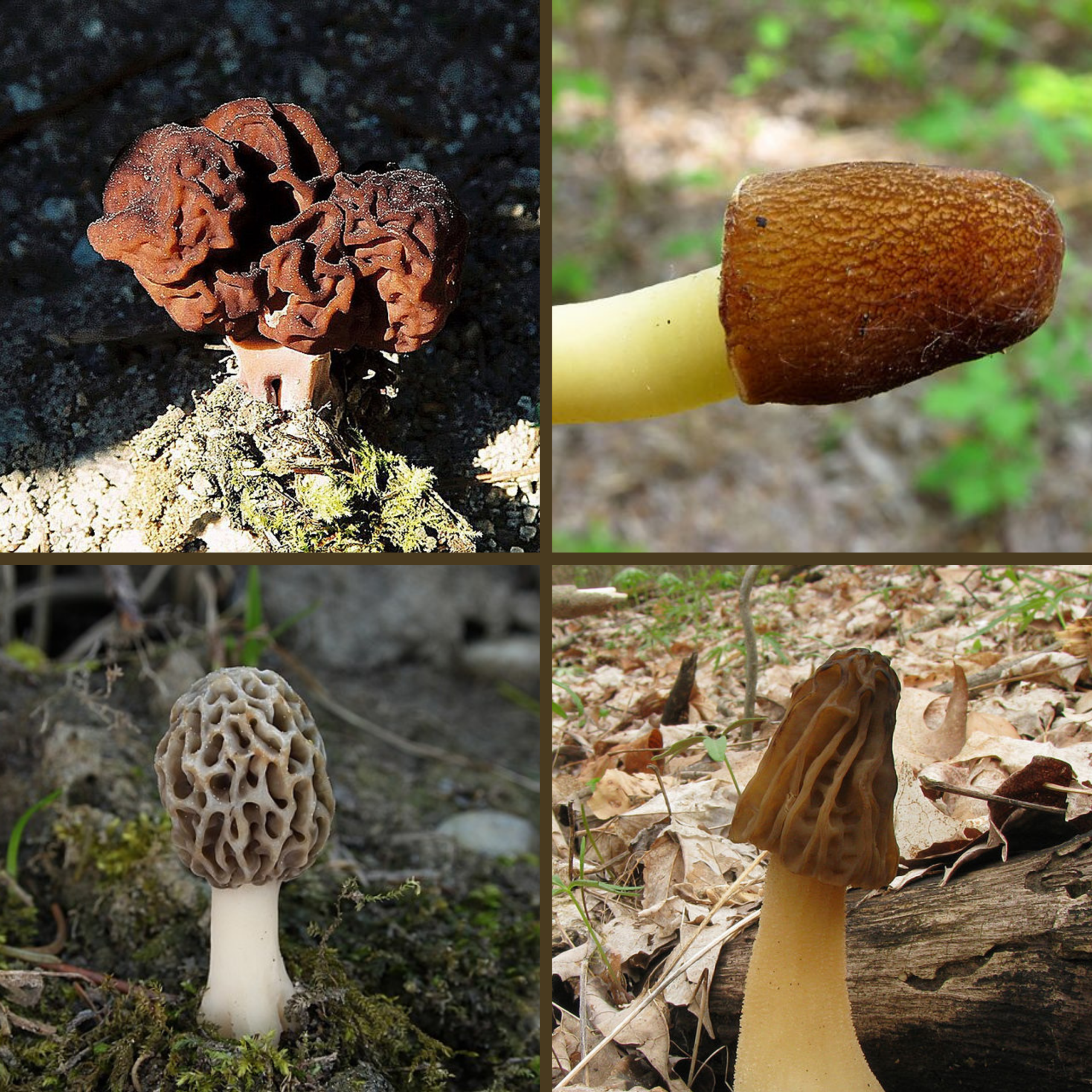
- Make sure they’re actually morels – False Morels (Gyromitra) are poisonous. See the Deadly Doubles: Honeycomb Trap for identification.
Best Cooking Methods:
Classic Sauté:
- Slice morels in half (or quarters if large)
- Heat butter in a pan
- Add morels, cook 15-20 minutes until browned and tender
- Salt and pepper
- That’s it. Perfection.
Cream Sauce:
- Sauté morels in butter
- Add cream, reduce
- Season with salt, pepper, fresh thyme
- Serve over pasta, steak, or chicken
Stuffed Morels:
- Leave morels whole (remove stems)
- Fill with herbed cream cheese or sausage stuffing
- Bake until tender
In Soups/Stews:
Add dried morels to soups, stews, risotto for deep umami flavor.
With Eggs:
Morels and eggs are a classic pairing – omelets, scrambled eggs, frittatas.
FLAVOR PROFILE
Morels taste earthy, nutty, meaty, with deep umami notes. The texture is satisfying – meaty but tender when properly cooked. They’re not delicate like some mushrooms; they hold up well to robust preparations.
WHY ARE MORELS SO EXPENSIVE?
If you see morels at a farmer’s market or fancy grocery store, expect $30-$60+ per pound. Why?
- Can’t be reliably cultivated – unlike button mushrooms or shiitake, morels resist commercial cultivation attempts
- Short season – a few weeks per year, that’s it
- Labor intensive – must be wild-harvested by hand
- Unpredictable – some years produce massive fruitings, other years almost nothing
- High demand – chefs love them, foragers love them, everyone wants them
This is why people guard their morel spots jealously.
MOREL FOLKLORE AND CULTURE
The Obsession:
Morel hunting isn’t just foraging – it’s a springtime ritual, almost religious for some people. Entire communities have morel festivals. People take vacation days. Families pass down secret spots through generations.
The Secrecy:
Ask a morel hunter where they found their haul, and you’ll get vague answers: “Oh, in the woods.” “By some trees.” “Around.” Morel spot secrecy is real and respected.
Old-Timer’s Wisdom:
- “When the oak leaves are the size of a mouse’s ear” (time to start looking)
- “When you hear the first whippoorwill” (morel season)
- “Look where you found them last year” (usually works)
- “The year after a forest fire is golden” (fire morels)
NUTRITIONAL VALUE
Morels are nutritious:
- Good source of Vitamin D (especially if they’ve been sun-dried)
- B vitamins
- Iron, copper, zinc
- Antioxidants
- Protein (for a mushroom)
- Low calorie
But: You’re probably not eating morels for nutrition. You’re eating them because they’re delicious.
THE CONSERVATION QUESTION
Are morels being overharvested?
The debate:
- Some mycologists worry about commercial harvesting pressure
- Others argue that since morels release spores before they’re large enough to harvest, picking them doesn’t hurt populations
- The real threat may be habitat loss (dying ash trees from Emerald Ash Borer, fire suppression, development)
Sustainable practices:
- Don’t harvest tiny immature morels
- Use mesh bags
- Don’t rake or damage forest floor
- Leave some for wildlife and spore dispersal
- Support habitat conservation
COMMON MISTAKES BEGINNERS MAKE
- Walking too fast – slow down, scan methodically
- Looking up instead of down – morels are on the ground
- Giving up too soon – it takes practice to “see” morels
- Going too early or too late – timing is everything
- Looking in wrong habitat – target the right trees
- Confusing with False Morels – learn the differences (see Deadly Doubles post)
- Not checking for bugs – always cut morels open
- Eating them raw – cook thoroughly
THE ADDICTIVE NATURE OF MOREL HUNTING
Fair warning: morel hunting can become an obsession. The combination of:
- Short season (urgency)
- Unpredictability (gambling thrill)
- Delicious reward (payoff)
- Beautiful spring weather (excuse to be outdoors)
- Treasure hunt aspect (dopamine hit when you find one)
…creates a powerful psychological hook.
You’ll find yourself checking soil temperatures, watching weather patterns, planning your weekends around morel forecasts. You’ll start eyeing dying elm trees in random parking lots. You’ll develop strong opinions about whether cut or pull is better.
Welcome to the cult.
FINAL THOUGHTS
Morels are special. They’re one of those foods that genuinely tastes better wild than anything you could buy. They force you to slow down, pay attention, learn to see. They connect you to the cycles of the forest, the rhythm of spring, and the patience required to hunt something that may or may not be there.
Are they worth the obsession? Ask any morel hunter and watch their eyes light up.
Learn to identify them correctly (especially learn the deadly look-alikes). Learn their habitat. Learn patience. Then go find yourself a mess of morels, sauté them in butter, and understand why people lose their minds over these weird honeycomb mushrooms every spring.
Happy hunting. And no, I won’t tell you where my spots are.
For look-alike warnings, see Deadly Doubles: The Honeycomb Trap. For toxic mushroom information, see the Poison Index. For other wild edibles, see the Flora Archive.