
[RESOURCE IDENTIFIED > WINTER DAFFODIL]
Specimen: Sternbergia lutea. Identification: Lily-of-the-Field / Autumn Daffodil. Status: TOXIC / NAUSEANT. Hazard: Severe Gastrointestinal Distress / Emesis.
CROSS-REFERENCE PROTOCOL
⚠️ IDENTIFICATION TRAP: Often mistaken for a “Yellow Saffron” or “Autumn Crocus” by inexperienced scouts. This specimen belongs to the Amaryllis family, not the Iris family. Cross-reference with the [RESOURCE > SAFFRON] archive to confirm flower anatomy.
FIELD IDENTIFICATION
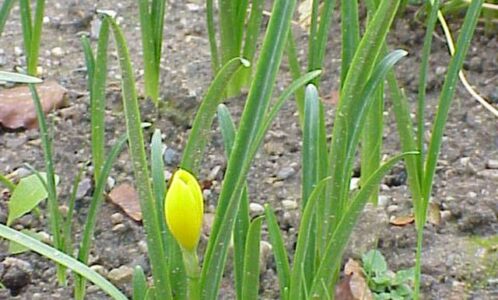
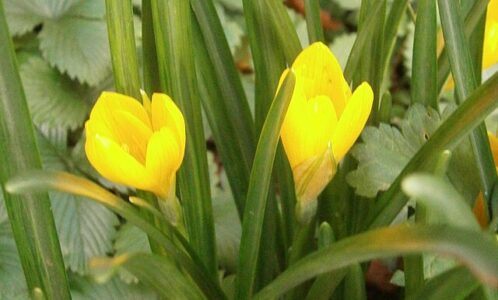
The Winter Daffodil is a deceptive autumn bloomer. It provides a burst of “false hope” in late-season sectors because its bright yellow color suggests a culinary or vitamin-rich resource. In reality, it is a chemical irritant designed to protect its corm from being eaten.
Primary Identification Markers:
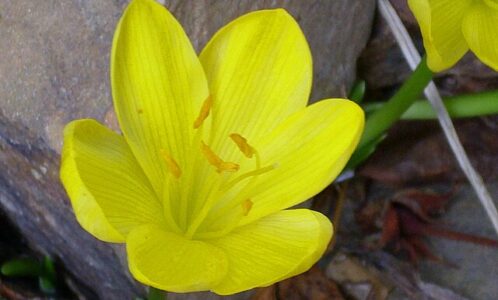
- The Stamen Count: Open the funnel. The Winter Daffodil has six yellow stamens. True Saffron only has three.
- Flower Color: Strictly bright, sunny yellow. True Saffron is lilac/purple. If you are looking for “Yellow Saffron,” you are looking for a myth; Saffron is identified by its red threads, not yellow petals.
- The Leaves: Dark green, strap-shaped, and fleshy. Unlike the “naked” Autumn Crocus, the Winter Daffodil’s leaves are present during the bloom.
- Flower Shape: More of a “cup” or “funnel” than the delicate, open petals of a true Crocus.
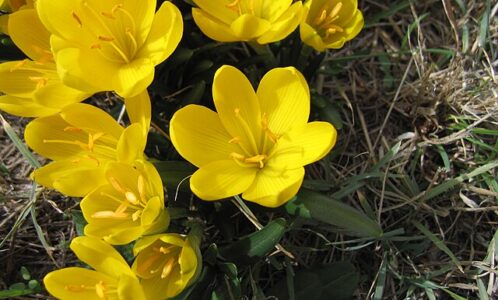
THE TOXICOLOGY LOG: THE PURGE
While rarely fatal for healthy adults in small quantities, the Winter Daffodil contains alkaloids (primarily lycorine) that trigger an immediate and violent rejection response from the body.
Symptoms of Ingestion:
- Rapid Onset Emesis: Violent vomiting within 30-60 minutes of ingestion.
- Abdominal Cramping: Severe “knotting” of the stomach lining.
- Dehydration Risk: In a bunker environment, the resulting diarrhea and vomiting can lead to critical fluid loss if not managed.
HISTORICAL CONTEXT
Historically used in ancient folk medicine as a “drastic purgative,” but abandoned because the dosage required to purge the bowels was too close to the dosage that caused permanent gastric damage. It has no place in a modern survival apothecary.
| ⚠️ |
Bunker Advisory: The Yellow Trap |
- COLOR DECEPTION: Never assume a flower is safe because it is “bright and cheerful.” Yellow autumn blooms in this quadrant are almost always irritants.
- THE SIX-STAMEN RULE: Like the Naked Lady, this plant has 6 stamens. Any autumn-blooming bulb with 6 stamens should be considered toxic.
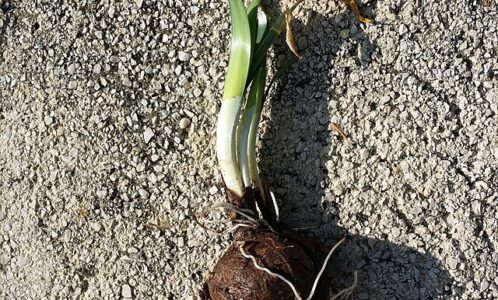
- CORM TOXICITY: The bulb is the most toxic part. If you are scavenging for wild onions or tubers, ensure you are not in a sector where Winter Daffodil has naturalized.
BUNKER CLEARANCE
“Yellow cup and six gold legs, brings the purge for him who begs. Keep the Saffron, leave the gold, lest your stomach’s health be sold.” This record serves as a warning for the Scavenger Grid. KNF7 and the Bunker Archives are not responsible for misidentification.
Historical information compiled from botanical records. NO MEDICAL ADVICE PROVIDED. This is an identification and avoidance log.