
The Midwife’s Herb
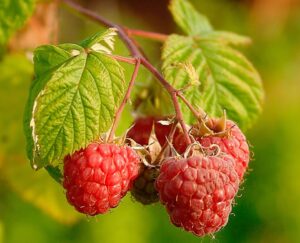
Raspberry Leaf doesn’t make headlines the way Elderberry does. There’s no dramatic folklore about a spirit in the trunk, no lurid cyanide warning. What it has is something quieter and arguably more impressive: about two thousand years of women quietly passing the knowledge of this plant from hand to hand, generation to generation, in every culture that encountered it. The Greeks claimed the gods of Olympus gathered its berries on Mount Ida—idaeus literally means “of Ida.” Hippocrates steeped the stems in wine as an astringent for wounds and difficult childbirth. The Cherokee used it. The midwives of Appalachia used it. The NHS in Norway is still seeing women using it. That’s not a trend. That’s a track record.
It is, above almost everything else in the folk pharmacy, a woman’s plant. But there’s more to it than the uterus, and we’ll get there.
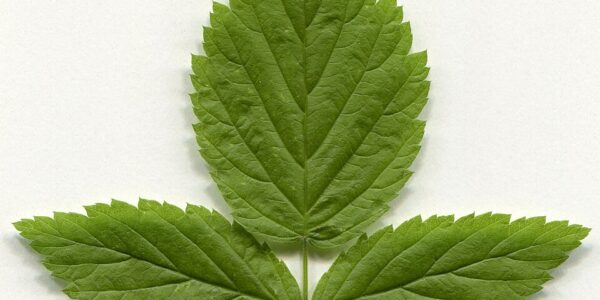
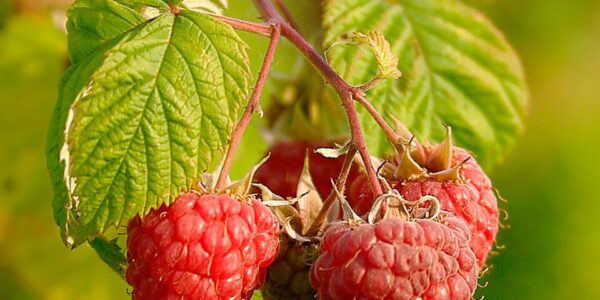
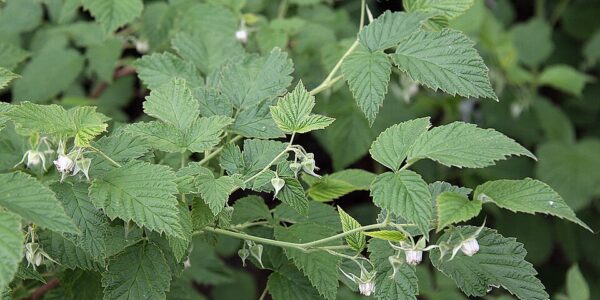
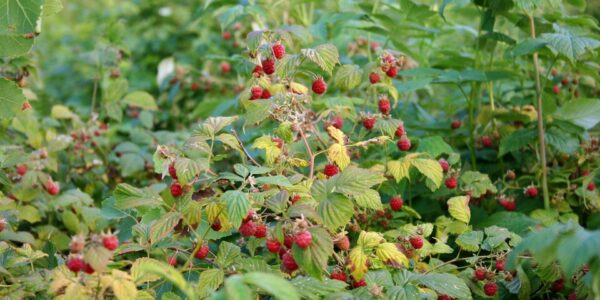
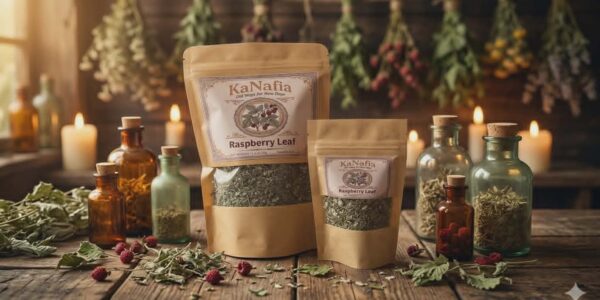
FIELD IDENTIFICATION: THE THREE-POINT CHECK
Here’s the good news: Raspberry Leaf is one of the easier plants to work with. The fruit is one of the most recognized wild foods on earth, and there are no true toxic look-alikes in the genus Rubus—everything else in that family is also edible. The caution isn’t “don’t confuse it with poison X”—it’s “make sure you actually have Rubus and not something that just superficially resembles it from three feet away.” Run these checks.
1. The Thimble Test (Touch/Visual) Pick a ripe berry. If it slides off the stem and leaves a hollow cone in your fingers—like a little thimble—it’s Rubus. That hollow cavity is the defining feature of a true raspberry. The receptacle (the core of the flower) stays attached to the plant. If the whole fruit pulls off solid with a hard center, you’ve got something else entirely. This single check eliminates the most dangerous scenarios.
2. The Cane Check (Touch/Visual) Raspberry grows on biennial canes—woody, arching stems covered in small thorns or bristles. First-year canes (primocanes) are green or reddish, bristly, and produce no fruit. Second-year canes (floricanes) produce flowers and fruit, then die. Run your hand carefully along a stem: it should be armed, never smooth. A smooth-stemmed vine producing grape-like clusters near woodland edges is a red flag and deserves the identification procedure for Moonseed (see Look-Alikes below).
3. The Leaf Underside (Touch/Visual) Flip a leaflet over. The underside of a Rubus idaeus leaf should be white to silver-gray and distinctly fuzzy—like fine felt. This silvery-white underside is characteristic and immediately distinguishes it from most plants in its habitat. Blackberry leaves are similar but the undersides are typically less dramatically pale.
PRIMARY MARKERS
- Leaves: Pinnately compound with 3–5 leaflets (3 on flowering canes, up to 5 on non-flowering ones). Leaflets are egg-shaped with sharply serrated edges. Undersides silvery-white and downy. The whole leaf arrangement is alternate on the stem, not opposite.
- Flowers: Small, white, five-petaled, in loose clusters. Often overlooked because the petals tend to be shorter than the sepals and fall off early—they’re not showy.
- Fruit: The iconic red aggregate drupe, hollow when picked. (If it’s blue-black and hollow, you may have Rubus occidentalis, the Black Raspberry—also edible and with similar leaf properties.)
- Habitat: Disturbed edges. Roadsides, forest margins, old fields, creek banks, fencerows, and places recovering from fire or logging. This is a pioneer plant—it moves in where the ground has been opened up. Find sun, find disruption, find Raspberry.
TRADITIONAL APPLICATIONS
I’m an herbalist, not a doctor. What follows is the historical record and traditional use—not a prescription.
Internal Use – The Uterine Tonic This is the plant’s signature use, and it’s both its most famous and most debated application. The paradox at the center of Raspberry Leaf’s reputation: it appears to both relax and tone uterine muscle. Herbalists call this “amphoteric” action—it normalizes rather than simply stimulates or suppresses. Traditionally it was used throughout pregnancy (especially the third trimester) to prepare the uterus for labor, reduce heavy menstrual bleeding, ease menstrual cramps, and support recovery after birth. Modern observational studies have suggested a modest reduction in labor duration and lower rates of forceps delivery and cesarean section among regular users.
Internal Use – The Astringent The tannins in the leaf are significant. An infusion acts as a classic astringent tonic throughout the digestive tract—used traditionally for diarrhea, loose stools, and general intestinal irritation. It was a go-to in folk medicine long before it became the “pregnancy herb.”
External Use – The Gargle and Poultice An infusion of the leaves was used as a gargle for sore throats and mouth inflammation—the tannins tighten inflamed tissue. A poultice of the leaf (often combined with slippery elm) was applied to wounds, burns, and infected skin to draw out infection and encourage healing.
PREPARATION METHODS
Standard Infusion (Tea)
- 2 teaspoons dried leaf per cup of boiling water.
- Steep COVERED for 10–15 minutes. The cover matters—it keeps the volatile compounds in the cup instead of evaporating into your kitchen.
- Traditional use: 1–3 cups daily. In pregnancy, traditionally started at 32–34 weeks after discussion with a midwife or doctor—not as a first-trimester herb.
Cold Infusion (Overnight Extraction)
- 1 tablespoon dried leaf per cup of cold water.
- Steep overnight (8–12 hours), covered, in the refrigerator.
- Produces a stronger tannin extraction; excellent for digestive use.
Fluid Extract
- 1:1 ratio in 25% alcohol.
- Standard dose: 5 ml three times daily.
Tincture
- 1:5 ratio in 40% alcohol.
- Macerate 4–6 weeks in a dark location, shaking daily.
⚠️ THE DANGEROUS LOOK-ALIKES
The honest answer is that the Rubus genus is one of the forager’s safest neighborhoods—everything in it produces edible fruit. The danger isn’t mistaking one Rubus for another. It’s mistaking a non-Rubus plant for Raspberry when you’re not paying full attention, particularly the berry—not the leaf.
1. Moonseed (Menispermum canadense) – POTENTIALLY FATAL
This is the one that deserves your full respect. Moonseed is a twining vine (not a thorny cane) that produces clusters of dark blue-black berries in late summer. It grows in moist, shaded woodlands and along riverbanks—the same habitat Raspberry frequents.
- The Growth Habit: Moonseed is a smooth-stemmed vine that twines around other plants. It has no thorns, no bristles, no woody cane structure. If it doesn’t prick you, it’s not Raspberry.
- The Seed: Break open a berry. Moonseed contains a single, flat, crescent-shaped seed—the “moon” of its name. A Raspberry drupelet contains a small round seed; the whole berry is hollow when pulled from the stem.
- The Leaf: Moonseed leaves are large, rounded, and peltate—meaning the leaf stalk attaches slightly inside the leaf blade rather than at the very edge (like an off-center umbrella). Raspberry leaflets are classically attached at the tip of the leaflet stalk.
- The Toxin: Moonseed contains isoquinoline alkaloids, including dauricine. Ingestion causes severe gastrointestinal distress, respiratory depression, and can be fatal. Children are particularly at risk—the berries are attractive.
2. Bittersweet Nightshade (Solanum dulcamara) – TOXIC
A common scrambling vine with small red berries in clusters that can be encountered in similar weedy, disturbed-edge habitat.
- The Berries: Nightshade berries are not hollow and hang in clusters of oval, glossy red (sometimes green or purple) berries—not aggregate drupelets.
- The Flower: If it’s flowering, nightshade has distinctive purple, reflexed petals with a prominent yellow beak of fused stamens. Nothing like Raspberry’s white five-petaled flower.
- The Toxin: Contains solanine and other glycoalkaloids. Particularly dangerous for children and pets. Causes vomiting, neurological symptoms, and in large doses can be fatal.
COMPARISON TABLE
| Feature | Raspberry Leaf (Safe) | Moonseed (FATAL) | Bittersweet Nightshade (TOXIC) |
|---|---|---|---|
| Growth Habit | Thorny/bristly biennial canes | Smooth twining vine | Smooth scrambling vine |
| Fruit Structure | Hollow aggregate (thimble) | Solid with 1 crescent seed | Solid oval berry |
| Fruit Color | Red (or black/purple for other Rubus) | Blue-black | Red/green/purple |
| Leaf Underside | Silver-white, fuzzy | Green, smooth | Green, slightly hairy |
| Leaf Stalk | Attached at leaflet tip | Peltate (off-center) | Attached at blade edge |
| Danger Level | Safe (leaf) / Edible (berry) | POTENTIALLY FATAL | TOXIC |
GROWING RASPBERRY LEAF
Rubus idaeus is not a polite houseguest. It spreads by rhizome and will cheerfully colonize more space than you intended to give it. That said, it’s one of the most productive medicinal plants you can grow.
- Propagation: Division of rhizomes in early spring, or hardwood cuttings. It rarely needs coaxing.
- Harvesting for leaf: Collect leaves in late spring to early summer before the plant flowers. At this stage the leaf is mature but the plant’s energy hasn’t shifted entirely to reproduction. Harvest dry leaves on a dry day; wet leaves mold.
- Drying: Spread on screens in a warm, well-ventilated area out of direct sunlight. The leaf should crumble cleanly when dry—not bend.
- The biennial rhythm: Remember those first-year canes (primocanes) won’t fruit. Don’t cut them all down in frustration—they’re next year’s harvest.
SAFETY CONSIDERATIONS
- Pregnancy: This plant’s primary traditional use is pregnancy support, but the operative word is traditional—meaning with knowledge and guidance. First-trimester use is generally avoided due to the herb’s uterine-stimulating potential. Most traditional use begins at 32–34 weeks. Always discuss with a qualified midwife or healthcare provider before use during pregnancy.
- Hormone-Sensitive Conditions: The phytoestrogen content is low, but those with estrogen-sensitive conditions should consult a professional before using therapeutically.
- Wilted Leaves: Avoid consuming fresh wilted leaves from the bush. Leaves that are either fully fresh and green or fully dried are the forms used medicinally. The wilted middle ground, particularly in first-year canes, may concentrate irritant compounds.
- Drug Interactions: The astringent tannins can reduce absorption of certain medications if taken simultaneously. Space herbal tea and medications by at least two hours.
- Diuretics: May mildly potentiate diuretic medications.
FINAL NOTES
Raspberry Leaf doesn’t ask you to respect it with dramatic toxicity warnings or elaborate preparation rituals. Its claim on your attention is subtler: it has been trusted, by a lot of people, across a very long time, to support some of the most consequential moments in human life. That’s worth something. Learn the plant properly—do the thimble test, check for the thorns, look at that silver underside—and you’ll have a reliable, gentle, and versatile ally that costs you nothing more than a walk along the right kind of weedy fence.
For more on toxic look-alikes, see the Deadly Doubles series. For detailed plant profiles, visit the Flora Archive.