
The World’s Most Expensive Spice
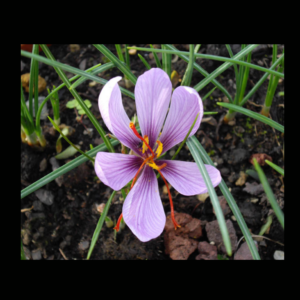
⚠️ CRITICAL: Saffron has deadly look-alikes. Read the full identification section before attempting to harvest.
Saffron is worth more per ounce than gold. Those tiny crimson threads – the dried stigmas of Crocus sativus – command premium prices because they’re labor-intensive to harvest, impossible to cultivate commercially at scale, and have been prized for over 3,500 years.
They’re also easy to confuse with plants that will kill you.
So let’s talk about how to identify true Saffron, how it differs from deadly look-alikes, and whether you should even bother trying to harvest wild (or garden) saffron at all.
WHAT IS SAFFRON?
Botanical Name: Crocus sativus
Common Names: Saffron Crocus, Autumn Crocus (confusing, since toxic Colchicum is also called this)
Family: Iridaceae (Iris family)
Saffron is a sterile triploid – it cannot reproduce by seed. Every saffron crocus in the world is a clone, propagated by dividing corms. This means true saffron doesn’t grow wild – it only exists where humans have planted it.
What It Looks Like:
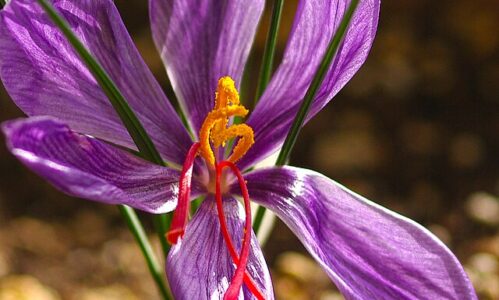
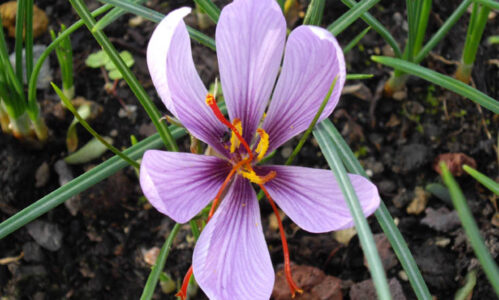
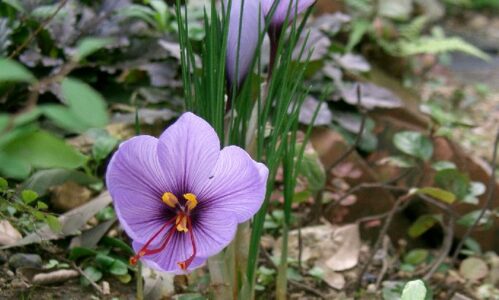
- Purple to violet cup-shaped flowers
- 6 petals
- Blooms in AUTUMN (late October-November)
- 4-6 inches tall
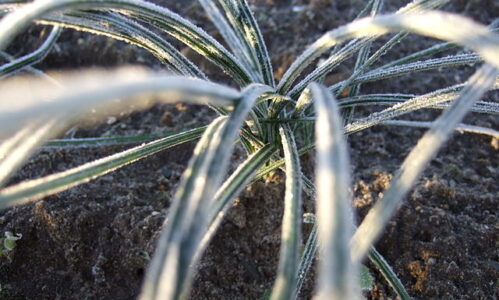
- Grass-like leaves with white stripe down center
- Leaves present during flowering
The Prize:
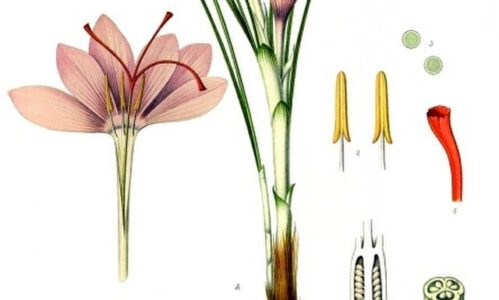
Inside each flower are 3 long, vivid crimson-red stigmas (the female reproductive parts). These are saffron. Everything else about the plant is ornamental.
The Reality:
- It takes 150-200 flowers to produce 1 gram of dried saffron
- Each flower has only 3 stigmas
- They must be hand-harvested
- This is why saffron costs $10-$30+ per gram
IDENTIFICATION: THE CRITICAL TESTS
Because saffron look-alikes can be fatal, you need multiple confirmation points.
TEST 1: The Red Thread (THE SIGNATURE)
What to look for:
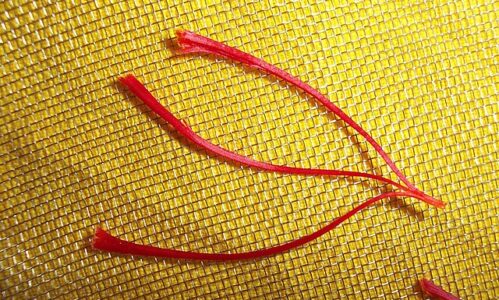
- 3 long, vivid crimson-red stigmas that droop out of the flower
- Bright red-orange color
- Thread-like, delicate
- Often extend beyond the petals
What it means:
- 3 long red threads = True Saffron (safe)
- Short, pale, or yellow stigmas = NOT saffron
- No visible threads = NOT saffron
This is THE defining feature. No crimson threads = not saffron.
TEST 2: The Stamen Count (CRITICAL SAFETY TEST)
What to do:
- Open the flower and look inside
- Count the yellow stamens (the “legs” with pollen on top)
What it means:
- 3 yellow stamens = Safe Crocus species
- 6 yellow stamens = Toxic Colchicum (Autumn Crocus) – DEADLY
This is life-or-death important. Six stamens means you’re looking at a plant that contains colchicine, which causes multi-organ failure with no antidote.
TEST 3: Bloom Time
Saffron blooms:
- Late October through November (depending on climate)
- AUTUMN only, never spring
If it’s blooming in spring:
- It’s a different Crocus species (possibly Silvery Crocus or others)
- NOT Saffron
- Safe, but not valuable
TEST 4: Leaves Present
Saffron:
- Leaves present WITH the flowers
- Narrow, grass-like
- White stripe down the center
- Emerge at same time as or before flowers
Autumn Crocus (Colchicum):
- Flowers appear on BARE stems (no leaves)
- Called “naked ladies” for this reason
- Leaves appear in spring, months after flowering
- This is a major identifying difference
TEST 5: Where You Found It
Saffron:
- ONLY in gardens or areas where humans planted it
- Never truly wild
- Often in established gardens, near old homesteads
- Requires cultivation
If you found purple autumn flowers in the wild:
- Probably Colchicum (deadly)
- Could be naturalized Colchicum from old gardens
- Unlikely to be Saffron
- DO NOT assume it’s safe
SAFFRON VS. AUTUMN CROCUS (THE DEADLY DOUBLE)
This is the confusion that kills people. Let’s break it down clearly:
| Feature | SAFFRON CROCUS | AUTUMN CROCUS (Colchicum) |
|---|---|---|
| Stigmas | 3 LONG CRIMSON threads | Short, pale, white/yellow |
| Stamens | 3 yellow | 6 yellow |
| Leaves | Present with flowers | Absent – “naked” stem |
| Bloom time | Late Oct-Nov | Aug-Oct (earlier) |
| Flower shape | Cup-shaped, 6 petals | Cup-shaped, 6 petals |
| Color | Purple/violet | Purple/pink/white |
| Cultivation | Only in gardens | Wild and gardens |
| Toxicity | Safe | FATAL (colchicine) |
The Three Definitive Tests:
- Count stamens: 3 = safe, 6 = deadly
- Check for leaves: Present = probably saffron, Absent = probably Colchicum
- Look for red threads: Long crimson = saffron, Short pale = not saffron
If ANY test fails, don’t harvest it.
For full comparison with photos: See Deadly Doubles: The Crimson Thread Trap
HOW COLCHICUM KILLS YOU
Understanding the poison might make you more careful:
Colchicine mechanism:
- Inhibits cell division throughout the body
- Causes multi-organ failure
- Symptoms delayed 2-6 hours (by then, significant absorption has occurred)
- No specific antidote
- Treatment is supportive only
Symptoms:
- Severe burning in mouth and throat
- Violent vomiting and bloody diarrhea
- Kidney and liver failure
- Bone marrow suppression
- Respiratory failure
- Death from organ failure (often days later)
Fatal dose: Very small. Even a few flowers can be lethal.
Why people die: They think they’re harvesting saffron and use the stamens (yellow) instead of stigmas (red), or they harvest the wrong plant entirely.
WHERE TO FIND SAFFRON
Habitat:
- Gardens only (never truly wild)
- Well-drained soil
- Full sun
- Mediterranean-type climates (but hardy to zone 6)
Growing regions:
- Historically: Iran, Kashmir, Spain, Greece
- Modern cultivation: Still those regions plus some specialty growers elsewhere
- In North America: Specialty gardens, herb enthusiasts, some small farms
If you want saffron:
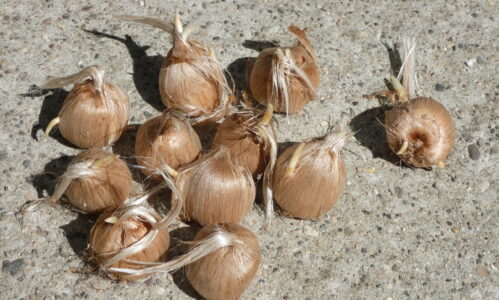
- Buy corms from reputable suppliers
- Plant in your own garden
- Don’t assume purple autumn flowers are saffron
The reality: You’re unlikely to “find” wild saffron to forage. If you want saffron, you’re growing it or buying it.
HARVESTING SAFFRON (If You Grow It)
When to harvest:
- Morning after flowers open
- Before bees visit (they can damage stigmas)
- Each flower lasts only a few days
How to harvest:
- Pick the entire flower
- Bring indoors to a clean workspace
- Gently pluck the 3 red stigmas from each flower
- Discard the yellow stamens and petals (or compost)
- Place stigmas on a plate or screen
The yield reality:
- 150-200 flowers = 1 gram dried saffron
- Each flower has 3 stigmas
- You need 450-600 stigmas for 1 gram
- This takes HOURS of tedious work
Why saffron is expensive: Now you know.
DRYING SAFFRON
Method:
- Spread stigmas on paper or screen
- Air dry in a dark, warm, dry place
- Takes 3-7 days
- Don’t use direct heat (oven, dehydrator) – destroys volatile compounds
- Properly dried stigmas are brittle, deep red
Storage:
- Airtight container
- Dark location
- Cool, dry conditions
- Properly stored saffron keeps for years
TRADITIONAL USES
I’m not a doctor. This is historical information, not medical advice.
Saffron has been used for millennia in traditional medicine:
Historical Applications:
Mood Support:
- Traditional remedy for melancholy and low spirits
- Persian and Arabic medicine used it for “gladdening the heart”
- Modern research suggests mild antidepressant effects via serotonin modulation
- Effects are modest
Cognitive Support:
- Traditionally used for memory support
- Some modern studies suggest neuroprotective effects
- Used in aging populations in traditional systems
Digestive Aid:
- Carminative (reduces gas)
- Antispasmodic (reduces cramping)
- Used for stomach upset
Menstrual Support:
- Historically used for menstrual cramps
- Traditional remedy for regulating cycles
- WARNING: Also traditionally used to induce labor/abortion – avoid in pregnancy
Respiratory:
- Traditional use for coughs and asthma
- Used in honey for throat soothing
Topical:
- Skin applications for wounds, inflammation
- Used in cosmetics historically
Active Compounds:
- Safranal (gives aroma, may affect mood)
- Crocin (gives color, antioxidant)
- Picrocrocin (gives bitter taste)
The Science:
Modern research on saffron is limited but suggests:
- Mild mood-elevating effects (comparable to low-dose antidepressants in some studies)
- Antioxidant properties
- Possible neuroprotective effects
- Anti-inflammatory compounds
Results are modest. Saffron is not pharmaceutical-strength medicine.
PREPARATION METHODS
CULINARY (Primary use):
Saffron is primarily a culinary spice with traditional medicinal uses as a secondary benefit.
How to use:
- Steep threads in warm liquid (water, broth, milk) for 20-30 minutes
- Liquid turns golden-yellow
- Add both threads and liquid to dish
- Use sparingly – a little goes a long way
Amount:
- Typical recipe: 10-30 threads (about a pinch)
- More doesn’t mean better – too much is bitter
Best in:
- Rice dishes (paella, risotto, Persian rice)
- Broths and soups
- Baked goods (saffron buns, cakes)
- Milk-based drinks (golden milk)
INFUSION (Traditional preparation):
For traditional medicinal use:
Ingredients:
- 10-20 saffron threads
- 1 cup warm (not boiling) water
Method:
- Place threads in cup
- Pour warm water (110°F–120°F) over
- Steep 20 minutes
- Drink, including threads
Traditional dose: 1-2 cups daily
TINCTURE:
Ingredients:
- 1 gram dried saffron threads
- 20 ml high-proof alcohol (vodka or Everclear)
Method:
- Place threads in small jar
- Cover with alcohol
- Seal, store in dark place
- Shake daily
- Steep 4 weeks
- Strain
Traditional dose: 5-10 drops in water
SAFFRON HONEY:
Ingredients:
- 0.5 gram saffron threads (about 75-100 threads)
- 4 oz raw honey
Method:
- Crush threads slightly
- Mix into honey
- Store in jar
- Use by teaspoon
Benefits: Long-lasting, pleasant, easy to dose
SAFETY AND DOSAGE
Generally safe in culinary amounts (the amount used in cooking)
Traditional medicinal doses:
- 30 mg (about 15-20 threads) daily
- Up to 100 mg considered safe
Do NOT exceed:
- 1.5 grams per day (toxic threshold)
- Doses above 5 grams are potentially fatal
- 20 grams is documented lethal dose
Contraindications:
Pregnancy:
- Avoid medicinal doses during pregnancy
- Saffron has traditionally been used to induce labor
- Can cause uterine contractions
- Culinary amounts in food are generally considered safe, but consult your healthcare provider
Medications:
- May interact with antidepressants
- May enhance sedative effects
- Consult doctor if on medications
Bipolar Disorder:
- Some reports of triggering manic episodes
- Use caution
Surgery:
- May increase bleeding risk
- Stop medicinal use 2 weeks before surgery
Side Effects (rare, from excessive use):
- Nausea, vomiting
- Dizziness
- Dry mouth
- Headache
- Anxiety
Signs of toxicity:
- Yellowing of skin and eyes
- Severe vomiting and diarrhea
- Bleeding
- If suspected, seek immediate medical care
GROWING SAFFRON
If you want your own saffron supply:
Planting:
- Plant corms in late summer (July-August)
- 4 inches deep, 4-6 inches apart
- Well-drained soil (crucial – they rot in wet conditions)
- Full sun
- Zones 6-9
Care:
- Minimal water (they prefer dry conditions)
- No fertilizer needed
- Divide clumps every 3-5 years
- Corms multiply slowly
Harvest:
- First harvest: 6-8 weeks after planting
- Subsequent years: more flowers as corms multiply
- Each corm produces 1-3 flowers
Yield expectations:
- 50-60 corms might produce 150-200 flowers in a good year
- That’s about 1 gram of saffron
- Build up your planting over years for meaningful harvest
The reality: Growing saffron is a long-term commitment for small yields. It’s a labor of love, not a cash crop (unless you’re in Iran or Kashmir with acres).
THE ECONOMICS
Why does saffron cost so much?
Labor:
- All hand-harvested
- Each flower picked individually
- Stigmas plucked by hand
- No mechanical harvesting possible
- Requires skilled labor
Yield:
- Low yield per plant
- Short harvest window (2-3 weeks)
- Weather-dependent
Processing:
- Hand-sorting
- Careful drying
- Quality grading
Result: $10-$30+ per gram retail, more for premium grades
The fake saffron problem:
- Saffron is frequently adulterated
- Dyed safflower or corn silk sold as “saffron”
- Buy from reputable sources only
- Real saffron is deep red, aromatic, expensive
IS IT WORTH GROWING?
Pros:
- Beautiful autumn flowers
- Produces actual saffron
- Low maintenance once established
- Deer resistant
- Long-lived perennial
Cons:
- Takes years to build up meaningful harvest
- Labor-intensive to harvest
- Requires perfect drainage
- Low yield per square foot
- Corms are expensive to buy initially
My take: Grow saffron if you enjoy the process and the beauty. Don’t grow it expecting to save money on saffron – the time investment means you’re “paying” for it in labor. But if you love the idea of harvesting your own spice that’s been prized for 3,500 years? Go for it.
FINAL THOUGHTS
Saffron occupies a unique space: culinary luxury, traditional medicine, and high-stakes identification challenge all rolled into one.
If you want saffron:
- Buy it from reputable sources (easiest, safest)
- Grow it yourself (rewarding but labor-intensive)
- Don’t forage it (doesn’t grow wild, confusion with deadly plants)
If you think you’ve found saffron:
- Count the stamens (3 = safe, 6 = deadly)
- Check for red threads (long and crimson = saffron)
- Look for leaves (present = safer bet)
- When in doubt, don’t harvest
The identification matters. Colchicum poisoning is ugly, painful, and often fatal. Don’t risk it.
Learn the differences. Master the identification. And then decide: is growing your own saffron worth the years of waiting and hours of harvesting?
For some people, yes. For others, buying a few grams from a spice shop is the wiser choice.
Either way, respect the plant, know the look-alikes, and understand why those tiny crimson threads are worth their weight in gold.
For toxic look-alikes, see Autumn Crocus (Colchicum) in the Poison Index. For detailed comparison, see Deadly Doubles: The Crimson Thread Trap. For other cultivated herbs, see the Flora Archive.