
The Essential One
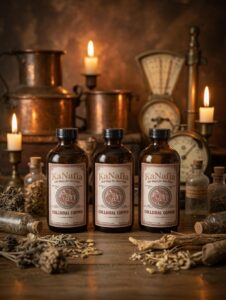
This post is for informational and historical purposes only. Nothing here is medical advice, and no health claims are being made. Always consult a qualified healthcare provider before using any supplement, including colloidal copper.
Copper is different from silver and gold in one important way: your body actually needs it. Not optionally, not philosophically. Physiologically. Copper is an essential trace mineral, meaning that without it, things stop working. Enzymes that build connective tissue, proteins that carry oxygen in the blood, the processes that convert food into usable energy, the formation of myelin sheaths around nerve fibers, all of it depends on copper being present in adequate amounts. Your body cannot make copper. It has to come from somewhere.
That baseline fact changes the entire conversation around colloidal copper compared to the other metals in this series. We are not asking whether copper has any legitimate role in the body. We know it does. The question is whether the colloidal form offers something worth considering, what its traditional history looks like, and where the real risks lie.
WHAT IT ACTUALLY IS
Colloidal copper is elemental copper, tiny metallic particles typically ranging from 1 to 10 nanometers in diameter, suspended in purified water. As with colloidal silver, the colloidal designation means the particles are small enough to remain suspended without settling. The proposed advantage of the colloidal form over other copper supplements is bioavailability: particles at that size are thought to be more readily absorbed than larger ionic compounds, though direct comparative research on colloidal copper specifically remains limited.
Copper in the body functions primarily as a cofactor, meaning it activates and enables enzymes that carry out essential tasks. Ceruloplasmin, the main copper-carrying protein in the blood, is responsible for iron metabolism. Lysyl oxidase cross-links collagen and elastin, which is why copper deficiency shows up in skin, joints, and cardiovascular tissue. Cytochrome c oxidase drives cellular energy production in the mitochondria. Superoxide dismutase is a frontline antioxidant enzyme. All of these require copper to function.
The RDA for copper in adults is 900 micrograms (0.9 mg) per day. The tolerable upper intake level, the point at which accumulation becomes a concern, is set at 10 mg per day for adults. That gap between what you need and what causes problems is relatively narrow compared to some other minerals, which is worth keeping in mind.
WHAT COLLOIDAL COPPER IS TRADITIONALLY CLAIMED TO DO
The alternative and traditional health community uses colloidal copper for a wide range of applications. These include collagen and elastin support, reduction of fine lines and wrinkles, skin elasticity and firmness, wound healing, hair pigmentation and thickness, joint and connective tissue support, cardiovascular health, energy levels and mitochondrial function, immune support, antioxidant activity, antimicrobial effects on the skin, fungal infections including athlete’s foot, acne and inflammatory skin conditions, anemia support, and general trace mineral supplementation. Topically it has been applied as a facial spray, in serums, and in wound dressings. As with all of the above, these are traditional and alternative claims. None of them constitute medical advice, and nothing here should be taken as a recommendation to use colloidal copper for any health condition.
THE HISTORICAL RECORD
The use of copper for its medicinal properties can be traced back to ancient times, with historical records showing that the Egyptians, Greeks, and Romans used copper-infused water vessels to support health and well-being. Greek physicians around 480 to 360 BCE recommended copper preparations for the treatment of leg ulcers associated with varicose veins, as well as for wound infection prevention. Later, around 23 to 79 CE, copper combined with honey was used as a treatment for intestinal worms, and copper preparations were applied to eye conditions and mouth ulcers.
The ancient Egyptians are widely credited with using copper compounds to sterilize wounds and drinking water. The Smith Papyrus, one of the oldest known medical texts, references copper as a wound-healing agent. This is not mythology dressed up as history. It is a consistent cross-cultural pattern of empirical observation that copper interferes with microbial growth, an observation that holds up to modern testing.
In the pre-antibiotic era, copper-lined vessels and piping were standard in hospitals specifically because copper surfaces kill bacteria on contact. This is the oligodynamic effect in action, the same principle that underlies modern interest in copper-infused hospital surfaces and antimicrobial copper alloys in healthcare settings. Copper has never fully left clinical practice in this sense.
COPPER DEFICIENCY: THE UNDERRECOGNIZED PROBLEM
This is one area where the alternative health community has a reasonable point that mainstream medicine sometimes underemphasizes. Copper deficiency is not common in people eating a varied whole-food diet, but it is not as rare as it is often assumed to be.
Groups at higher risk for copper deficiency include people who supplement heavily with zinc (zinc and copper compete for absorption, and high zinc intake can deplete copper over time), people who have had gastric bypass or other malabsorptive surgeries, people with Crohn’s disease or celiac disease, and people who consume a very limited diet. Symptoms of deficiency can include fatigue, anemia that does not respond to iron supplementation, numbness and tingling in the extremities, difficulty walking, and premature graying of hair.
The skin and connective tissue applications of colloidal copper that are most popular in alternative health circles have a real physiological basis. Copper is genuinely required for the enzymes that build and maintain collagen and elastin. A person who is deficient in copper will see effects in their skin and connective tissues. Whether supplementing with colloidal copper specifically addresses that in a clinically meaningful way is a different question, and one without a definitive answer in the literature.
TRADITIONAL AND CONTEMPORARY APPLICATIONS
Nothing in this section constitutes medical advice or a health claim. This is a record of historical and traditional use, shared for educational purposes only.
Topical Use
A 2014 review referenced multiple studies connecting copper to skin health, including wrinkle reduction, better elasticity, and healing wounds and skin issues like athlete’s foot. A 2015 study found that copper dressings could increase collagen levels in skin, though the study was conducted on animals. Colloidal copper is used topically as a facial spray, in serums, and in wound care preparations. The topical route avoids the accumulation concerns associated with internal supplementation and is generally considered the lower-risk application.
Internal Use
Traditional practitioners have used low-concentration colloidal copper internally as a trace mineral supplement, particularly in contexts where dietary copper intake may be inadequate. The key word in responsible internal use is low concentration and short term or cycled, not as a daily permanent supplement taken in addition to an already copper-sufficient diet.
PREPARATION NOTES
Choosing a product: As with colloidal silver, concentration is the primary variable that matters. Traditional internal use references the 5 to 10 ppm range. A quality colloidal copper product at 10 ppm should appear clear to very pale blue-green. Products marketed at much higher concentrations offer no demonstrated advantage and carry higher accumulation risk.
Topical: Apply directly via spray or incorporated into a serum or carrier. Standard low-ppm products require no dilution for topical use.
Internal (traditional use reference only, not a dosing recommendation): Traditional practitioners have referenced small amounts of a low-concentration product (around 10 ppm) taken periodically rather than daily long term. Because copper is an essential mineral with a defined dietary intake and a tolerable upper limit, internal supplementation makes most sense in contexts of suspected deficiency rather than as an indefinite daily habit.
THE RISKS YOU NEED TO UNDERSTAND
Copper Toxicity
Unlike silver, where the primary risk is cosmetic (argyria), copper toxicity can be a genuine physiological threat. Excessive copper can accumulate in the body and cause serious health issues including liver and kidney damage and neurological problems. Acute symptoms of too much copper include nausea, vomiting, diarrhea, and stomach pain. Chronic accumulation at high levels can cause jaundice, anemia, and liver damage. Chronic copper toxicity is rare, and the suggested safe level of copper in drinking water is pegged at 1.3 mg per liter. At the low concentrations in quality colloidal copper products used short-term, the risk profile is very different from acute poisoning scenarios. Dose and duration are everything.
Wilson’s Disease
Individuals with Wilson’s disease, a genetic disorder where the body cannot properly excrete copper, are especially vulnerable to copper buildup and must avoid supplements entirely. This is a firm contraindication, not a caution. If you have Wilson’s disease or a family history of it, copper supplementation of any kind is not appropriate without direct medical supervision.
The Zinc-Copper Balance
This is the interaction most people supplementing with either mineral miss. Zinc and copper compete for absorption in the gut. People who supplement heavily with zinc over long periods can become copper deficient. Conversely, supplementing copper when zinc levels are already low can exacerbate that imbalance. These two minerals need to be considered together.
COMPARISON TABLE
| Form | Evidence Level | Risk Level | Notes |
|---|---|---|---|
| Topical spray or serum (5 to 10 ppm) | Moderate | Low | Strongest rationale; avoids systemic accumulation |
| Copper-impregnated wound dressings | Moderate | Low | Used in clinical wound care research |
| Oral low-dose (10 ppm, short-term) | Low to Moderate | Low to Moderate | Reasonable for suspected deficiency; not for indefinite daily use |
| Oral high-dose or long-term | Low | High | Accumulation risk; no justification for ongoing high-dose use |
SAFETY CONSIDERATIONS
Do not use internally if you have Wilson’s disease or any copper metabolism disorder.
Do not use internally alongside high-dose zinc supplementation without accounting for the interaction between the two.
Do not use internally during pregnancy or with children without guidance from a qualified healthcare provider.
Do not treat colloidal copper as a substitute for a copper-sufficient diet. Food sources of copper include liver, shellfish (especially oysters), nuts, seeds, dark chocolate, and legumes. If your diet includes these regularly, you are likely meeting your copper needs through food.
Be aware that copper accumulates. Unlike water-soluble vitamins that the body excretes when intake exceeds needs, the body’s ability to manage excess copper has limits. Long-term unsupervised supplementation is not the same as an occasional short-term use.
Consult a healthcare provider before internal use if you have any liver or kidney condition.
FINAL NOTES
Copper’s place in the body is not in dispute. It is essential, it is well-studied, and its role in everything from skin integrity to nerve function to immune activity is documented in mainstream biology. The alternative health interest in colloidal copper is not without a rational foundation.
What requires care is the gap between “copper is essential” and “more copper supplementation is better.” The body’s copper homeostasis is precise, the margin between enough and too much is narrower than with some other minerals, and the consequences of chronic excess are serious. The same physiology that makes copper worth understanding makes it worth respecting.
Used thoughtfully, topically or in low concentrations short-term in appropriate contexts, colloidal copper has a sensible place in a traditional wellness practice. Used carelessly, it is one of the easier ways to stress a liver that did not ask for it.
Nothing in this post constitutes medical advice. No health claims are made or implied. For more in this series, see Colloidal Silver and Colloidal Gold. For plant profiles, visit the Flora Archive.